Trip 53
April 20, 2026
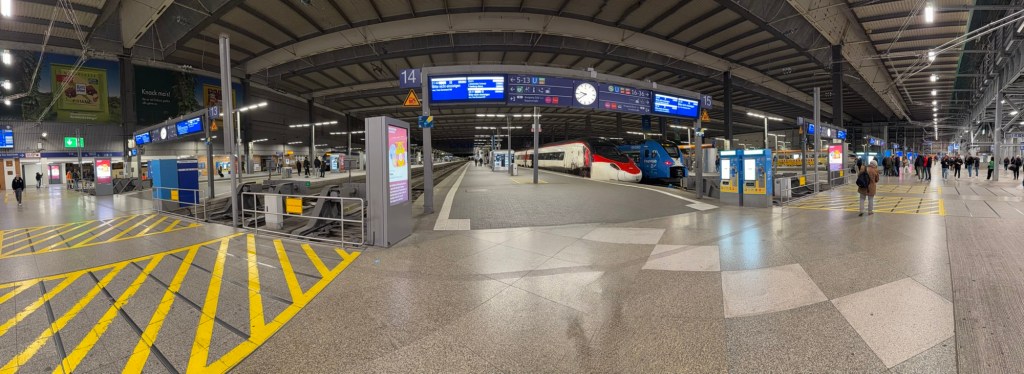
We started our journey to Amsterdam at 23:00 the previous evening in Munich, where, predictably, it was pretty quiet in Hbf. Some late night arrivals , and the few food stands left in the main train line area were about to close.
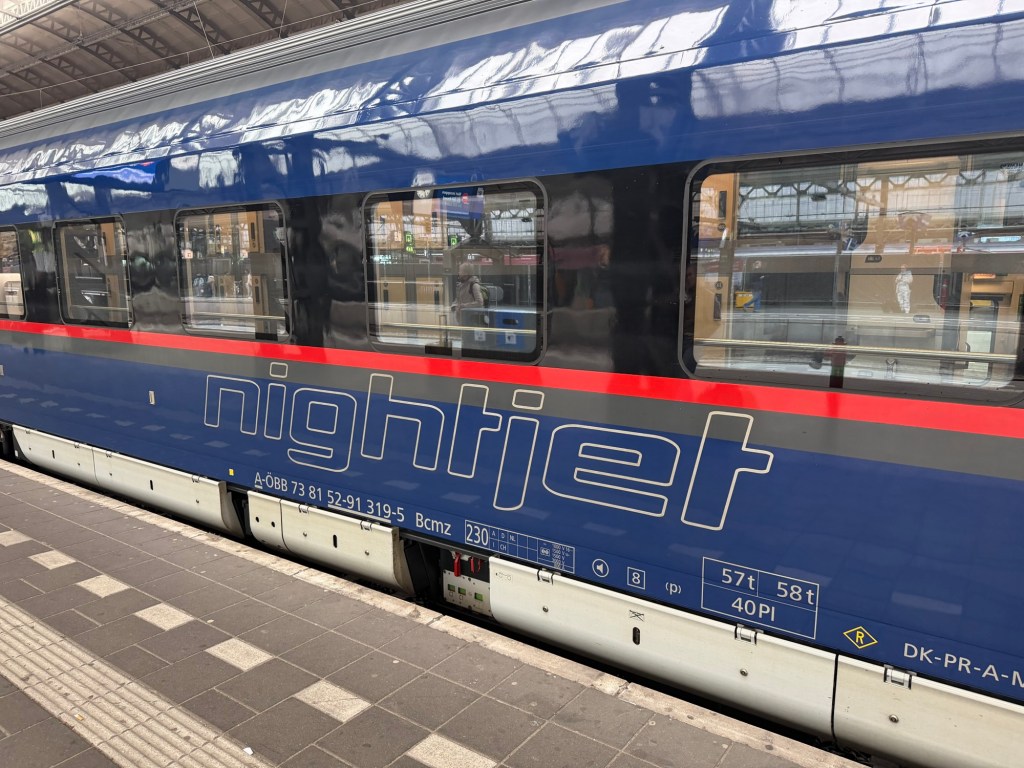
We chose a new “experience” for our overnight “sleeper”. In our four decades of train travel in Europe , we’ve had three distinct experiences with “sleepers”. The first was many years ago and was a (nice) two bed compartment with its own bath. The second and most frequent for us have been couchettes – there are usually 4-6 in a compartment (depends on what you pay) There were also couchettes on this train. Luggage storage in them is underneath lower bunks or an overhead rack. It’s a place to lie down and if there are actually 6 in one compartment, it can be really crowded (I’ve sometimes “slept” with my luggage) . This is the third type of experience on a sleeper for us; we had what’s termed a mini cabin on Nightjet. I’ll call them sleep “pods”, as mini cabin is a bit generous for the space. Each pod was (LxWxH 190 x 63.5 x 90 cm) or in old math: 6.2’ long, 2.1’ wide, 3’ in height. They were 2 high , with luggage storage in the middle (those steps you see in the middle luggage storage area is where you step to go to the upper pods), with 2 more pods on the right hand side. Of the three types we’ve tried , this is second “best”. It was pretty new, and compartment was close to the bathroom (important when you get old 😉) . Pro tip: always wear shoes when you go to use the bathroom on the train.
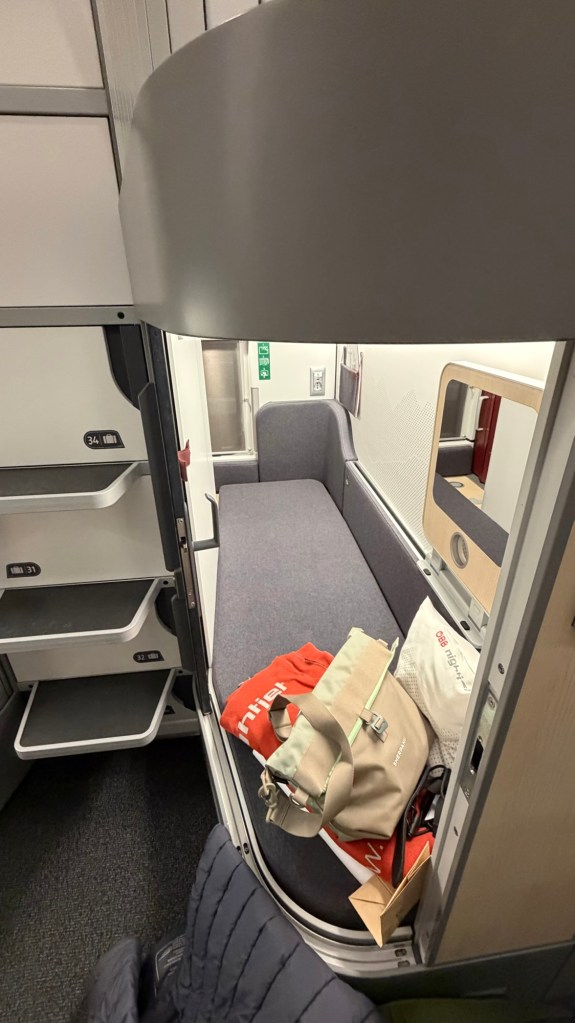
Definitely more modern (these looked pretty new), the mini cabins have lockers for hand luggage (max. 40×55 x 23 cm – our suitcases just barely fit ) and shoes (max. 18 x 57 x 15 cm) next to each mini cabin and use the supplied NFC cards (tap on panel next to your pod to unlock ) with secure locking of every compartment. The mirror is a fold down table and at the head of the compartment, if you’re traveling as a couple, you can connect the adjoining mini cabins on the same level by unlocking and opening a small sliding door.
It’s a ~10 hour trip. As always, you need reservations for your destination, as all wagons in the train don’t necessarily go to the final destination (Amsterdam Centraal for us). The wagons usually arrive in sequential numerical order. I suppose because of the multiple stops along the way, the numbering wasn’t sequential, making finding your car a little more challenging, and there was no composition chart on trackside as there often is, to show which numbered wagons would be in which track section (so you know where to stand).
Before departure, the conductor came by to take our order for coffee or tea in the morning, but we were completely surprised that he never came by to check tickets, reservations or passports. You do need to scan a ticket QR code to get out of the arrival hall in Amsterdam though.
With more than an hour until arriving in Amsterdam , we started stopping at some suburban cities. The countryside is flush with the signs of spring, with trees leafing out and a few farmers out tilling their fields; in town the elm trees are blooming.
We added a little bit of funds to our OV-chipcaart for the subway to our hotel, as we had just a tiny bit remaining from our last trip here (not enough for one fare)
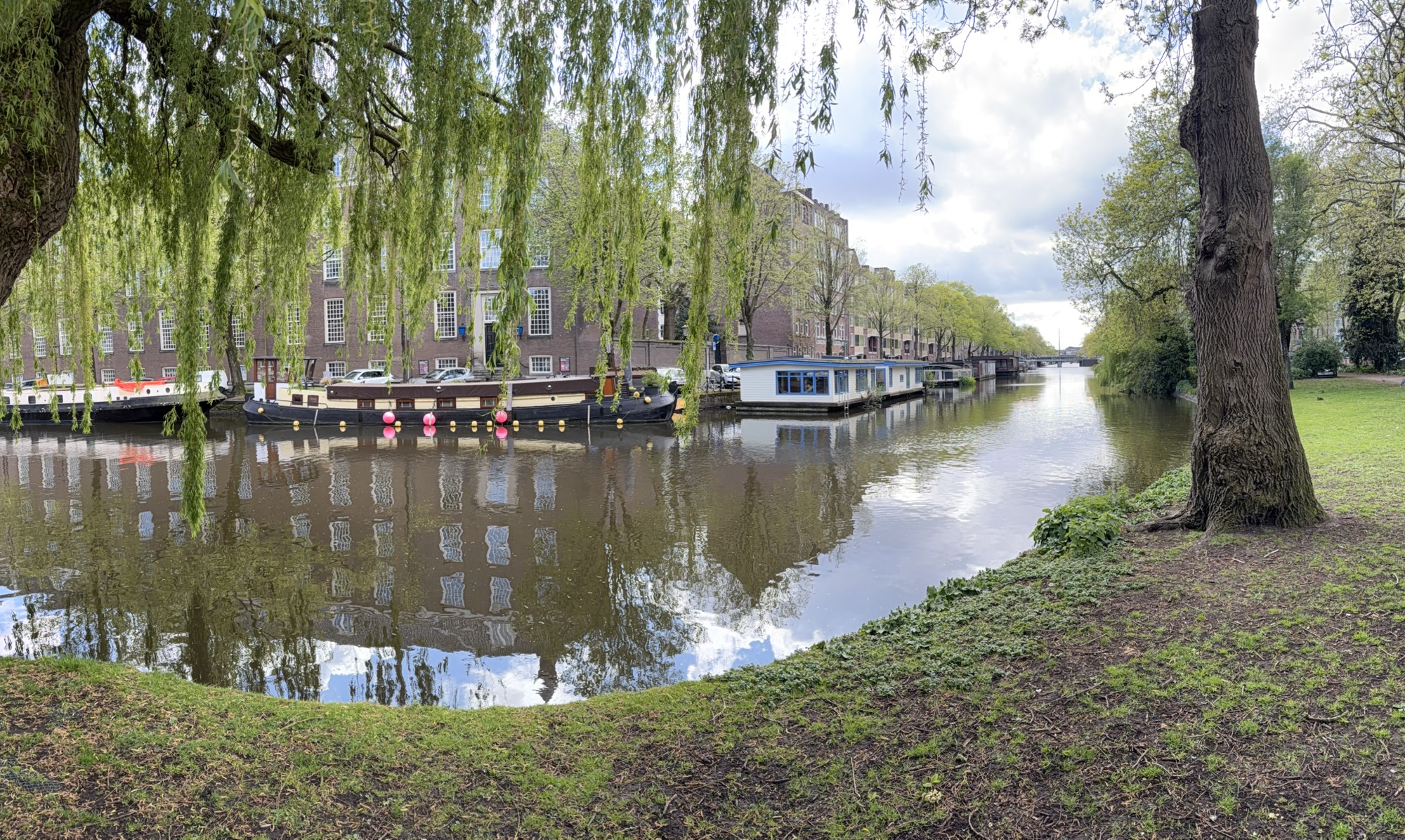
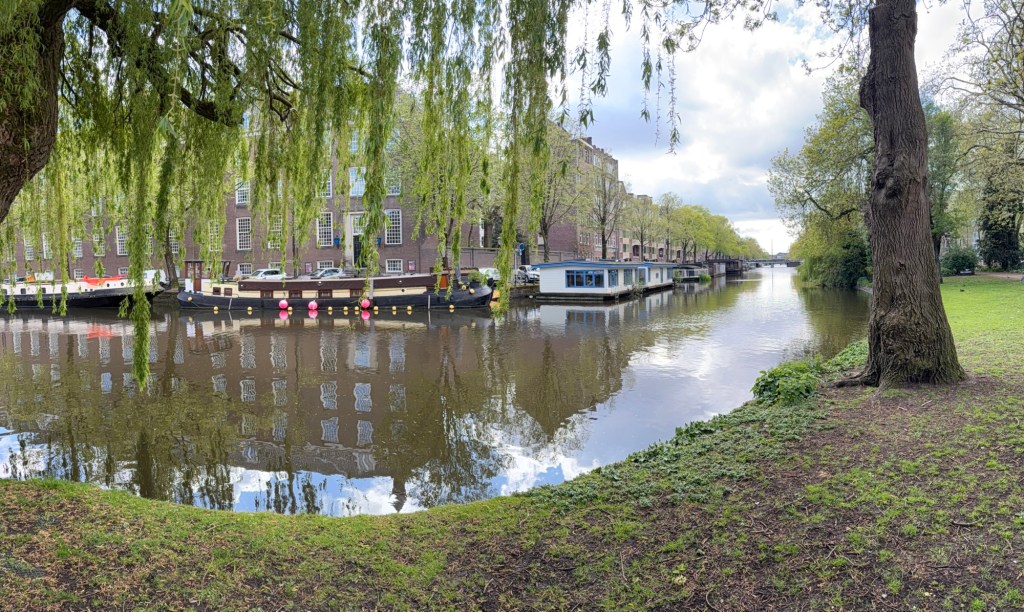
We came for Keukenhof, but enjoy the tulips and canals here in the city.


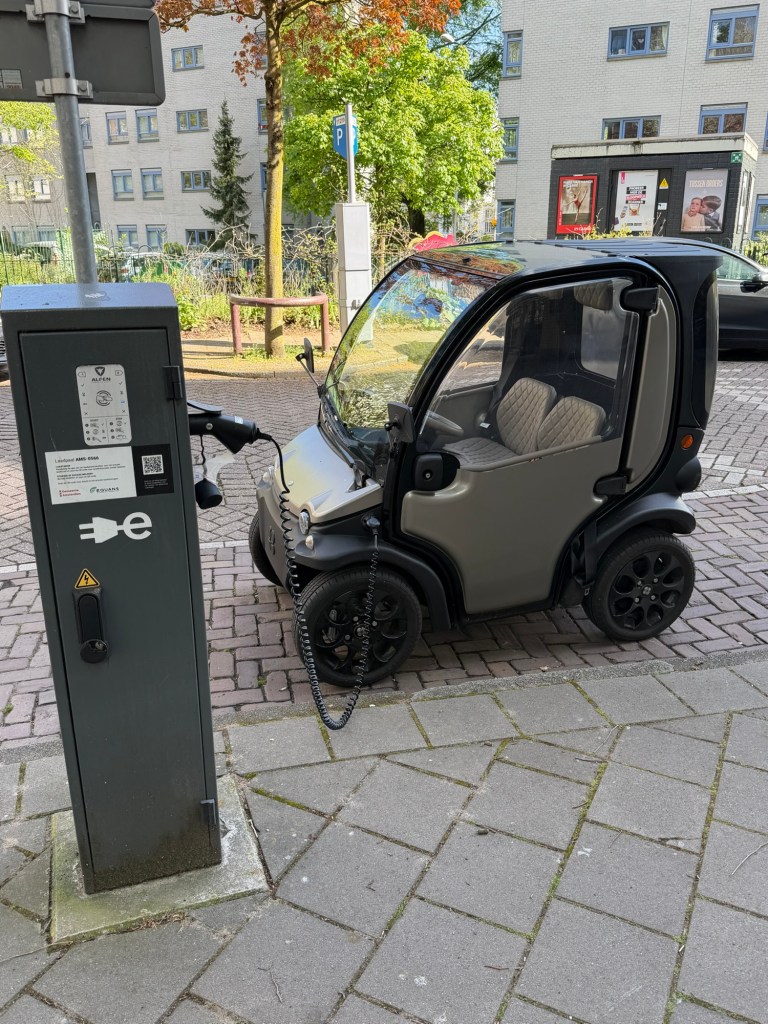
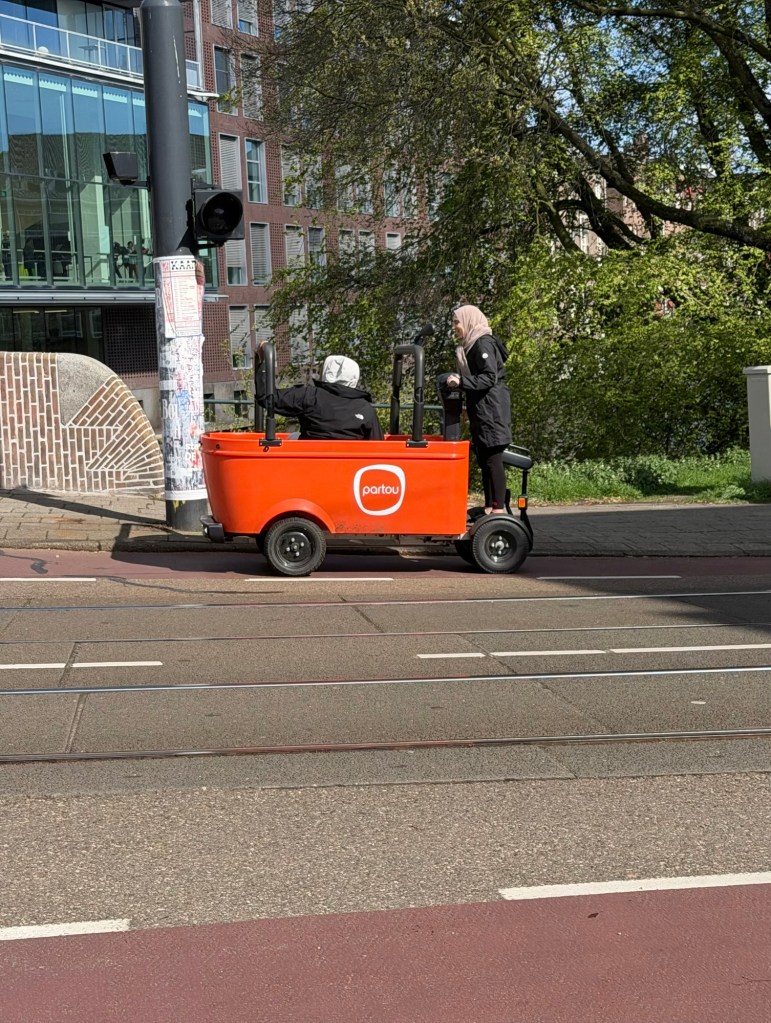
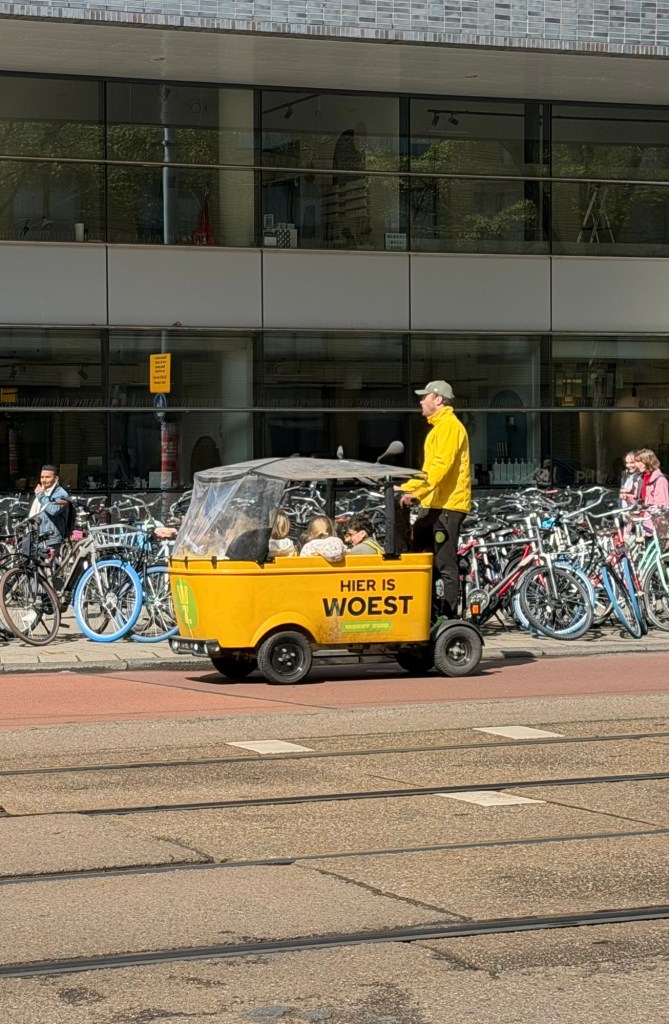
And, as always, the tiny little city cars, some with a motorcycle engine and some EV.