Trip 53
April 18, 2026
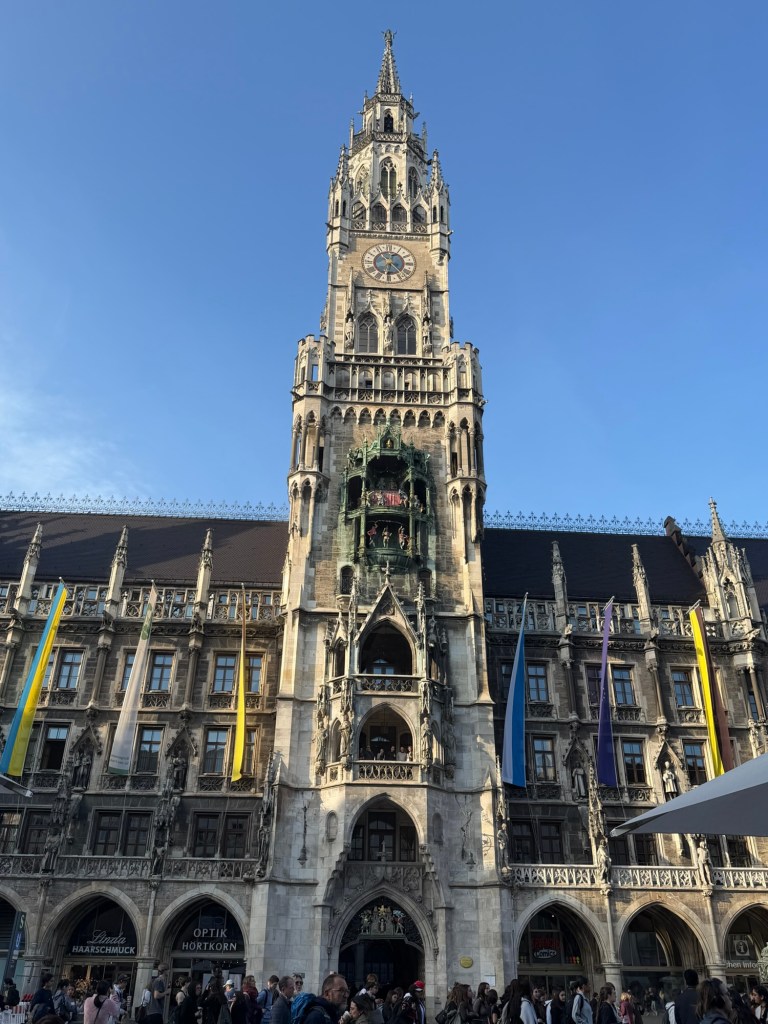
One bucketlist sight we’ve never gotten around to before today, either because it is not open every day, forgot about it, or had other places to see, was the tour of the Neues Rathouse (city hall) and the law library (Juristische Bibliothek) .
The tour (in English) is limited in opening hours, with times just on Saturday and Sunday. Ours started at 13:30 and the guide was very informative.
The Neues Rathaus was started at a time when Munich’s population was rapidly expanding, which was actually the reason why part was built with brick (the right hand side, built 1889-1892), while when the left hand side was added (1898-1905), doubling the size, was built with limestone blocks, something I’d never noticed when looking at the building. Munich experienced explosive population growth. The population of Munich was only 24,000 in 1700, but it doubled every 30 years. During the 1800s, it transformed from a provincial town of roughly 40,000–50,000 residents into a major European city with 100,000 in 1850 to over 500,000 people by 1900. The population increased fivefold in the half-century after 1850 alone. The “Altes Rathaus” (old city hall, or what’s left of it) is across the square to the right.
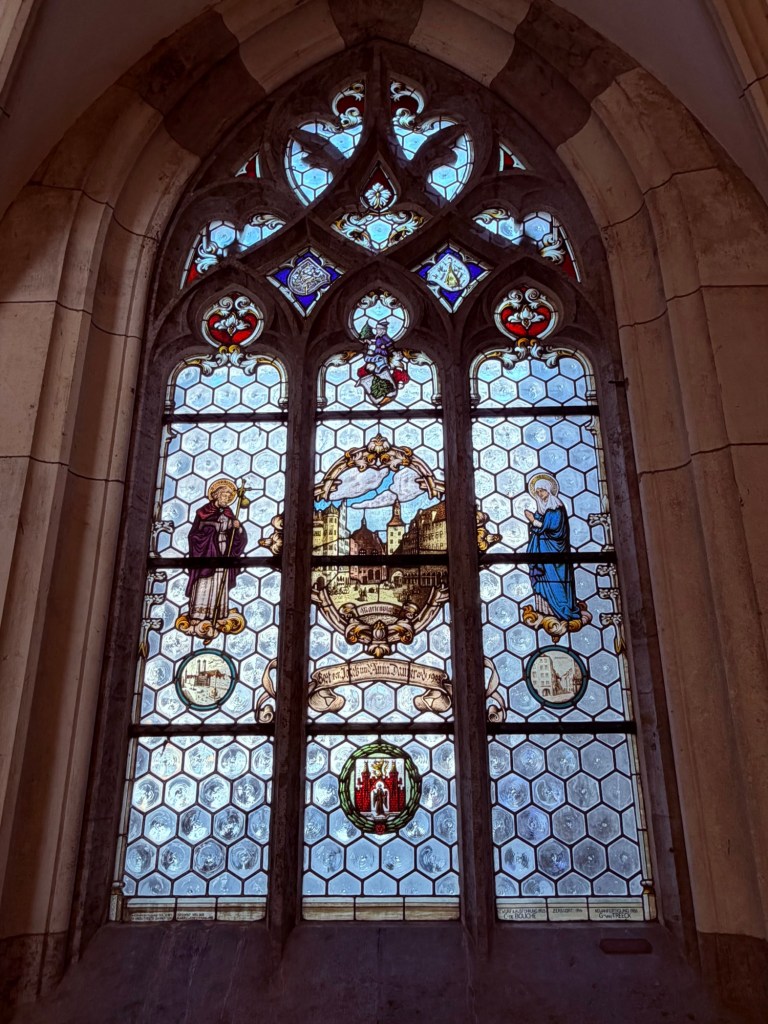
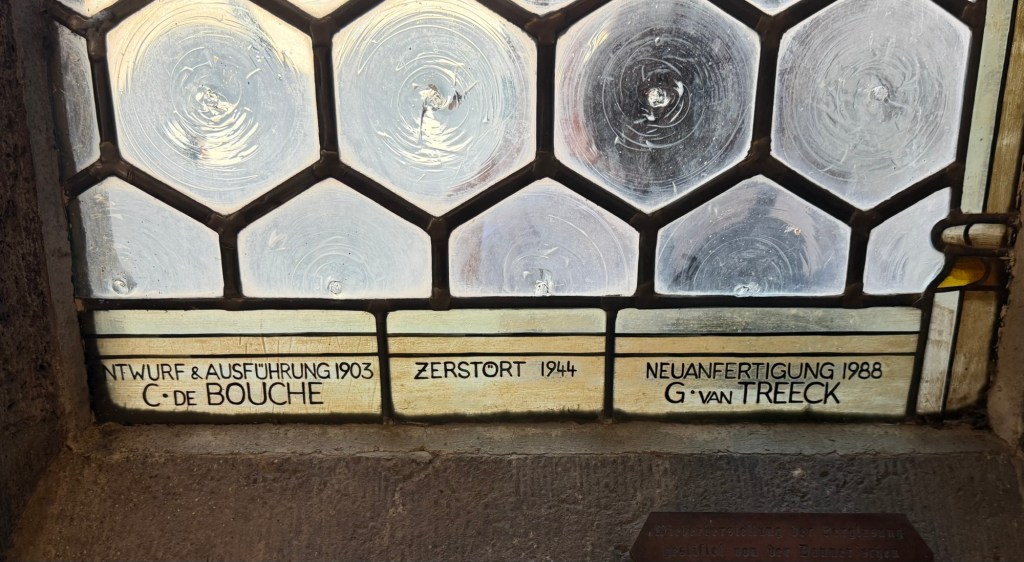
The city was heavily damaged from Allied bombing during WWII, though the Neues Rathaus was largely spared; all of the stained glass windows we saw were restorations/replacements made post-war. The Allied command made the Neues Rathaus their headquarters in April 1945 and gathered three former (non-Nazi ) mayors to discuss reconstruction of the city. The guide said the Allied commander actually suggested relocating the city elsewhere rather than reconstruction, though extreme proposals like this did not prevail. It’s indeed fortunate the mayors and planners gave the matter no thought , or the 860+ year legacy of Munich as it is today would have been lost.
We went up wide stone staircases in the central part of the building to three floors. The Neues Rathaus is a functioning city hall , but interestingly, has three mayor’s positions—a Lord Mayor (Oberbürgermeister) and two Deputy Mayors (Bürgermeister)—to ensure continuous administrative leadership and reflect the political balance of the city’s coalition government. The newly elected Lord Mayor comes from the Green Party, which overturned 4 decades of the SPD party dominance. Munich is typically governed by a coalition of political parties (currently a Green-SPD-Volt alliance). To reflect this, the three mayor positions are usually distributed among the coalition partners.
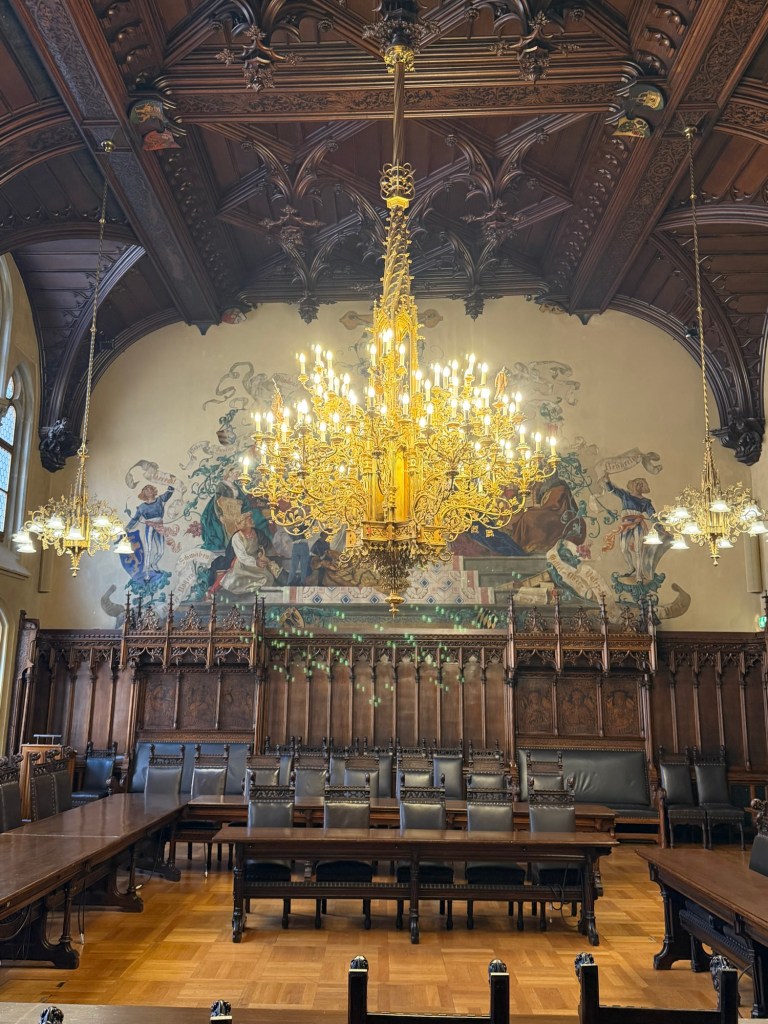
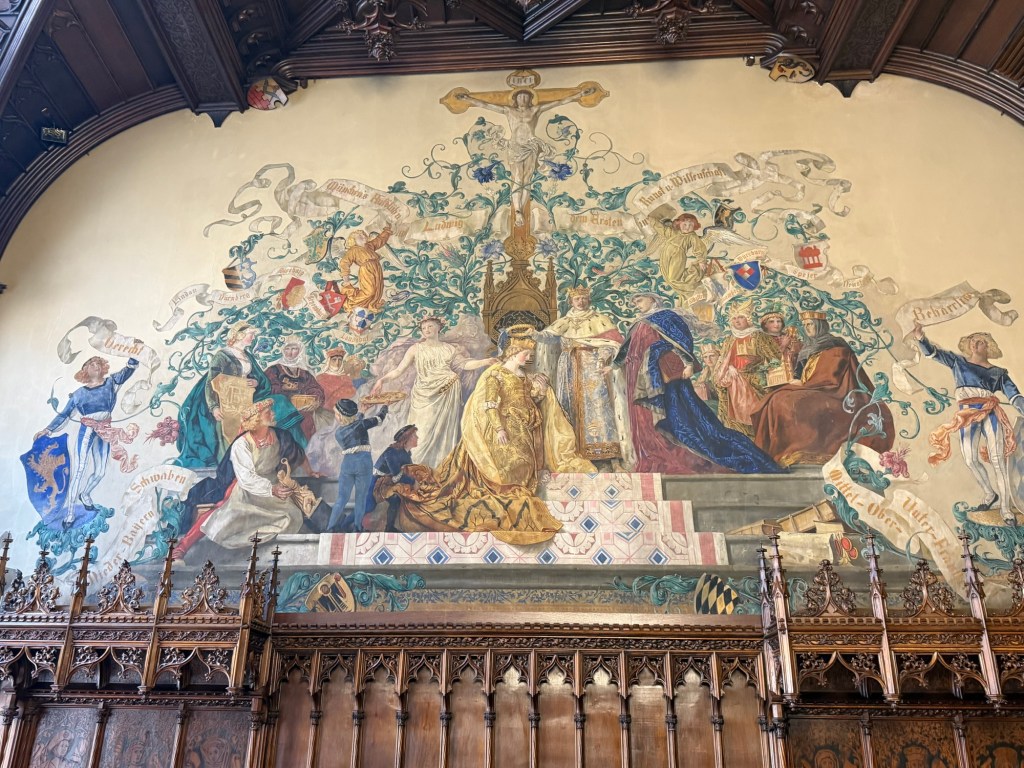
Mural on front wall of (Hauptpatronin of München, a figurative representative) is Jungfrau Maria (Patrona Bavariae) being crowned by Ludwig II
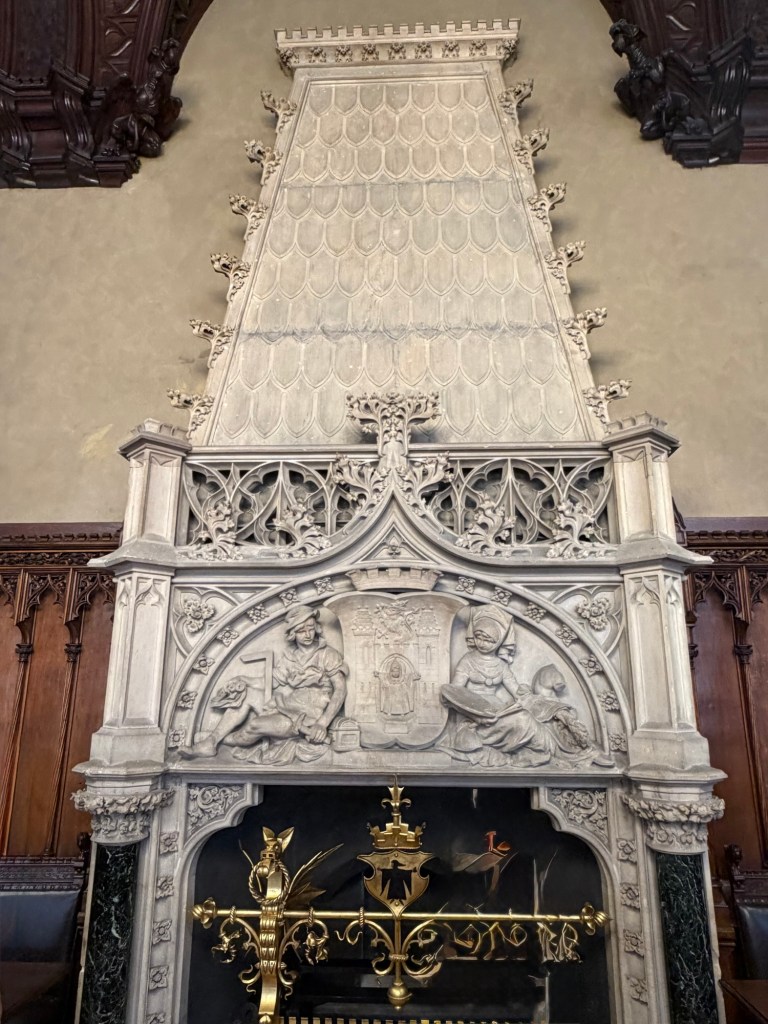
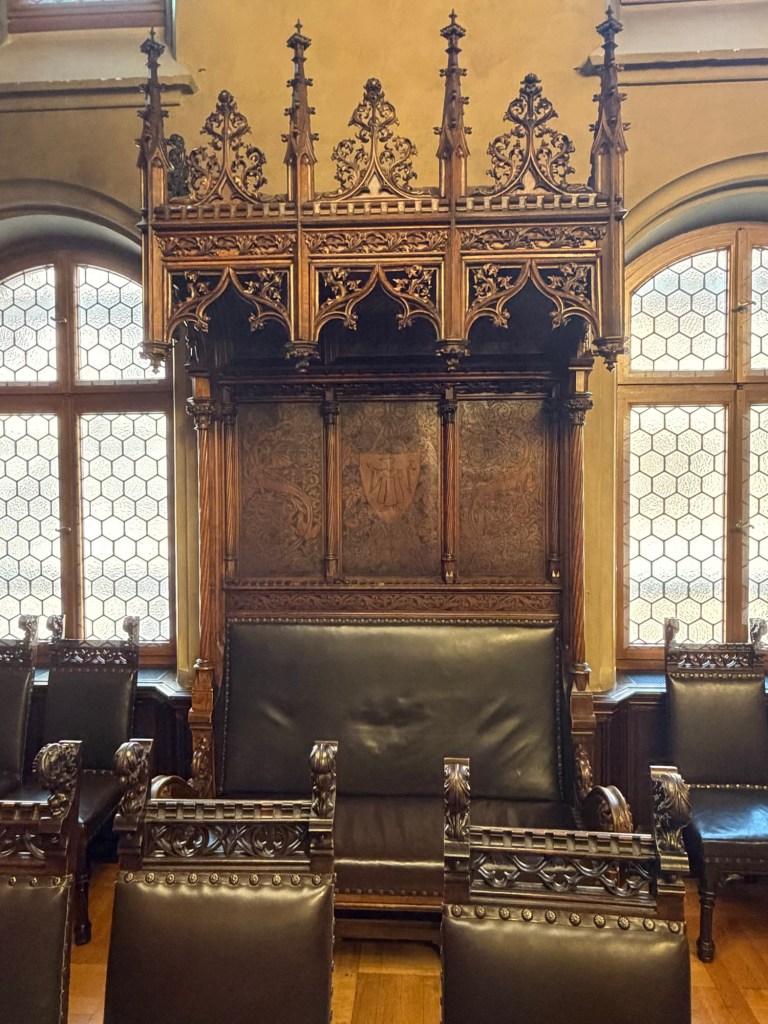
The actual meeting room for the three mayors and assembly representatives is much larger, furniture not ornate.
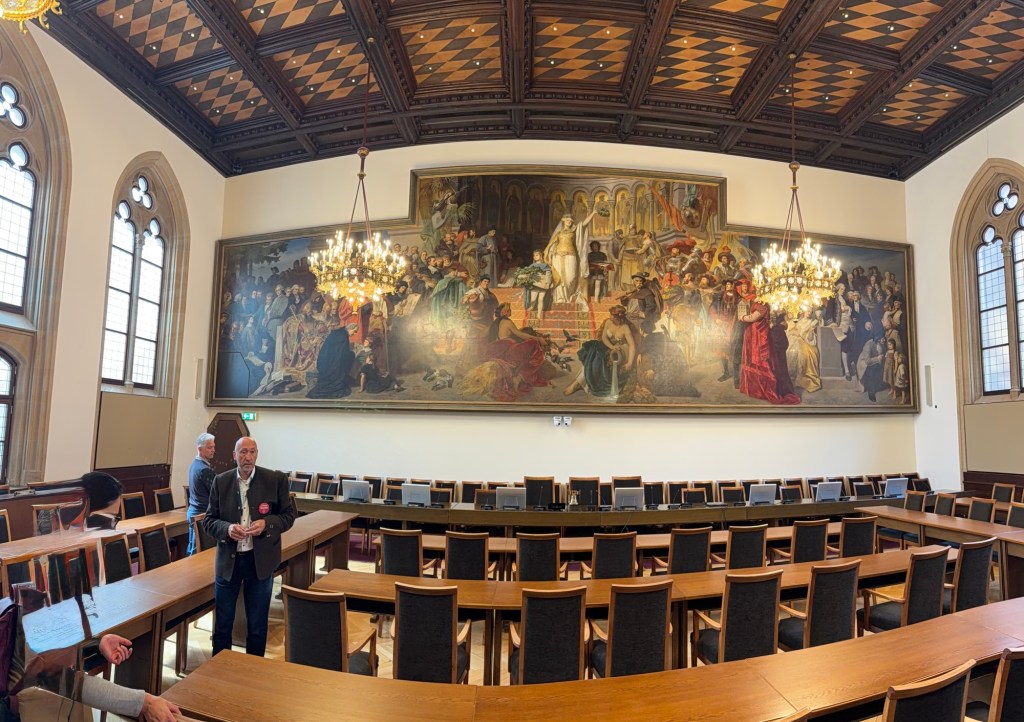
Such a large painting had to be sponsored to pay for it, but the Wittelsbach family who helped pay for it, got relegated to the shadows.
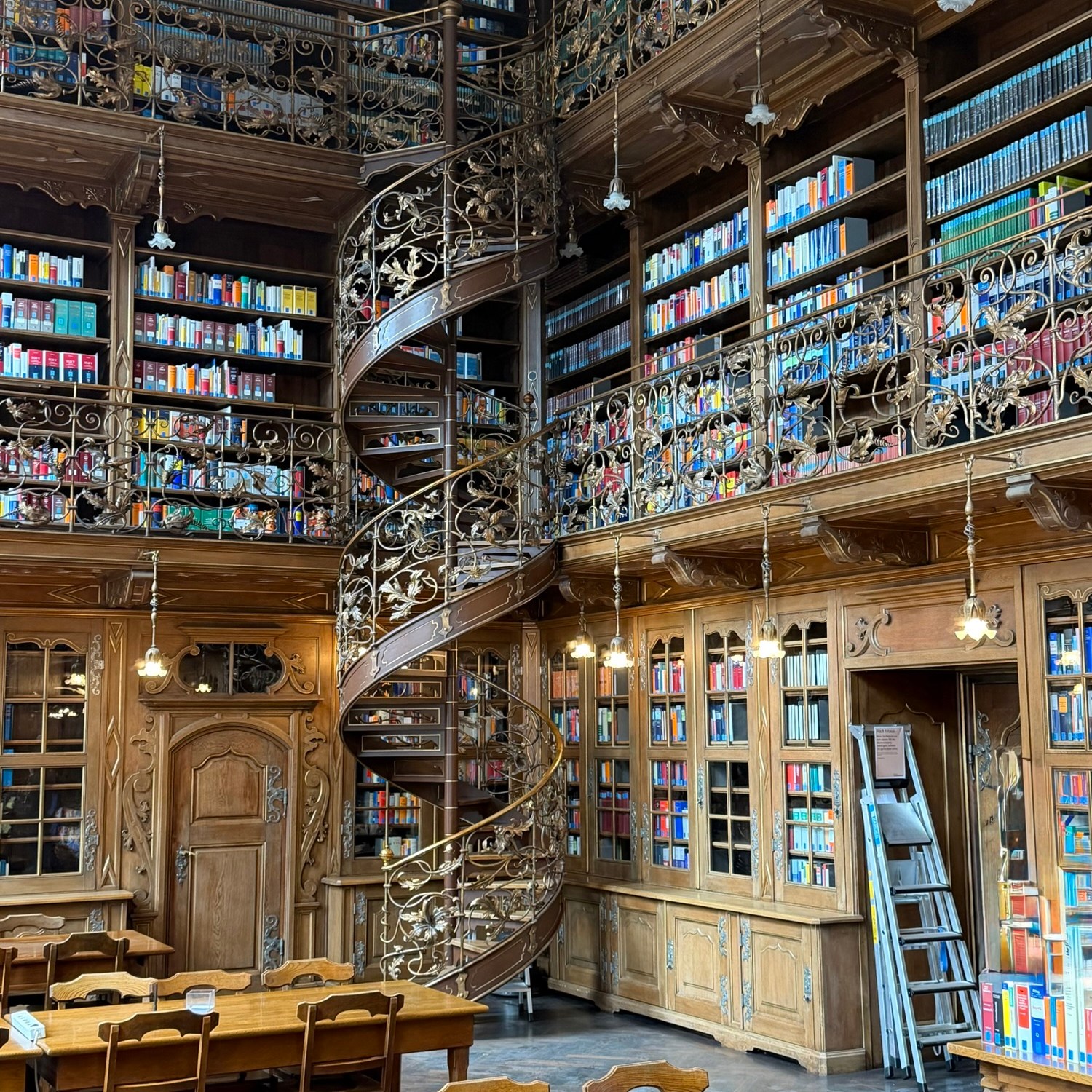
For us, the highlight of the tour was the law library. This library is not public and is used by university student studying contemporary law (so no old law books in Latin), but the two story library is lavish in its Art Nouveau style , contrasting with the gothic style of the Rathaus itself. The library was constructed during the project’s third phase and was completed in 1906.
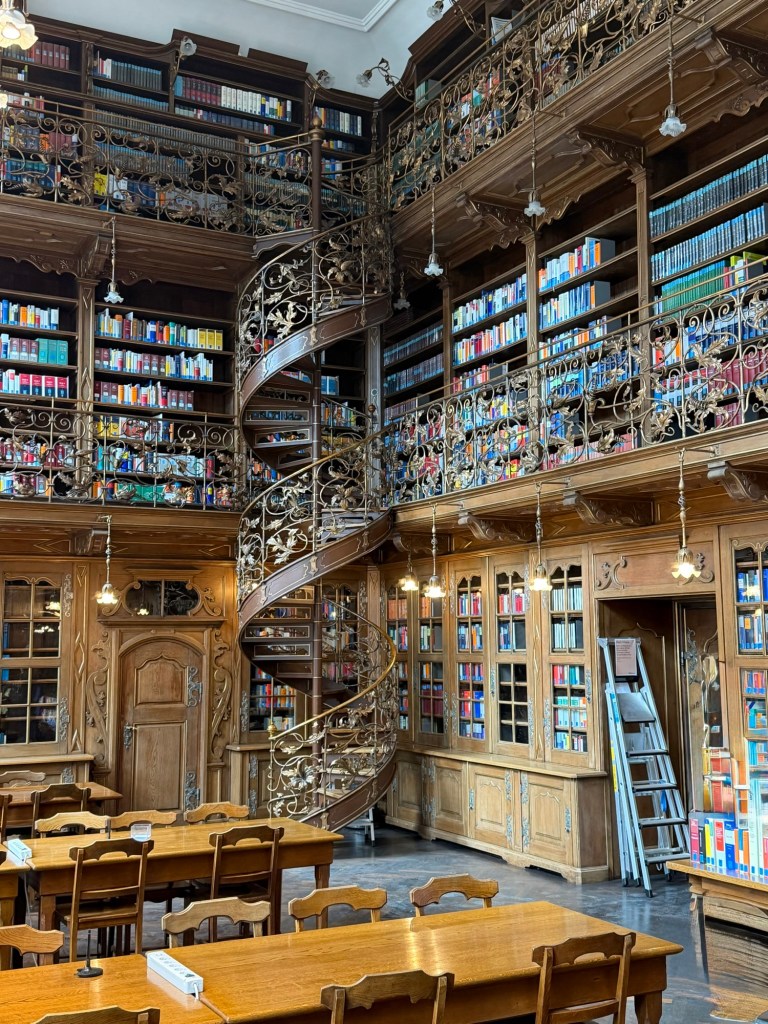
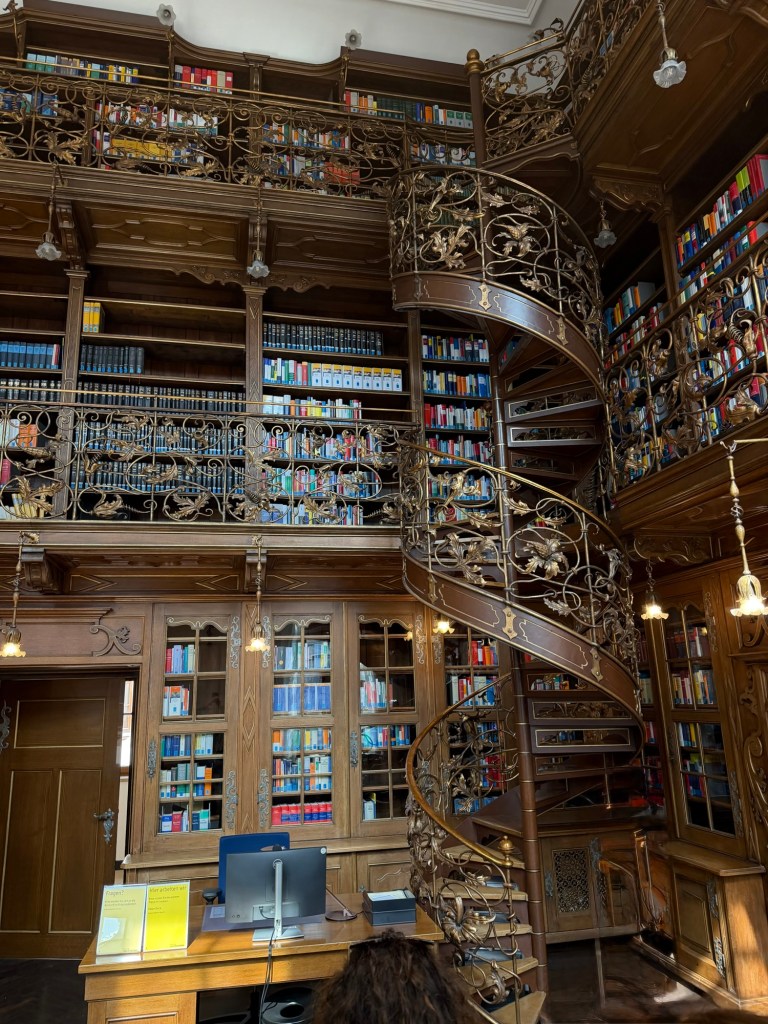
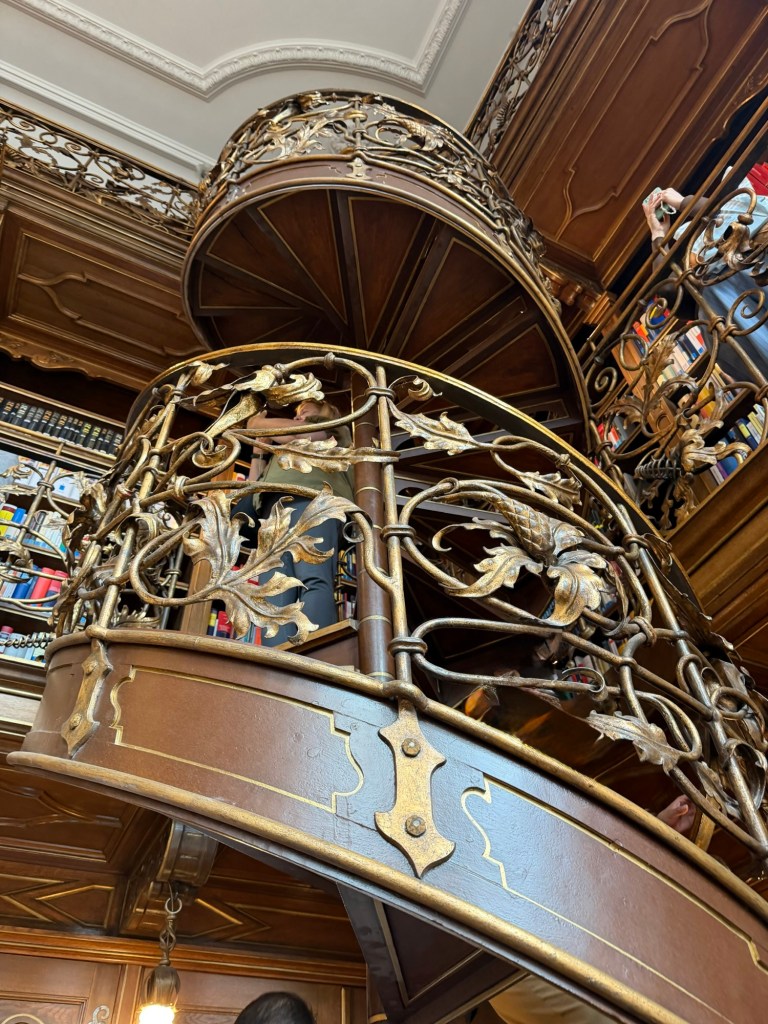
Remarkably, you are permitted to climb this beautiful staircase.
The final part of the tour took us out to the balcony that overlooks the square below. For over fifty years, FC Bayern Munich have celebrated championships by greeting their fans from the balcony of the Neues Rathaus.
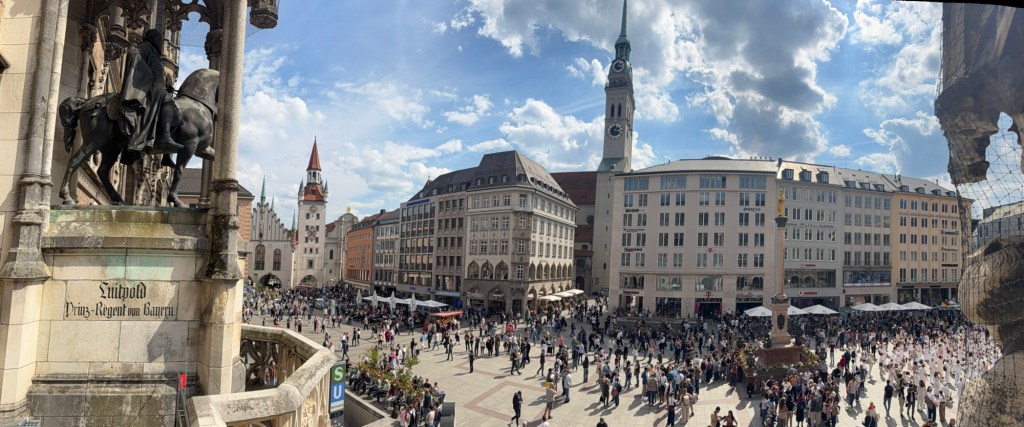
There is so much more that I haven’t included, especially with respect to some of inner rooms with stained glass windows that depict history throughout Munich’s centuries.
If you have the time and the tour schedule availability meets with yours, definitely make a point to go on this tour.
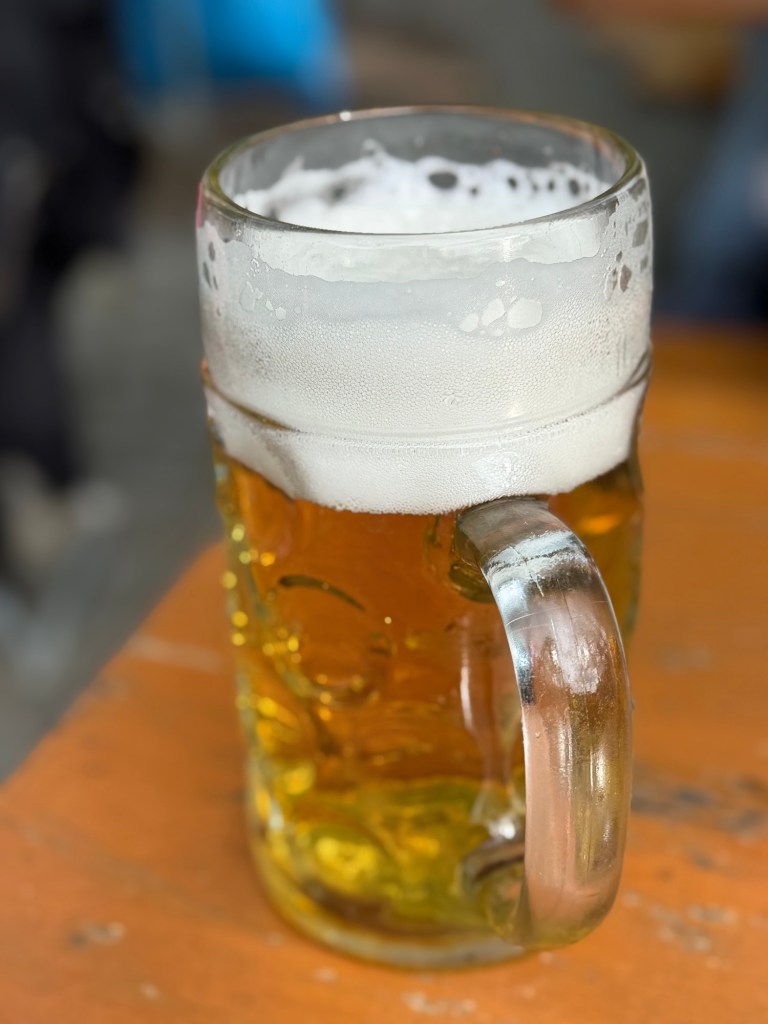
We finished the day at the Viktualienmarkt , where, being Saturday and a beautiful afternoon, it was crowded! Not a barrier to getting noch ein Maß though.


One thought on “Munich’s Neues Rathaus”