Trip 53
April 14, 2026
The Ringstrasse is a wide avenue that circles the old central part of Vienna and features many grand and imperial structures from the 18th and 19th century. It was constructed after Emperor Franz Joseph I ordered the demolition of Vienna’s obsolete city walls in 1857, the Ringstrasse is a 5.3-kilometer (3.3 miles), ring-shaped boulevard built between the 1860s and 1890s.
The project, spanning 1860-1890, was designed to showcase the grandeur of the Habsburg Empire, funded by the sale of land for public buildings and luxury private palaces. The buildings were designed to evoke historical periods that matched their function (such as Neo-Gothic for town hall, Neo-Renaissance for museums).
The width of the boulevard was both architectural and strategic- the width ensured, that like the Grand Boulevards of Paris, the rabble couldn’t construct barriers to block the road and the avenue was wide enough for his army to march down (one of their barracks was located just off one part of the Ring. )
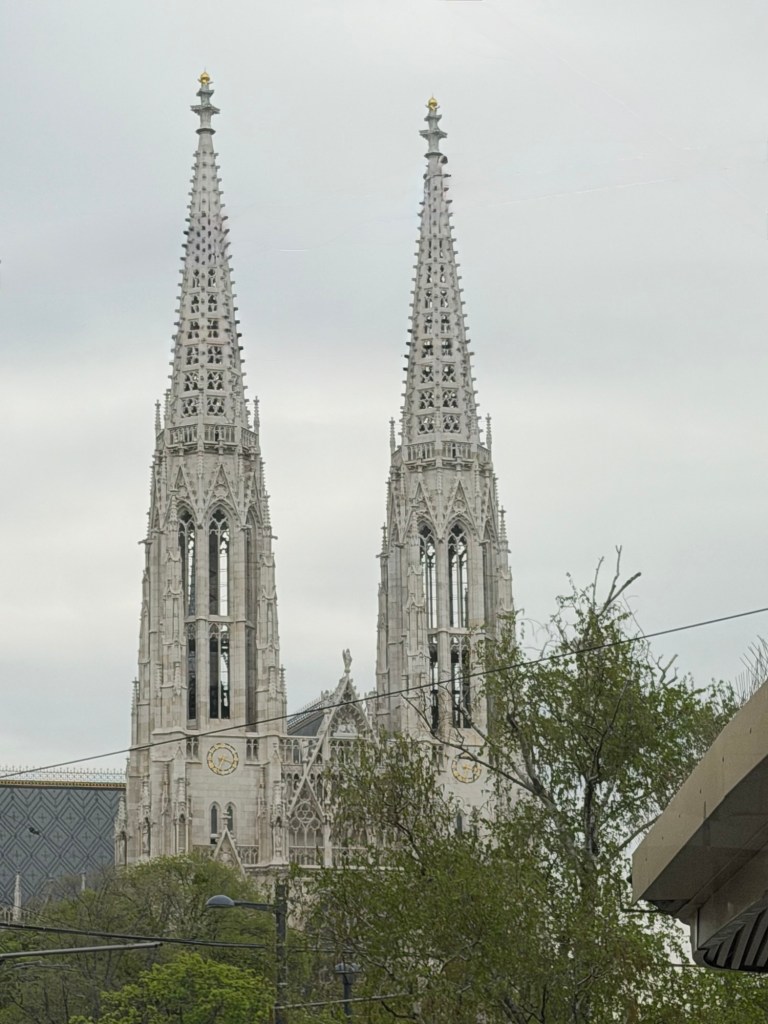
Some of the most iconic buildings along the route are: Vienna State Opera (Opernring); Museum of Fine Arts & Natural History Museum (Burgring); Parliament Building (Dr.-Karl-Renner-Ring); Vienna City Hall (Rathausplatz) – we visited during a Christmas market trip ; Burgtheater (Universitätsring) ; University of Vienna (Universitätsring); Votivkirche (Rooseveltplatz/Schottenring)
To walk this distance would be daunting, so we took the Wiener Linien tram, on Line 2 starting at the Opera, changing to Line 1 at Schwedenplatz (where the ring runs along the Danube River. The grand total for the two of us was 3.20€ .
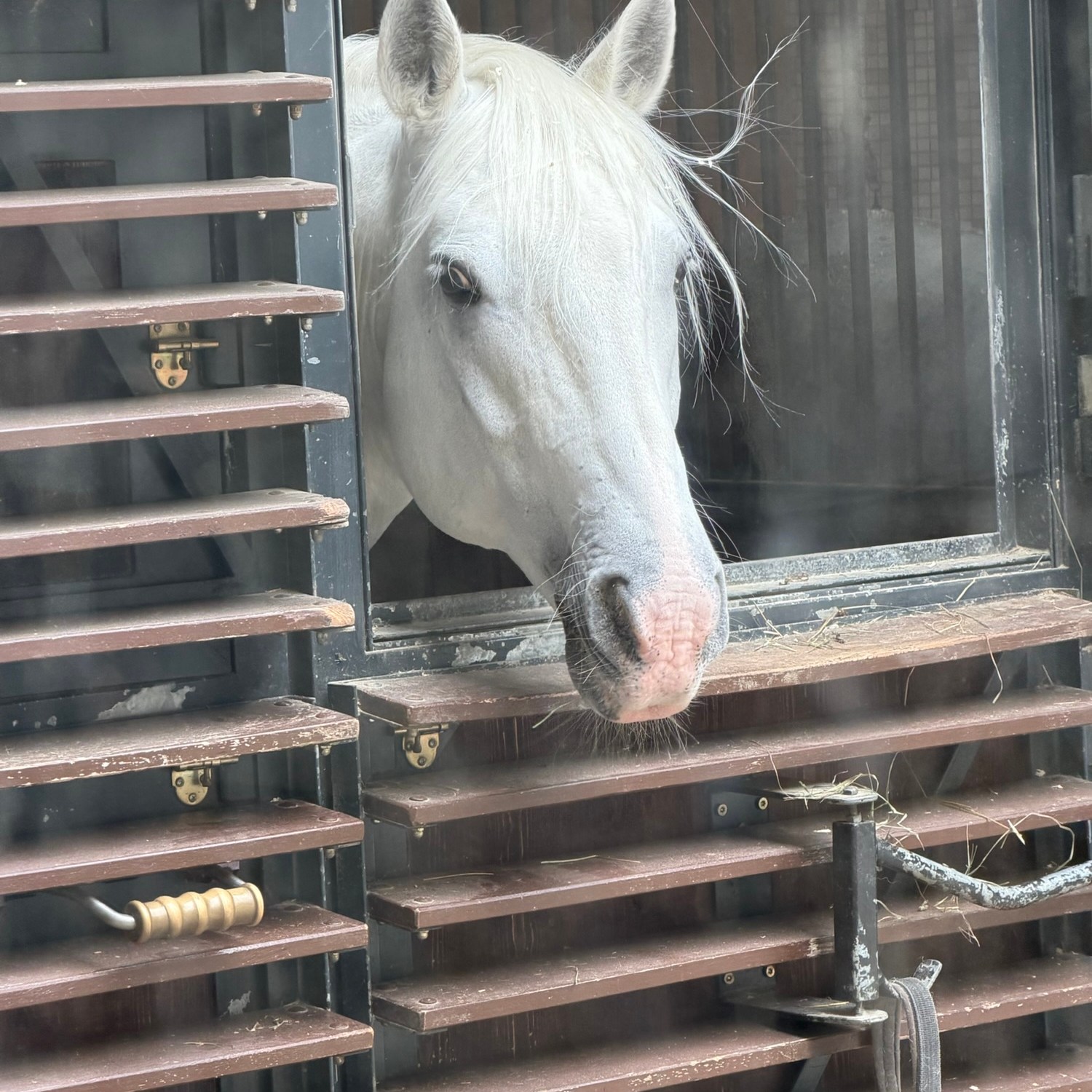
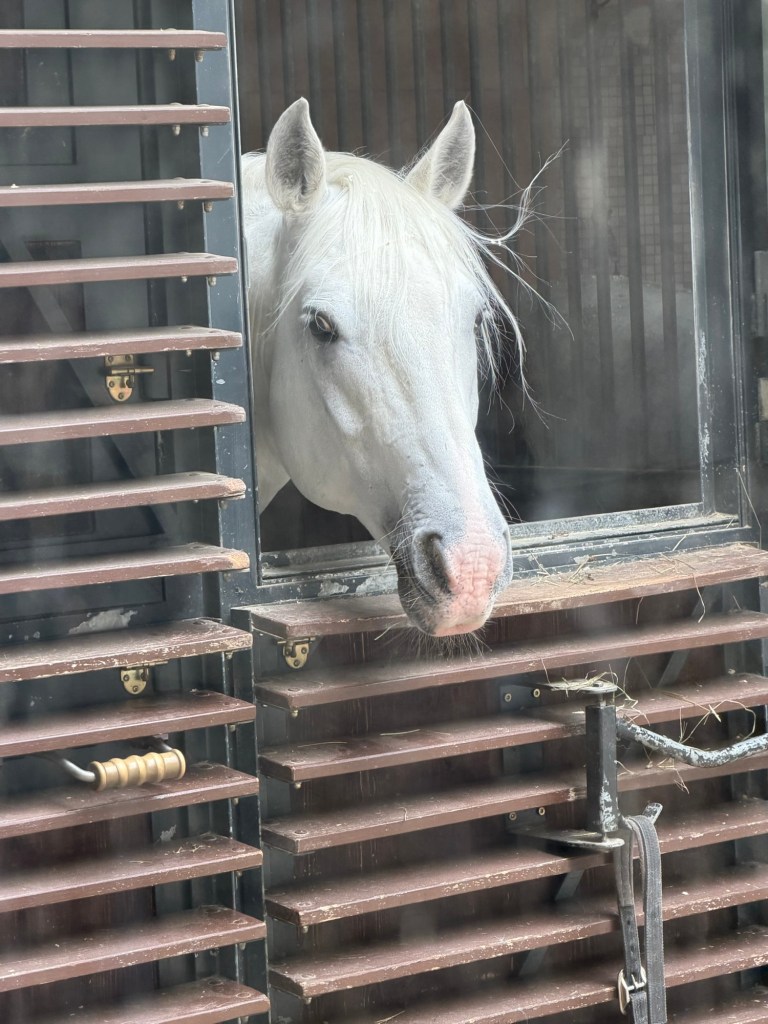
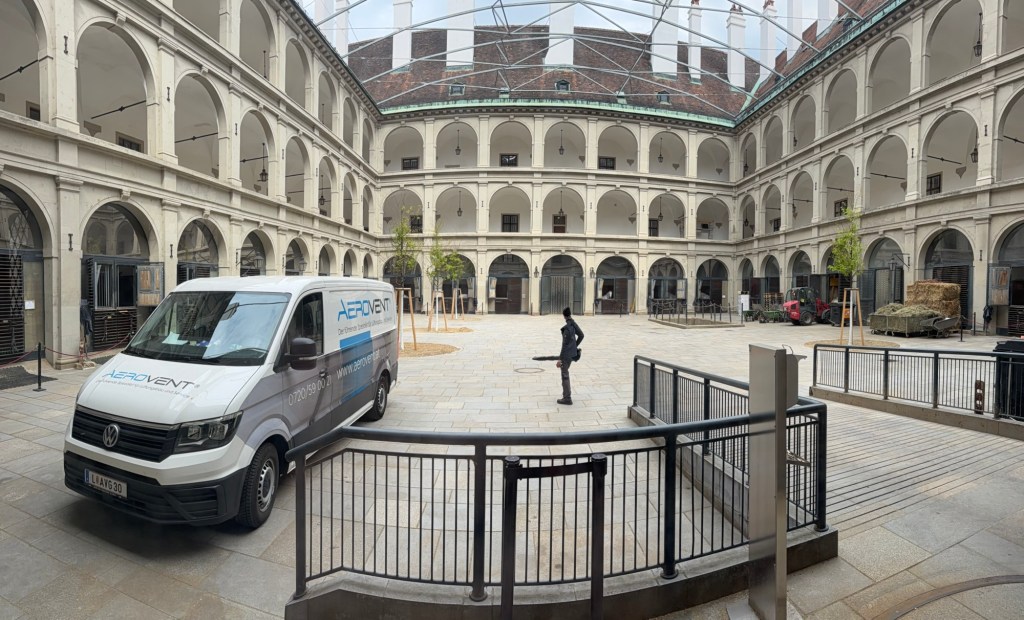
But prior to walking to the Opera, we pass the Spanish Riding School stables.
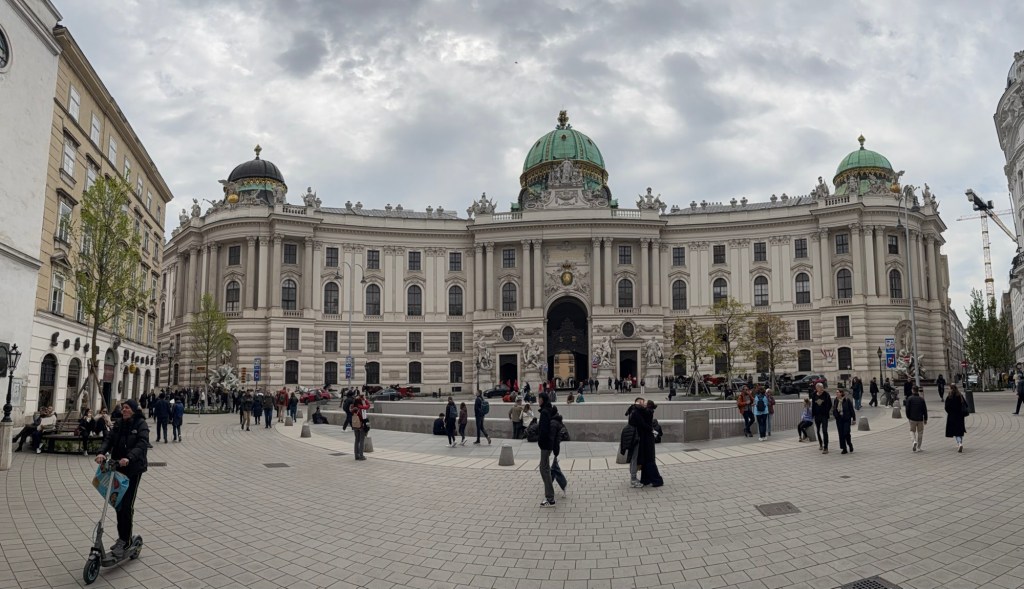
Continuing on our way to the Opera, we’ll pass the Albertina Museum and in a small park across the street are memorials against the horrors of war , called the Gates of Violence, unfortunately, ever present within our society, especially today.
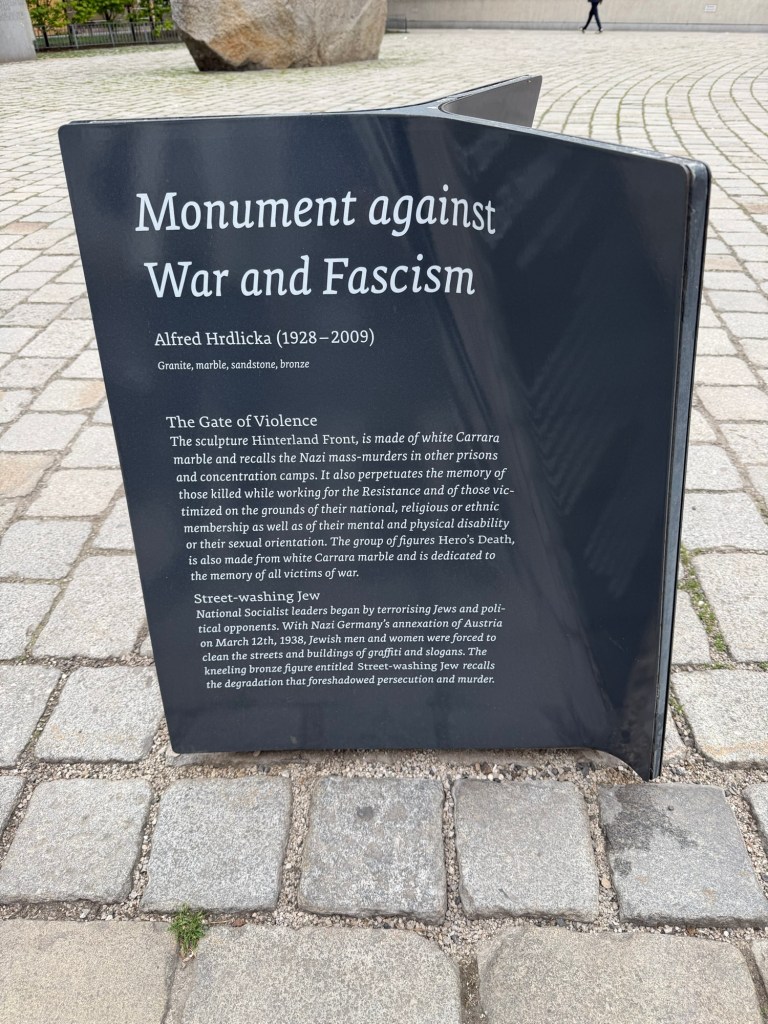
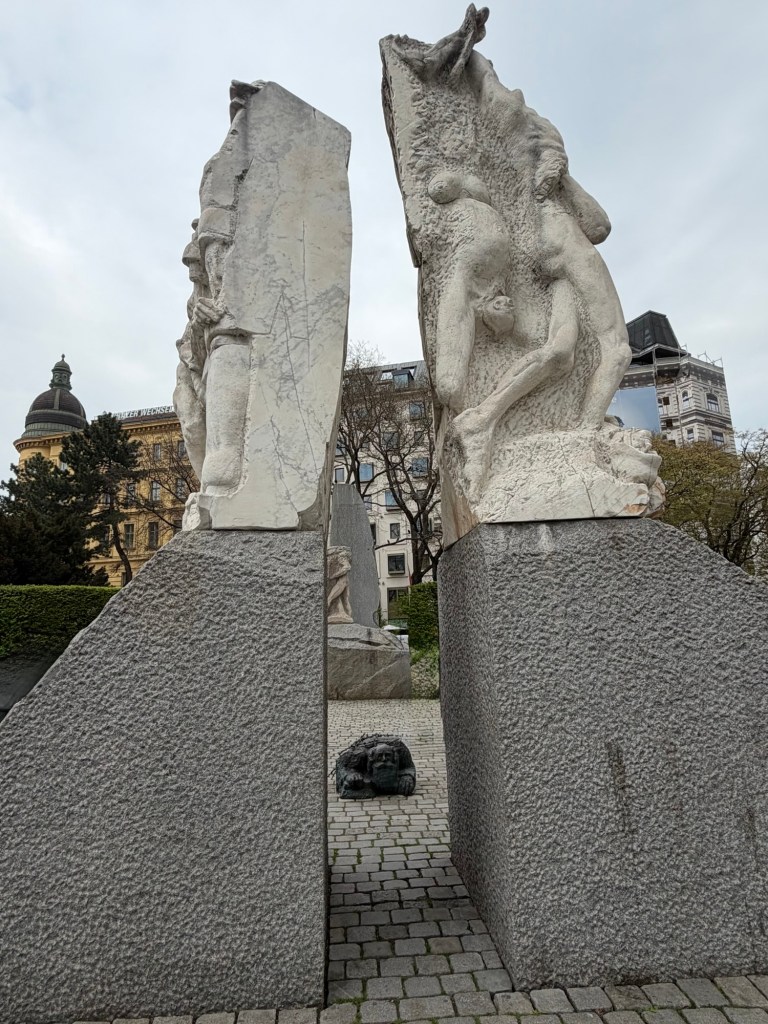
We listened (audio podcast) to a narration of a ring tour by Rick Steves (YouTube video), which tries to align the Ringstrasse stops with the sights you’ll see (or quickly pass (YouTube) by) along the route (map).
As we turn one corner, there’s an observatory, still standing and in (different) use, built under orders from Franz Josef.
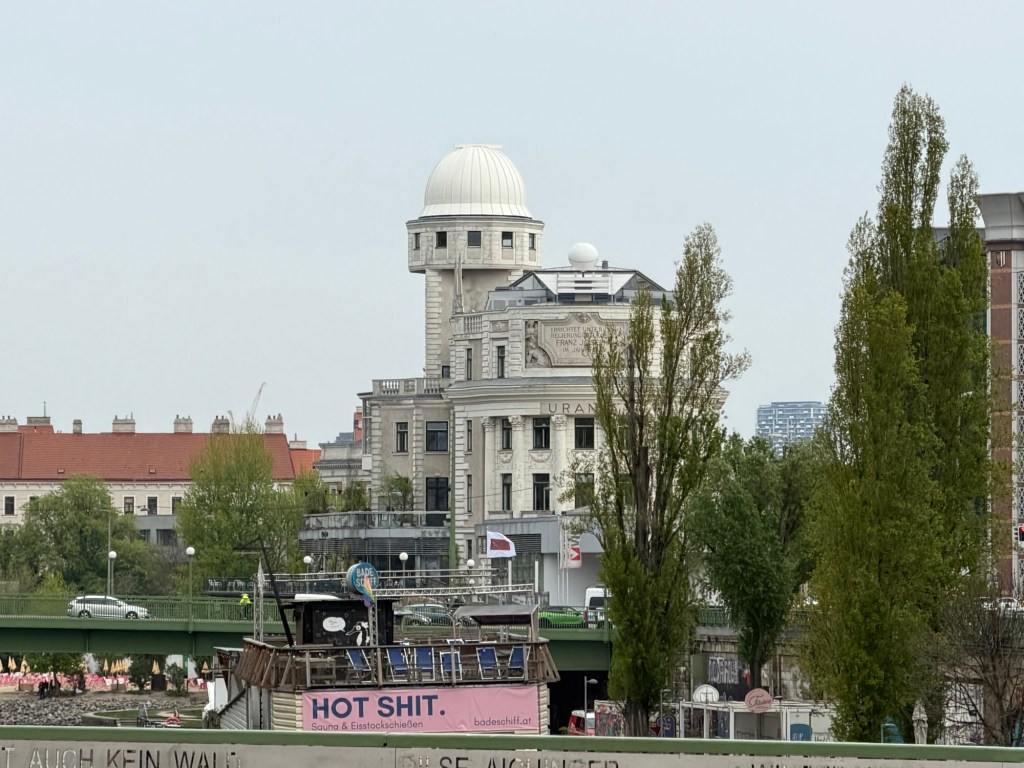
There’s a lot to see, so we actually went ‘round twice, including getting off at one point to walk across the bridge over the Danube River. Being a “ring” , you get back on Tram 1 to come back to where you started.
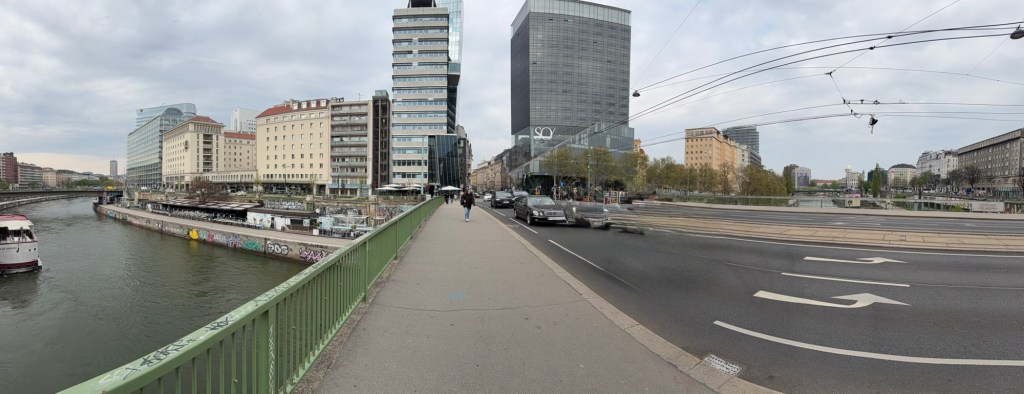
In 1998, we left from Vienna and took a hydrofoil down the Danube to Budapest. It was a unique trip, but the scenery was not especially dramatic and you had to stay inside the boat. Sadly, they no longer run the hydrofoil this route.
One last stop At Trzesniewski before we leave tomorrow.

We’ve visited Vienna at least a half dozen times and each return brings new discoveries and the pleasures of revisiting some of our favorites. The architecture, the art, the food, the history will all bring us back again.

