Trip 45
January 21, 2024
Today we’re off on a day trip to Toledo, about 36 miles and the same in travel time on the high speed train. We had to rush a bit to make the train we’d booked because the Metro was packed and one metro train was out of service, getting us to the train station 5 minutes before departure. Fortunately, coach 1, so we don’t have to walk the length of the train to board.
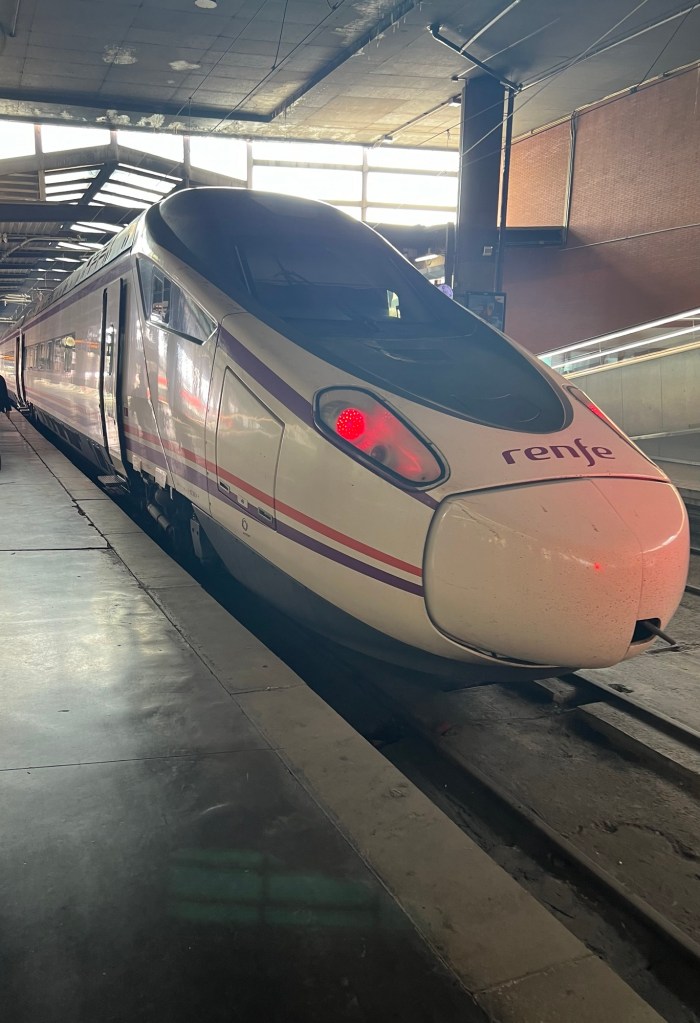
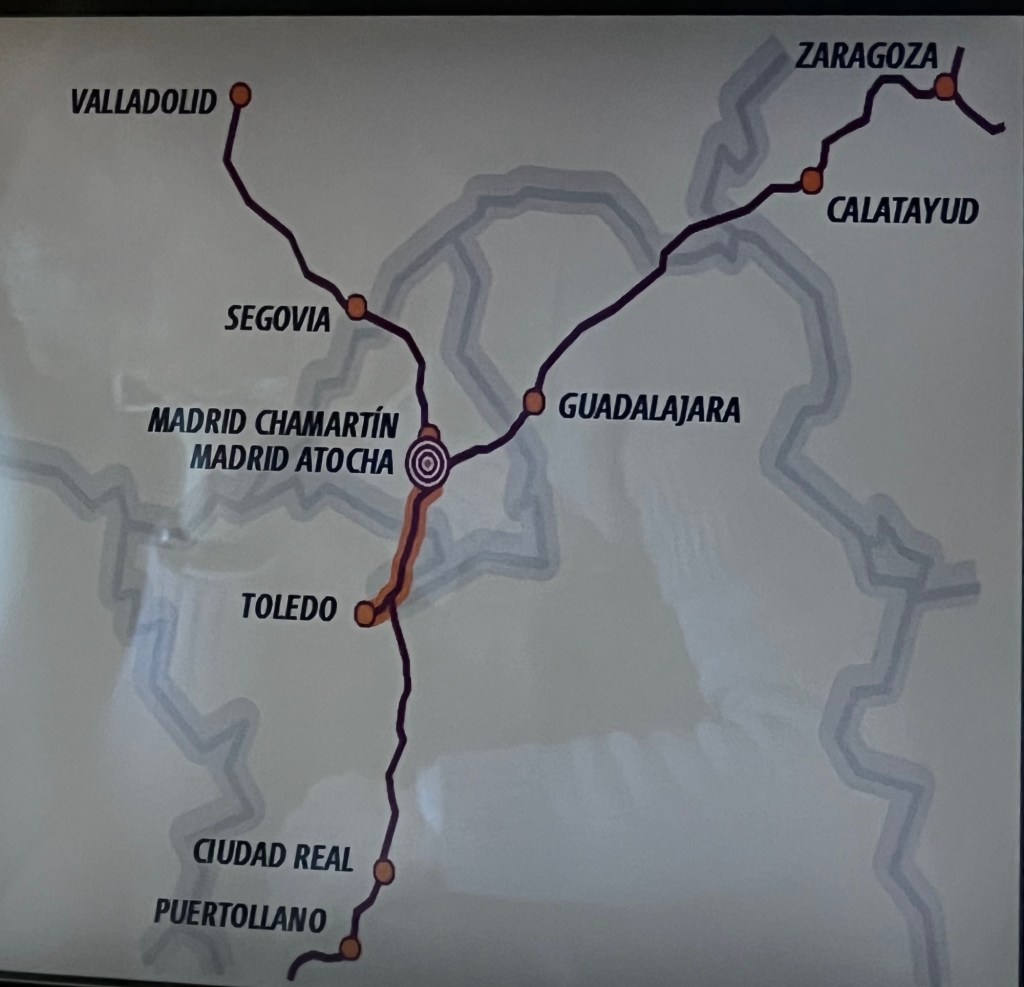
The train gets up to speed (137 mph) quickly. After getting out of urban Madrid, the surrounding area is more rolling than hilly, much more agricultural; soil is rocky, passing orchards of olive trees.
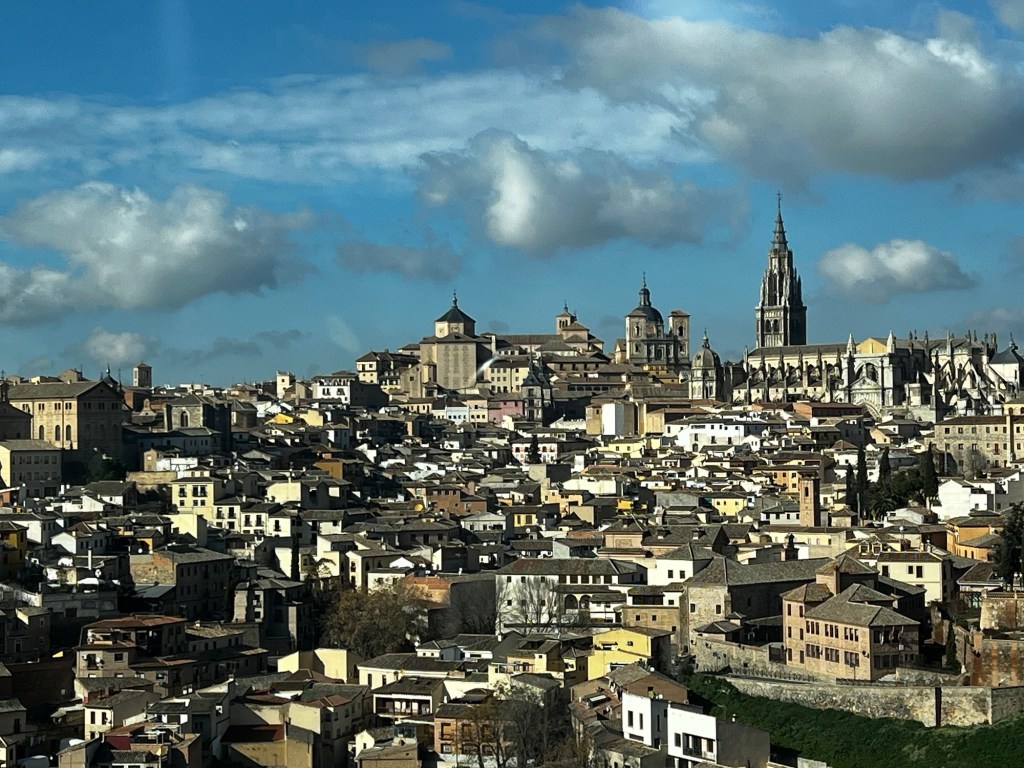
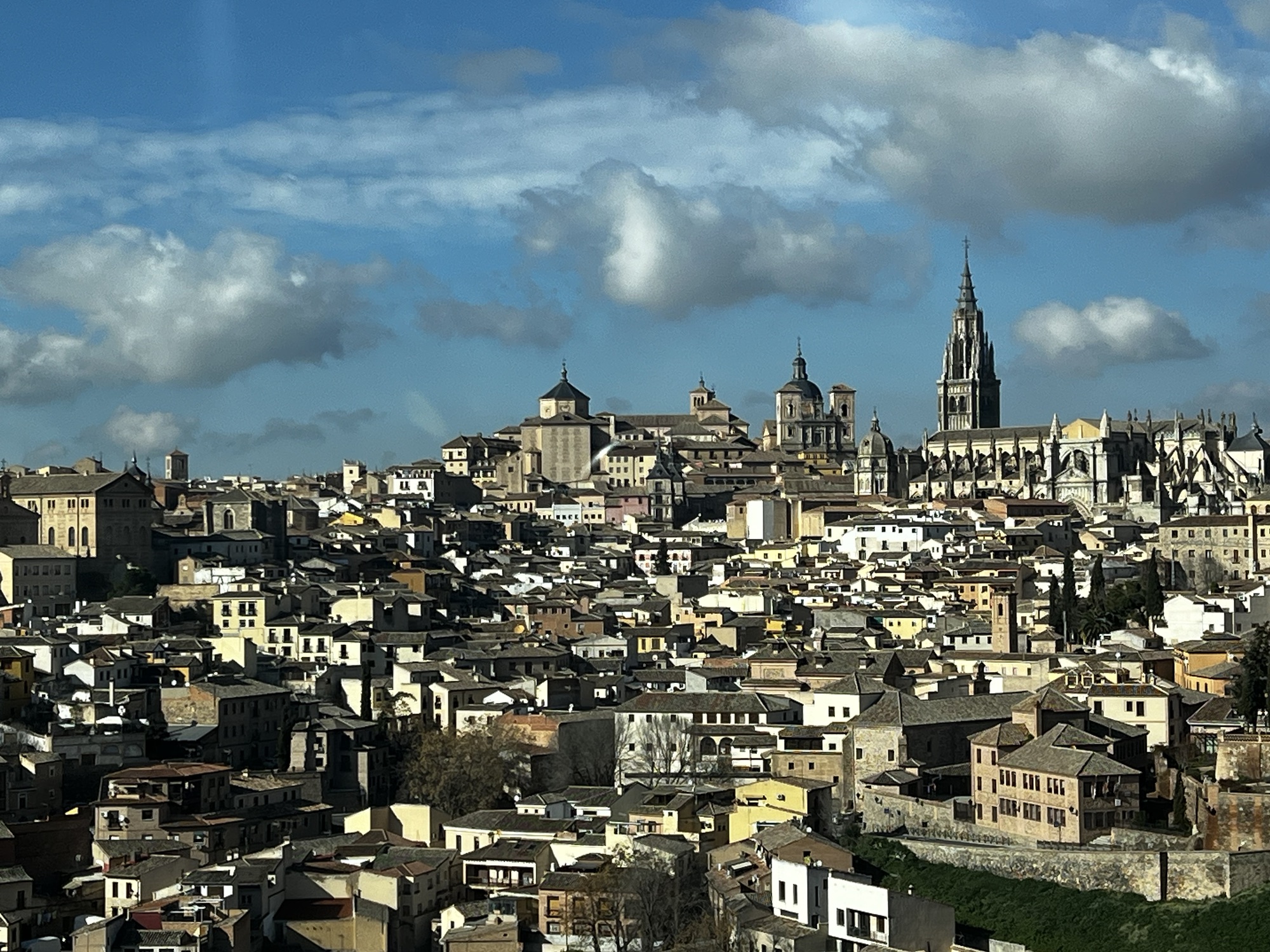
We took a “hop on/ hop off bus for a scenic tour around the (very) hilly city. Toledo (Latin: Toletum) is known as the “City of the Three Cultures” for the cultural influences of Christians, Muslims, and Jews throughout its history. Though there are still two Jewish synagogues, their numbers are greatly reduced due to the expulsion of Jews (Alhambra Decree) ordered by the King in 1492. The decree was enacted to eliminate their influence on Spain‘s large converso population and to ensure its members did not revert to Judaism. Over half of Spain’s Jews had converted to Catholicism as a result of the Massacre of 1391. Due to continuing attacks, around 50,000 more had converted by 1415. Many of those who remained decided to convert to avoid expulsion. As a result of the Alhambra decree and the prior persecution, over 200,000 Jews converted to Catholicism, and between 40,000 and 100,000 were expelled.
In the 2nd century BCE Toletum was a city of the Carpetani tribe, and part of the region of Carpetania. It was the capital, from 542 to 725 CE, of the Visigoth Kingdom and was the venue for the Councils of Toledo. The city, seat of the powerful archdiocese for much of its history, has a Gothic Cathedral.
Not nearly as large as you might think from the photos, it has a population of 83,000. The old city is located on a mountaintop with a 150-degree view, surrounded on three sides by a bend in the Tagus River, and contains many historical sites, including the Alcázar, the cathedral (the primate church of Spain), and the Zocodover, a central market place.
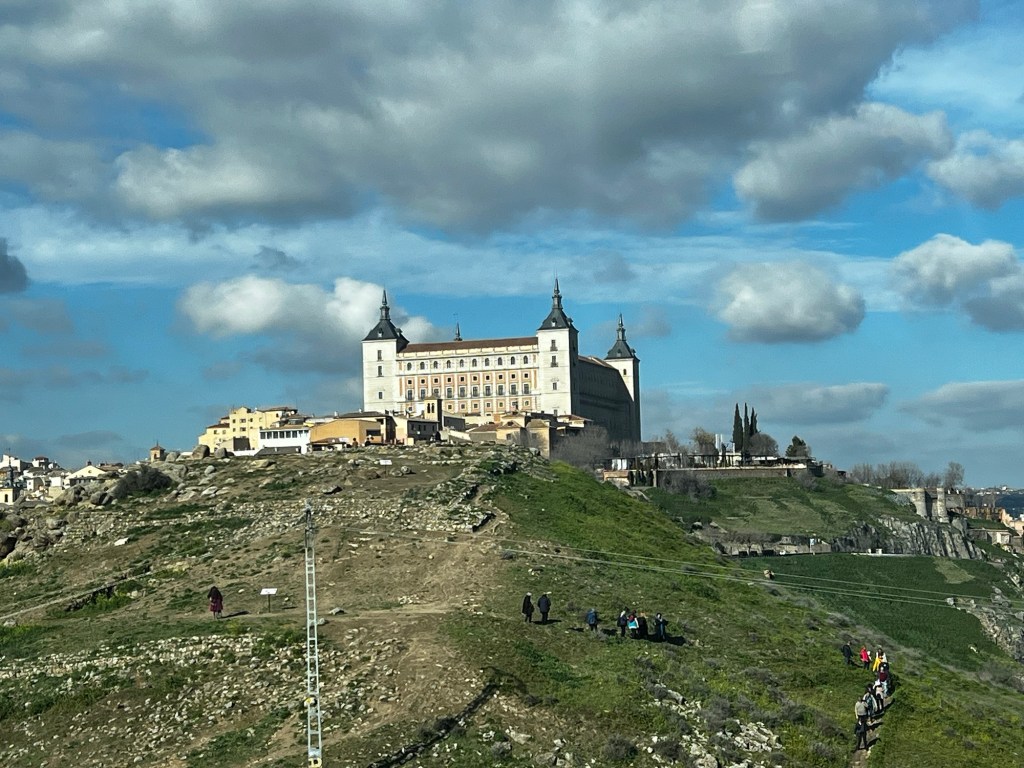
Some of the architecture of Toledo reflects that of the conquest of Spain by the Moors in 711, after the withdrawal of the Romans. Spain recaptured Toledo in 1085. Toledo was the capital of Spain until 1560.
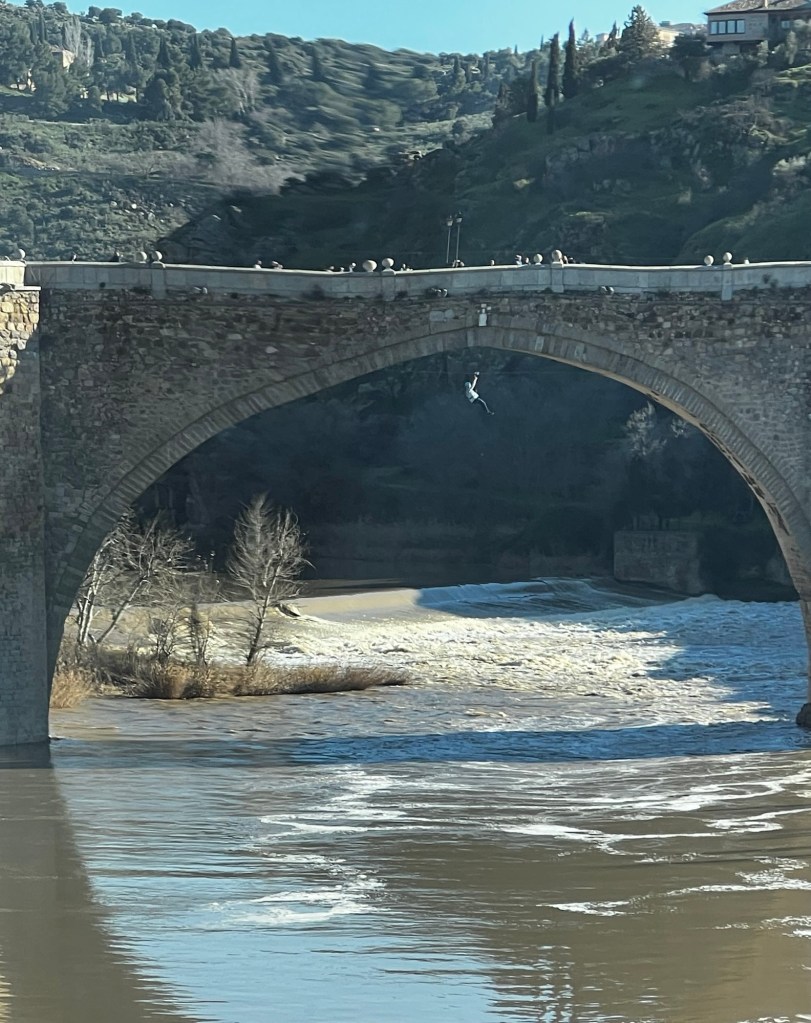
Throughout the old town, you’ll see city walls , but these were not all built in the same era. Toledo was first walled by Romans, and the remains of some Roman walls can still be found today. Stones of these walls were reused during reconstruction by the Visigoths, who tripled the walls in size. The Visigoth King Wamba renewed the former walls and sculpted inscriptions in city gates. Those inscriptions were destroyed by the Muslims. The Arabs enlarged the walls and the city of Toledo. After the Reconquista, the walls were again enlarged and new gates were constructed. As the city outgrew the original walls, over time, they were extended further out.

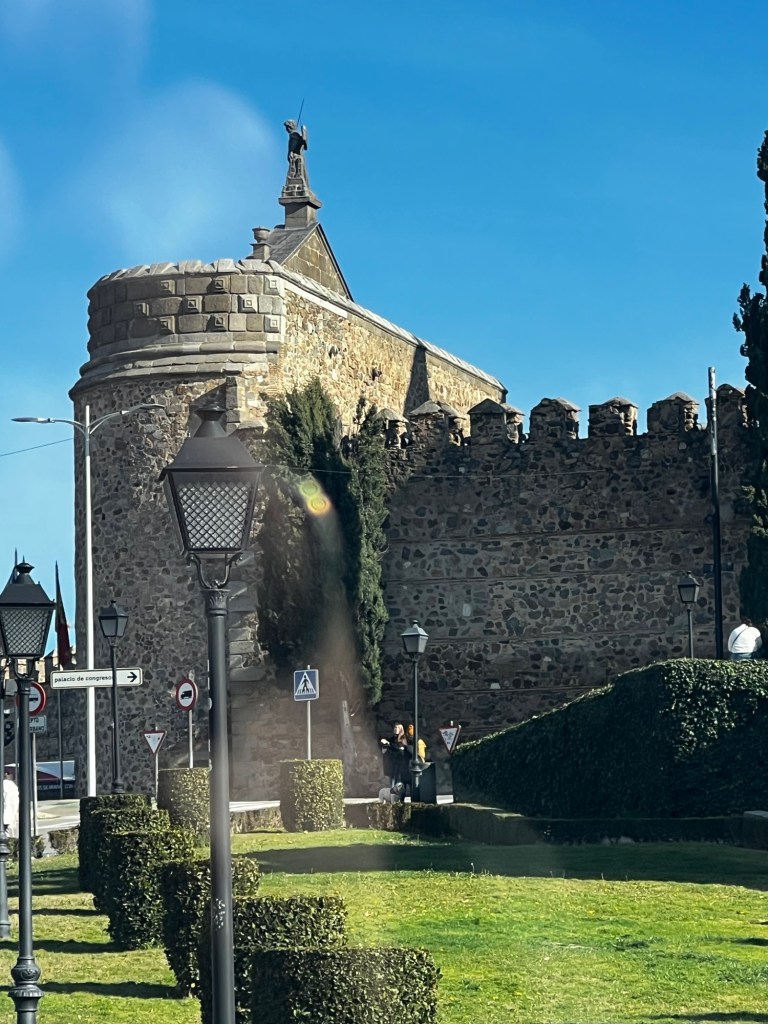
We walked around the old town near the Plaza Zocodover, enjoying the pedestrian streets and shops ( many open on Sunday) until it was time to take the bus back to the Estacio (train station).
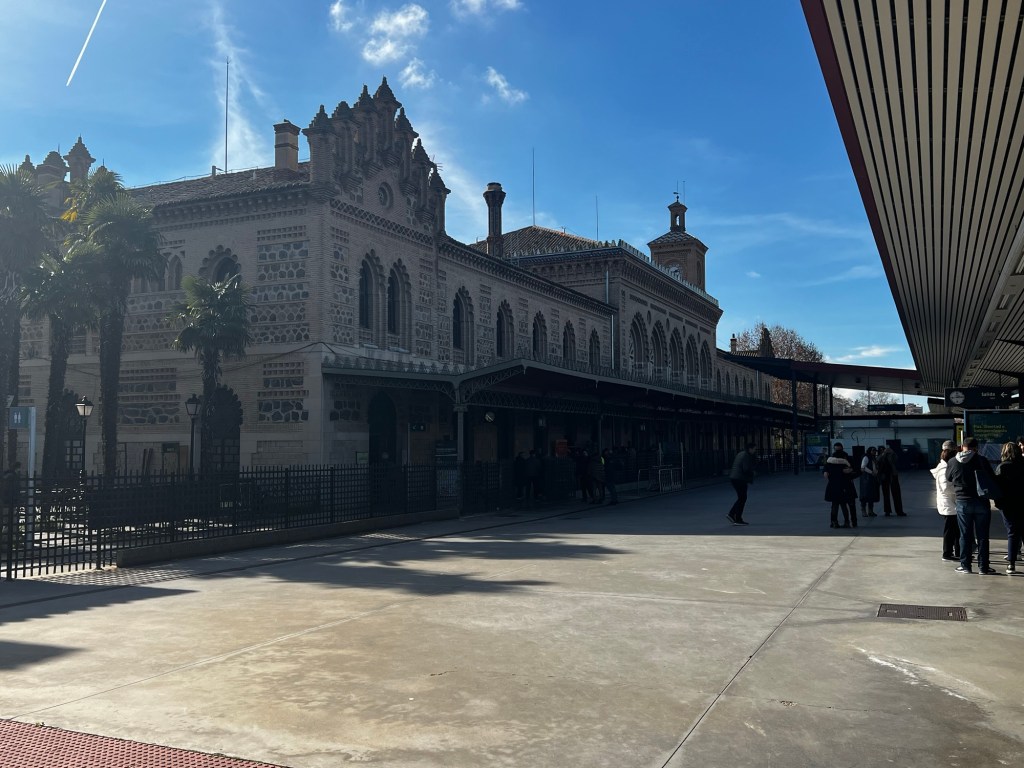
It’s not a large train station, with only three platforms.
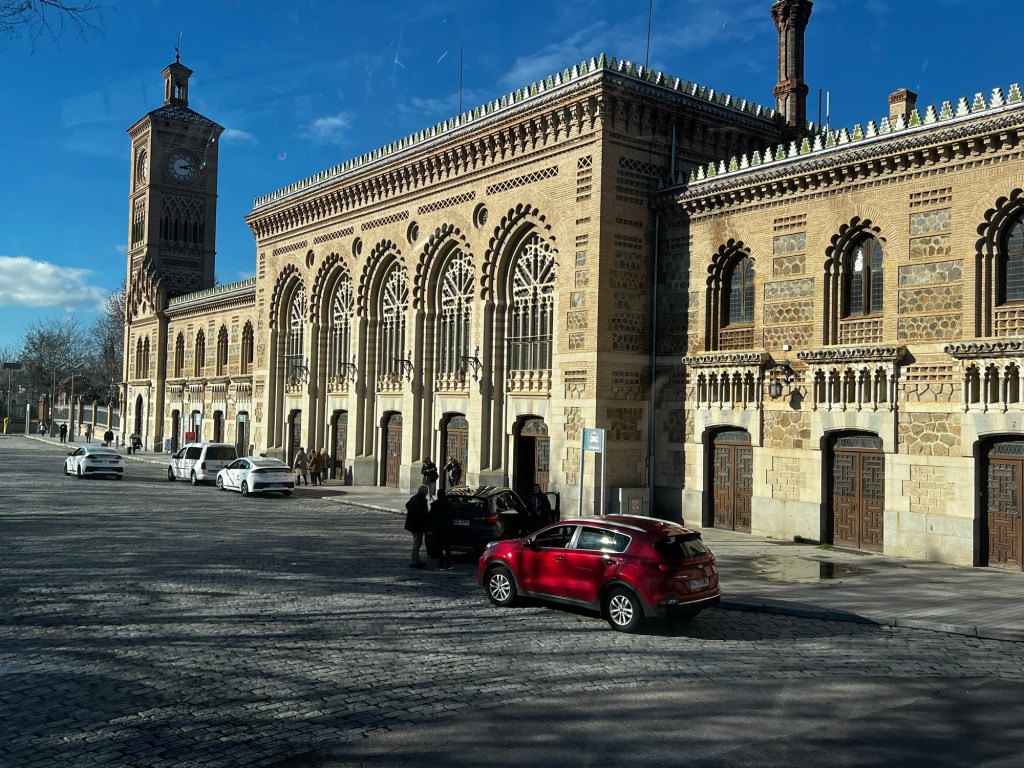
When we bought tickets to Toledo this morning, we had no idea how long we’d stay and there is one train per hour back to Madrid. But…when we checked late in the afternoon, the three trains before the one we’re on were completely sold out. We’re on the 9:26pm, last train of the day back to Madrid.


Beautiful pictures of a gorgeous city! We enjoyed our visit there too!!
LikeLike