Trip 53
April 13,2026
We started out this morning with breakfast at our new hotel and before we could even order, the front desk reception came around to our table to see if there was anything we needed or with which they could help (reservations, etc). Wow! What wonderful service.
The restaurant server came to our table to take our order and, seeing a German language newspaper on the table, started out in German. I speak “ein paar worter” (a few words) and challenge myself to try to read, but on realizing this was not the right language, instantly switched to English.
After breakfast, we walked to Stephansplatz to take Wiener Linean (subway) line out to Schönbrunn for an Easter fair that goes on until near the end of the month. We’ve been to Schönbrunn several times before, so we are not planning on touring the palace, but enjoying the fair and walking the gardens. Buying tickets at the terminal is simple and they are pre validated do you do not need to punch them in the machine before going down to the platform. It’s not more than about 25 minutes out from Stephansplatz to Schönbrunn on the subway, with one change of lines, and then a five minute walk to the palace.
Schönbrunn (Schönbrunn means “beautiful spring”) was the summer palace for the Royal family. Like other “getaways” , it evolved from a 14th-century manor (Katterburg) into a premier Baroque summer residence for the Habsburgs after Emperor Maximilian II acquired the land in 1569. Over time, it was expanded and transformed into a grand Baroque summer residence and center of court life, featuring 1,441 rooms, Rococo interiors, and the expansion of the gardens. Remodeled by Maria Theresa in the 1740s, it served as the center of imperial power until 1918.
In 1918, the First World War ended with the collapse of the Austro-Hungarian Empire. After more than 650 years of Habsburg Empire, the former imperial city Vienna turned into the capital of a tiny political territory. After the Empire broke up, Austria shrank to around 40 percent of the size of the previous Empire.
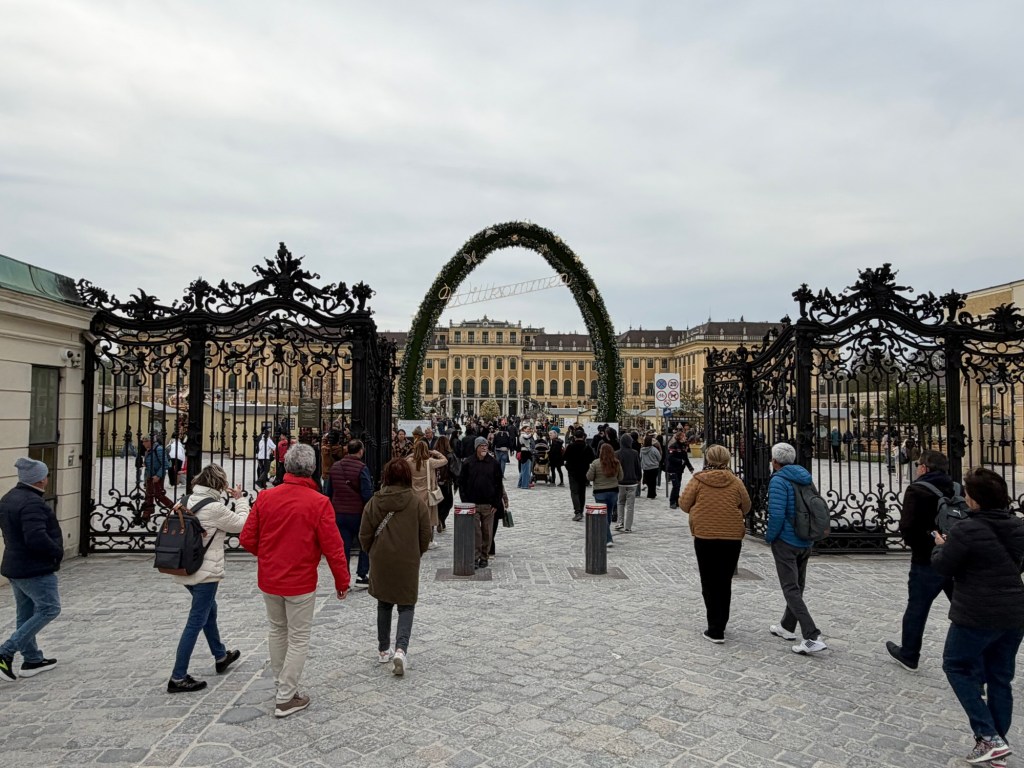
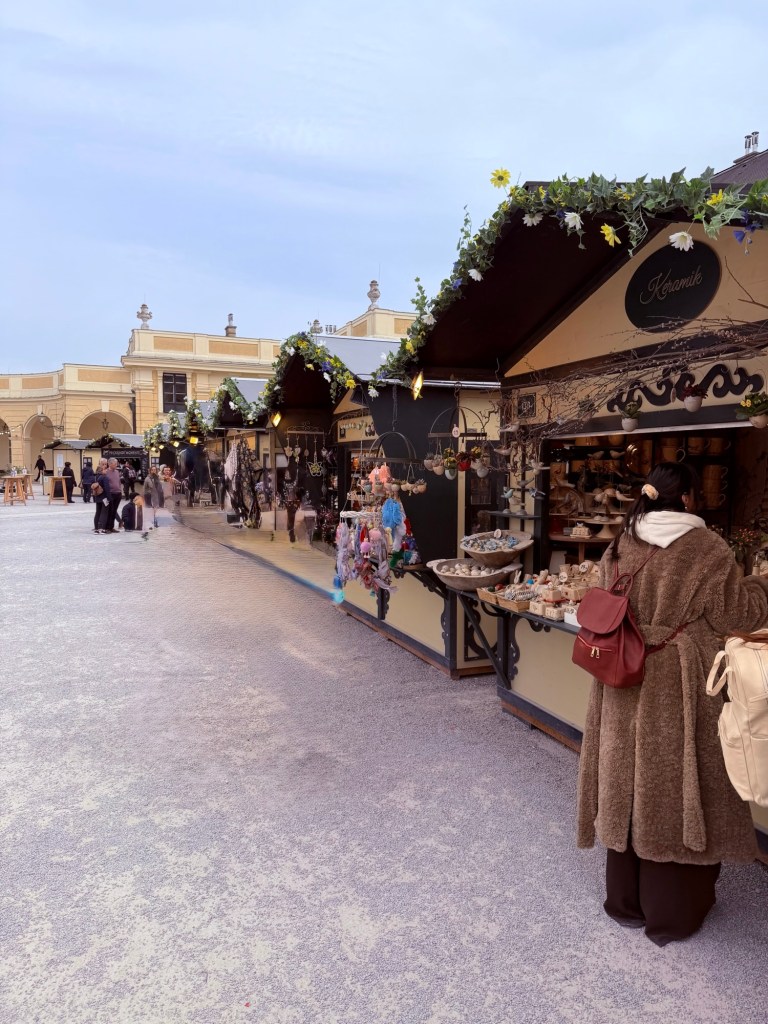
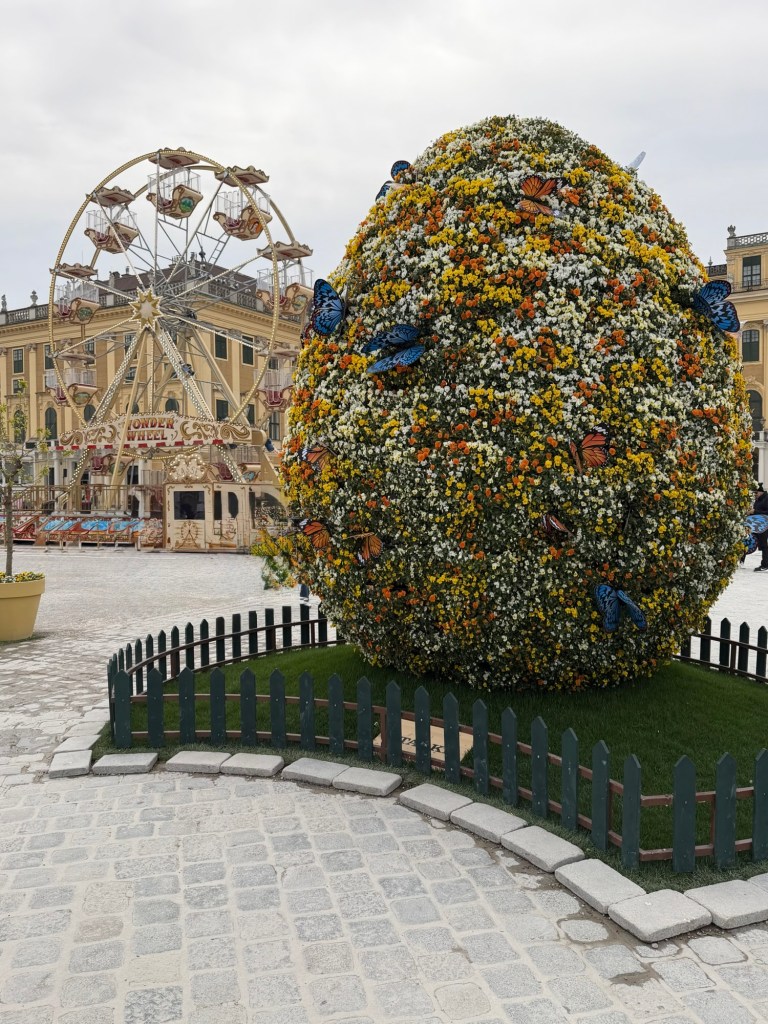
There are quite a few vendors with stalls set up in the foreground area, selling small goods, with some selling food, though the bulk of the stalls are selling small goods- wooden ornaments, craftworks and a few amusement rides.
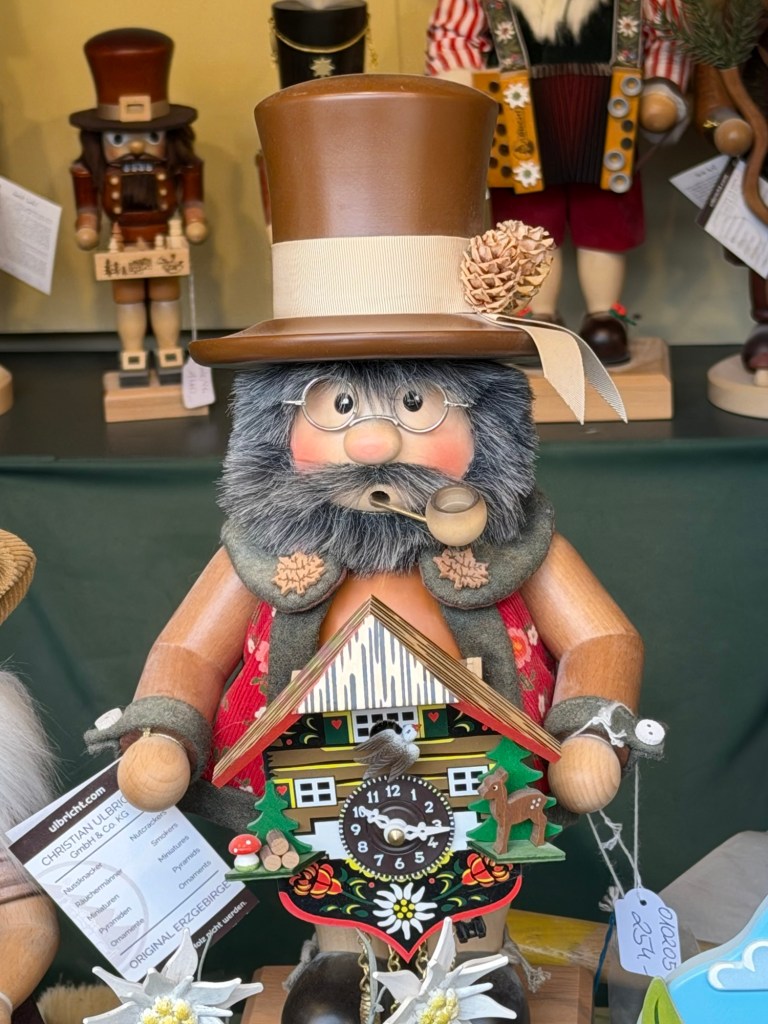
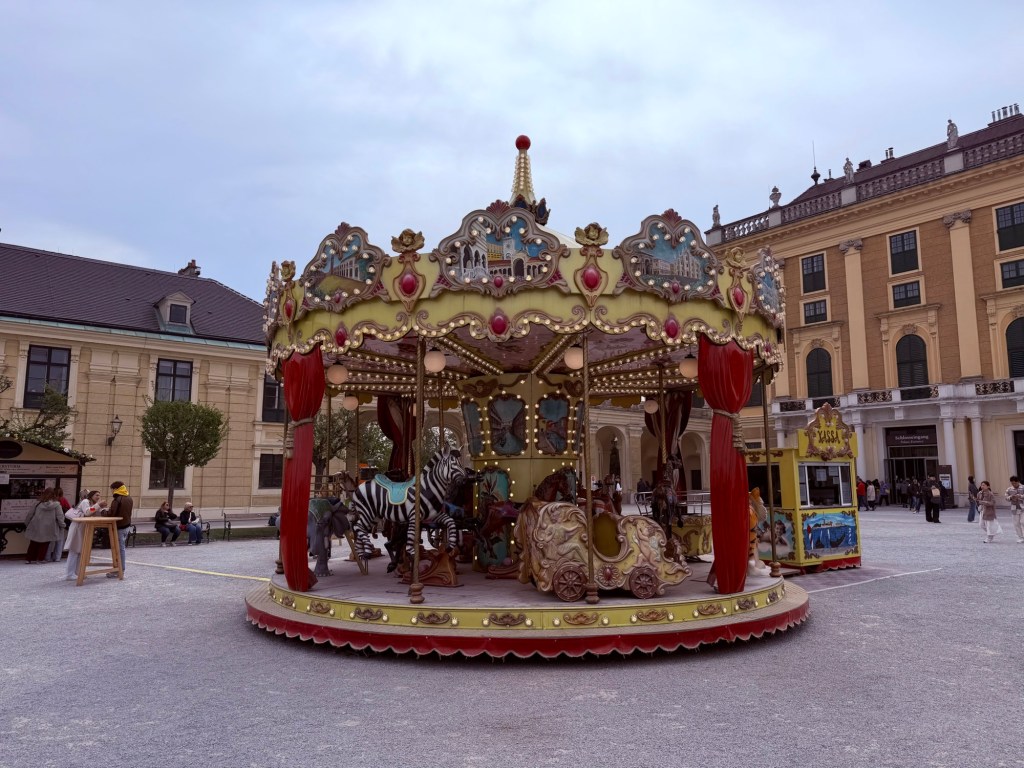
It’s really the same arrangement as the Christmas market held here that we visited some years ago. There are a number of young school children , both in groups and supervised by watchful parents, so school must be out for spring break.
After browsing the stalls, we wanted to walk around to the right and to the back of the palace, to view the gardens. It’s still early spring here, so the flower beds are not yet blooming, but the views are expansive.
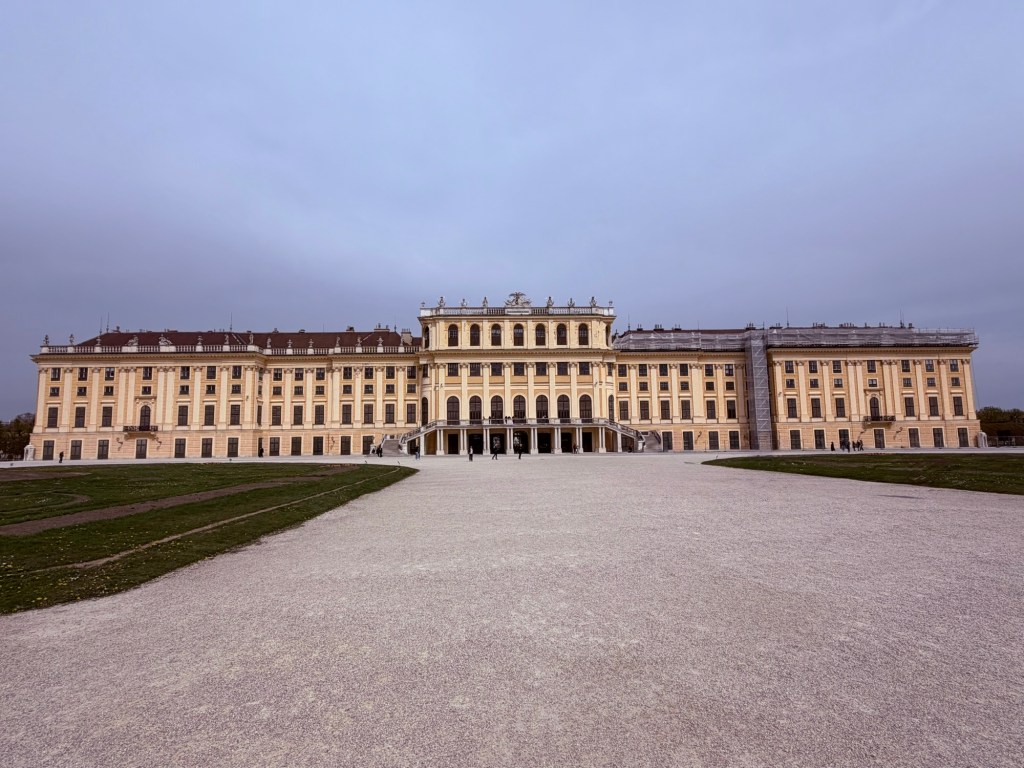
It does not look like it from this view, but it’s actually quite a walk to get up to the Glorietta .
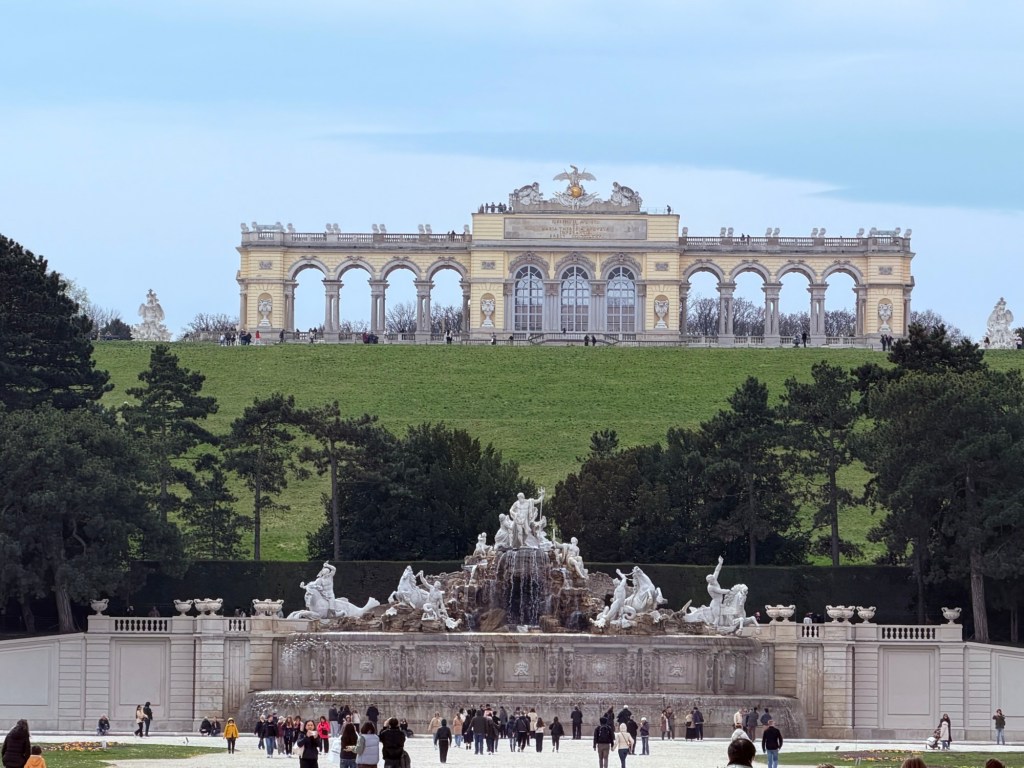
In summer, they usually have all the fountains flowing (largest one is here in the foreground) and the flowerbeds planted.
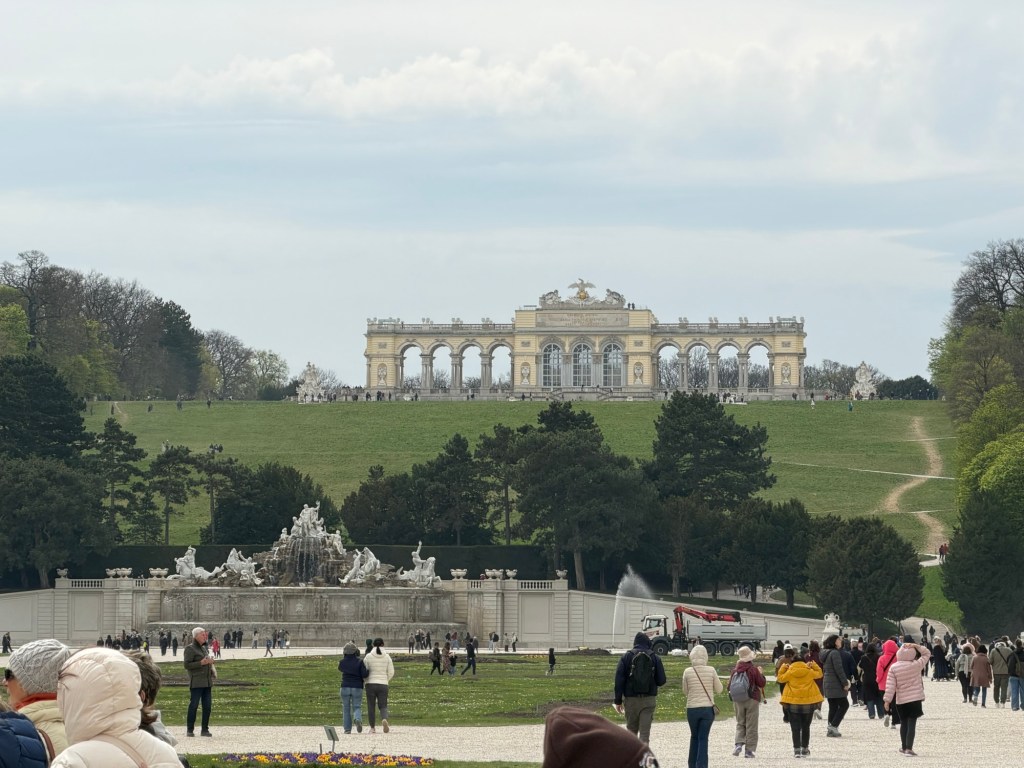
Once up there though, you have an expansive view of the palace, the Vienna woods and Vienna itself. Each season is unique as the trees change color.
We had a reservation in town for a late afternoon“linner” (lunch+dinner) at a classic venue for Wiener Schnitzel at Figlmüller. Figlmüller has been serving Wiener schnitzel since 1905. It’s very close to Stephansdome and if you didn’t know where it was, you might not find it, as it’s down a narrow pedestrian side street.
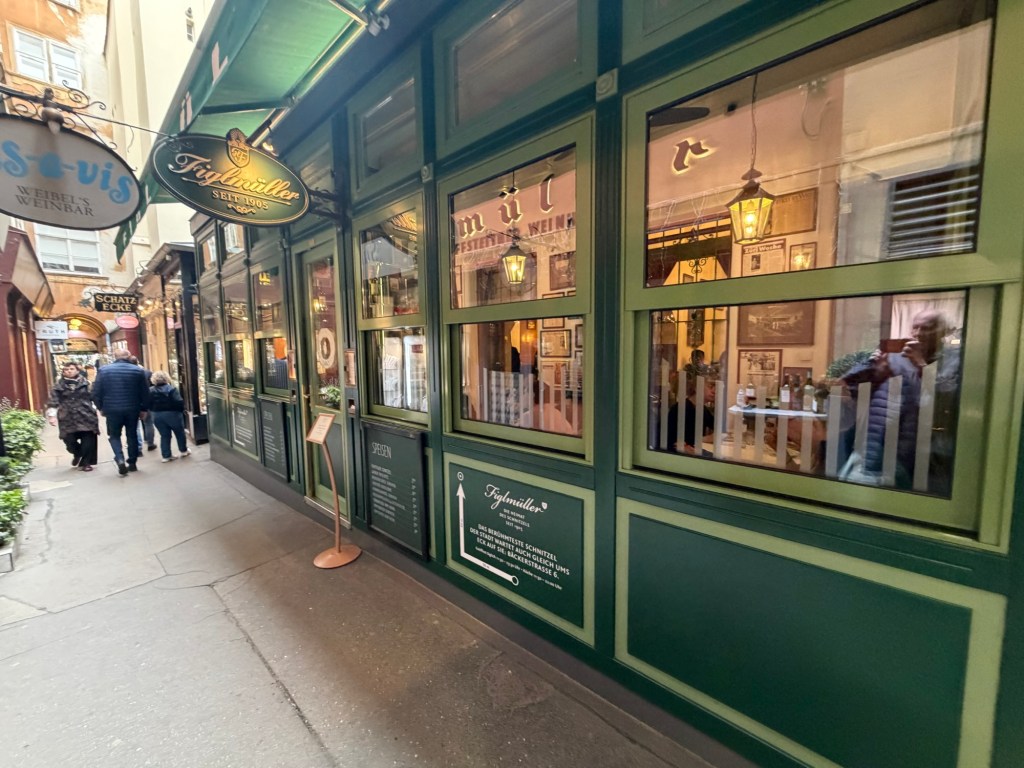
Reservations are really recommended, as the seating is pretty limited. Though diners’ attire is definitely informal, the wait staff wear tuxedos.
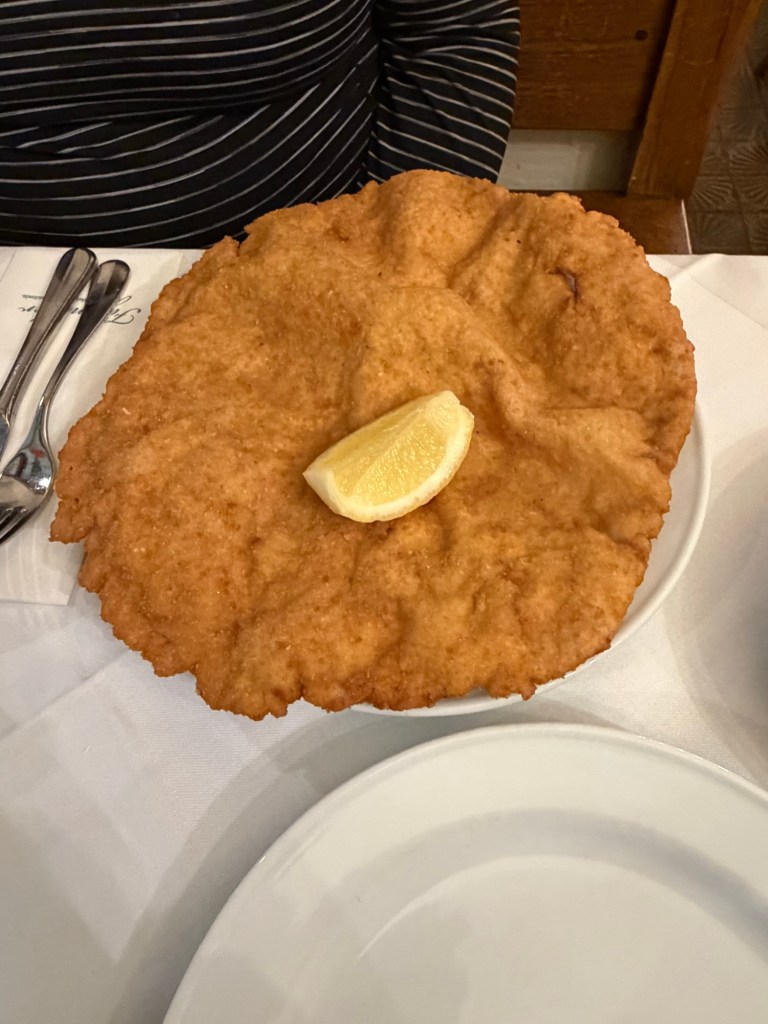
We ordered one schnitzel to share. It was larger than the plate and neither of us could quite finish our one half, though we saw a table of four order one per person.
Leaving Figlmüller, it’s just a few minutes’ walk past Stephansdome to either the Graben or Kärntner Straße.
Kärntner Straße is not as wide as Graben, but it is one continuous stretch of retail shopping. The Kärntner Straße is one of the most famous streets in the center of Vienna. It begins near the Vienna Ring Road on Karlsplatz, leading past the Vienna State Opera and north to Stephansplatz in the center of Vienna. At Stephansplatz, the Kärnter Straße meets the Graben.
Punctuating all of the retail along Kärntner Straße is a Maltese church.
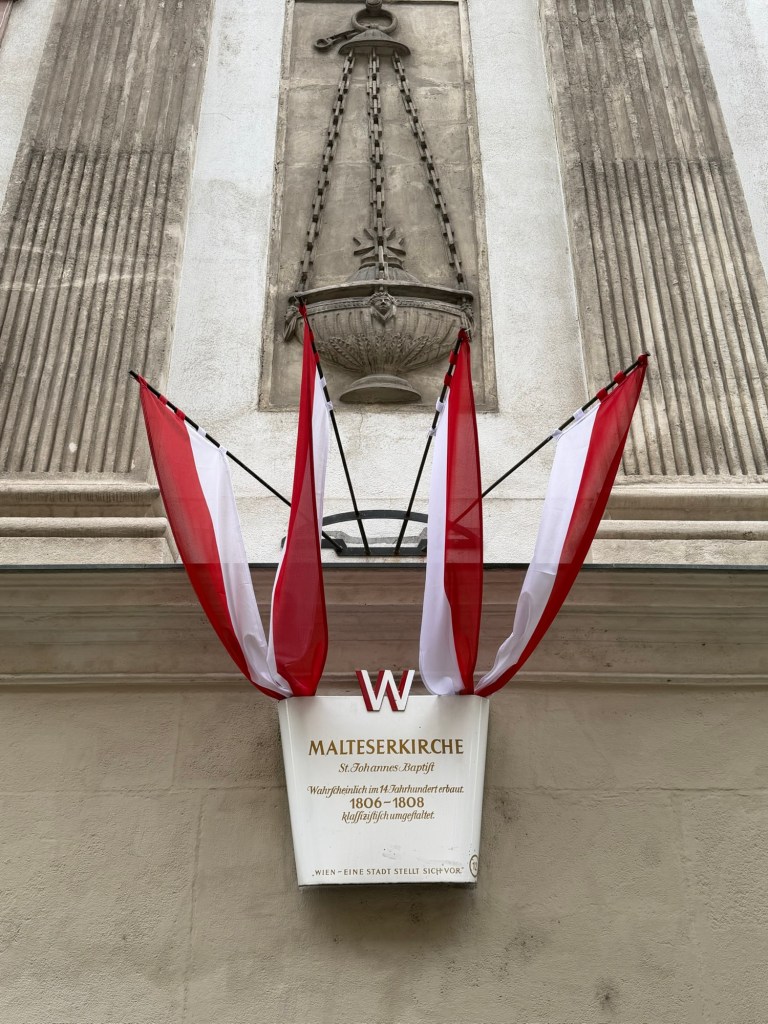
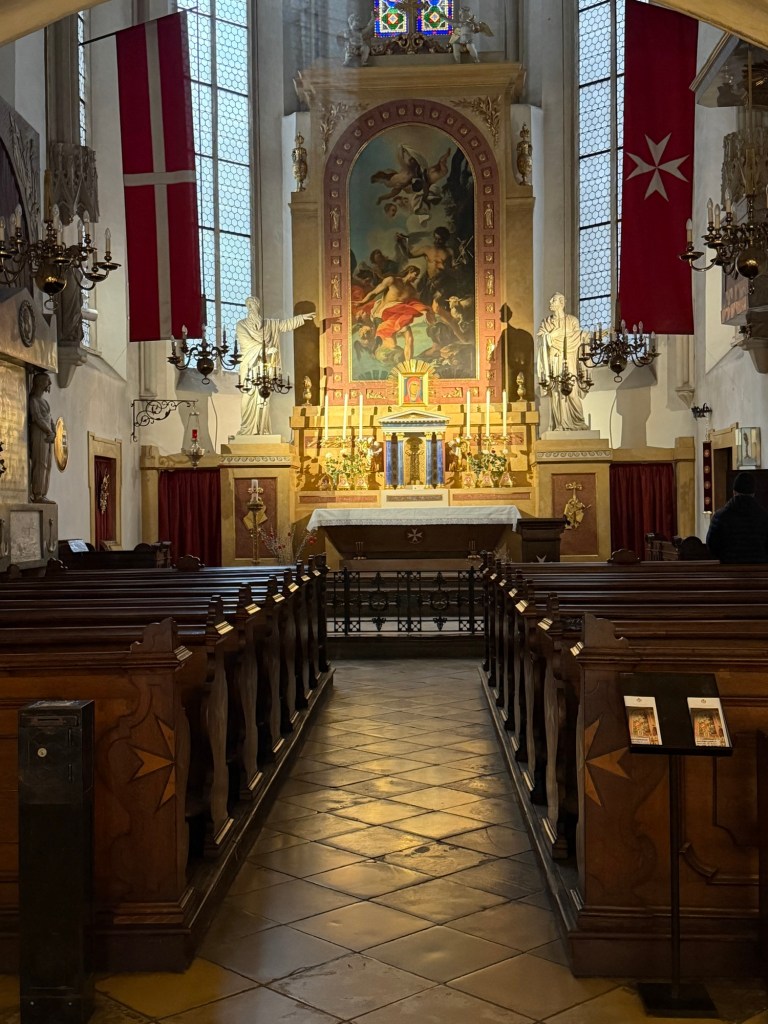
We’ve visited this church before, but it was closed when we walked by.
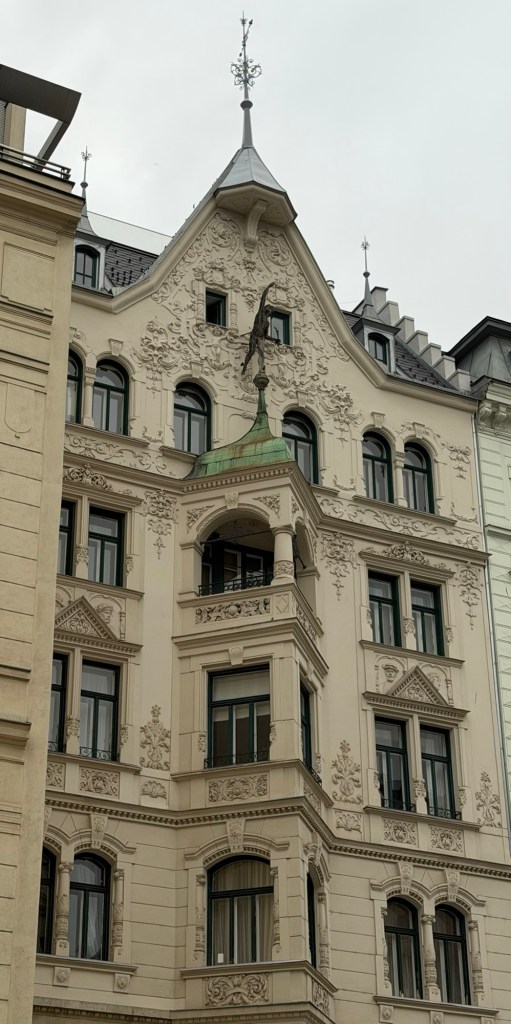
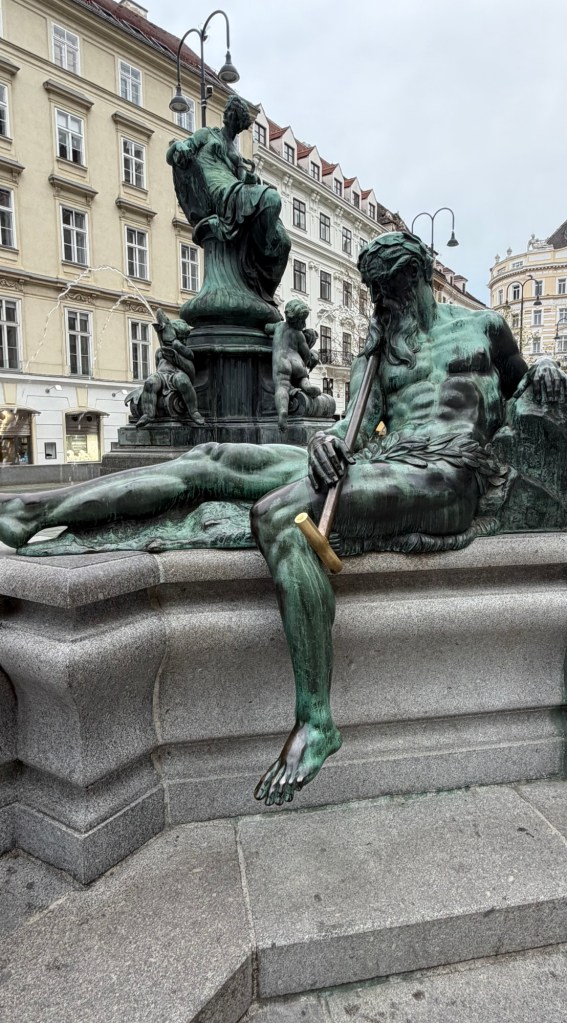
The architecture of the old center of town is grandiose with a palace, fountains and gardens and full of history.
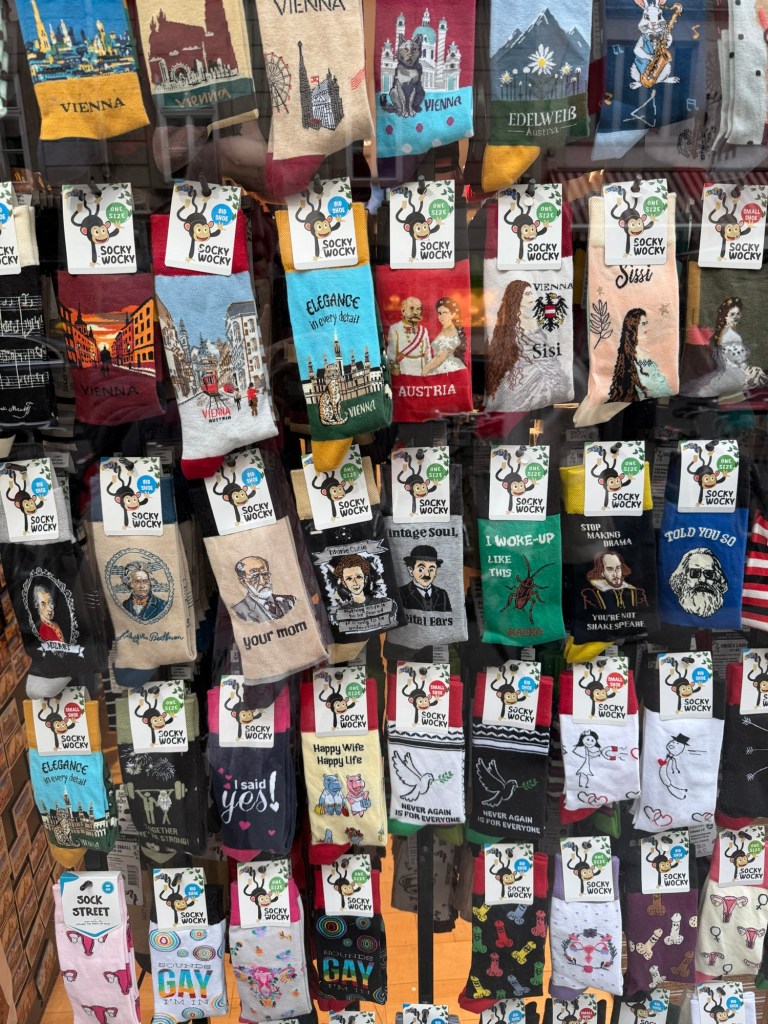
But if you simply want souvenirs, they have that too.
 TerraTraveler