Trip 52
December 22, 2025
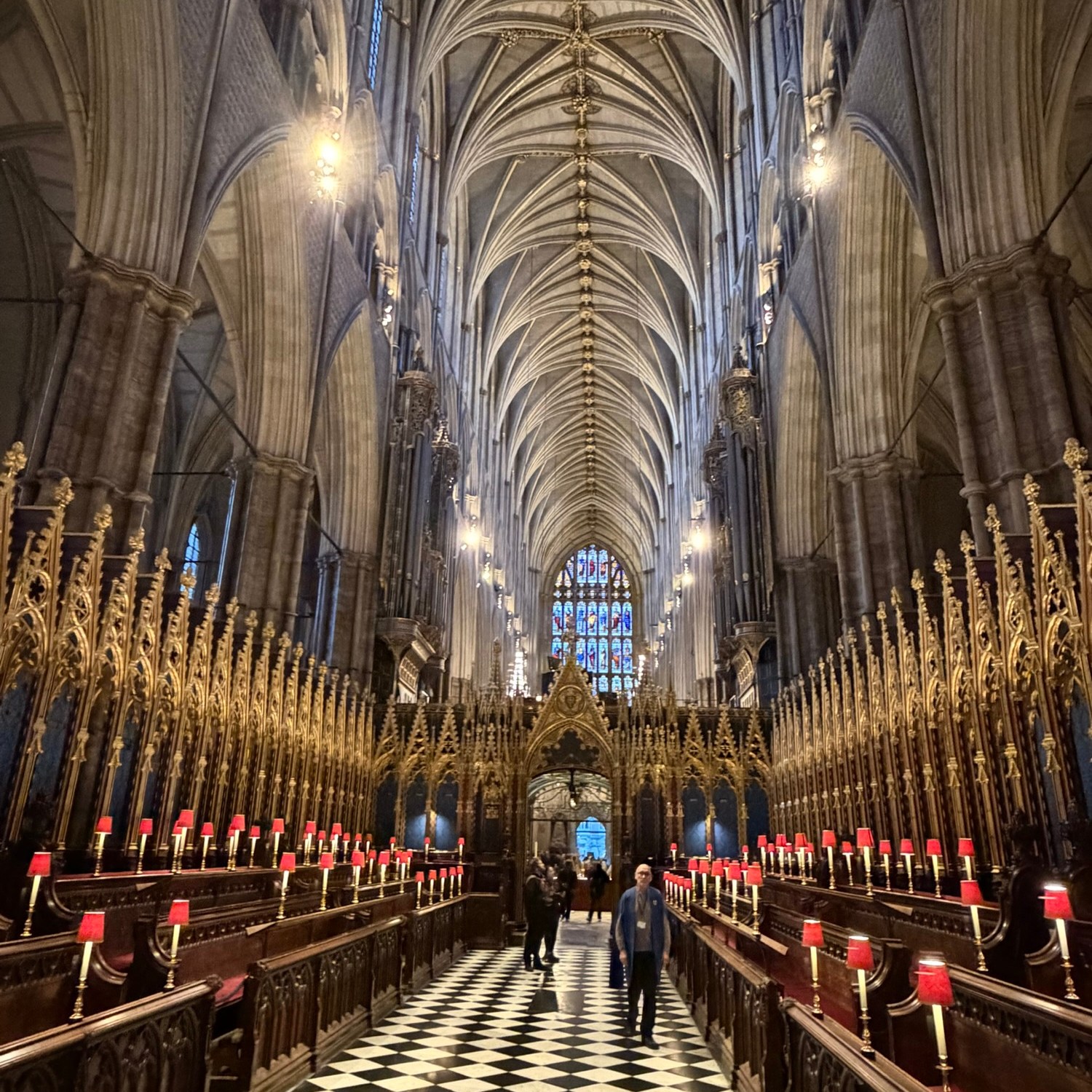
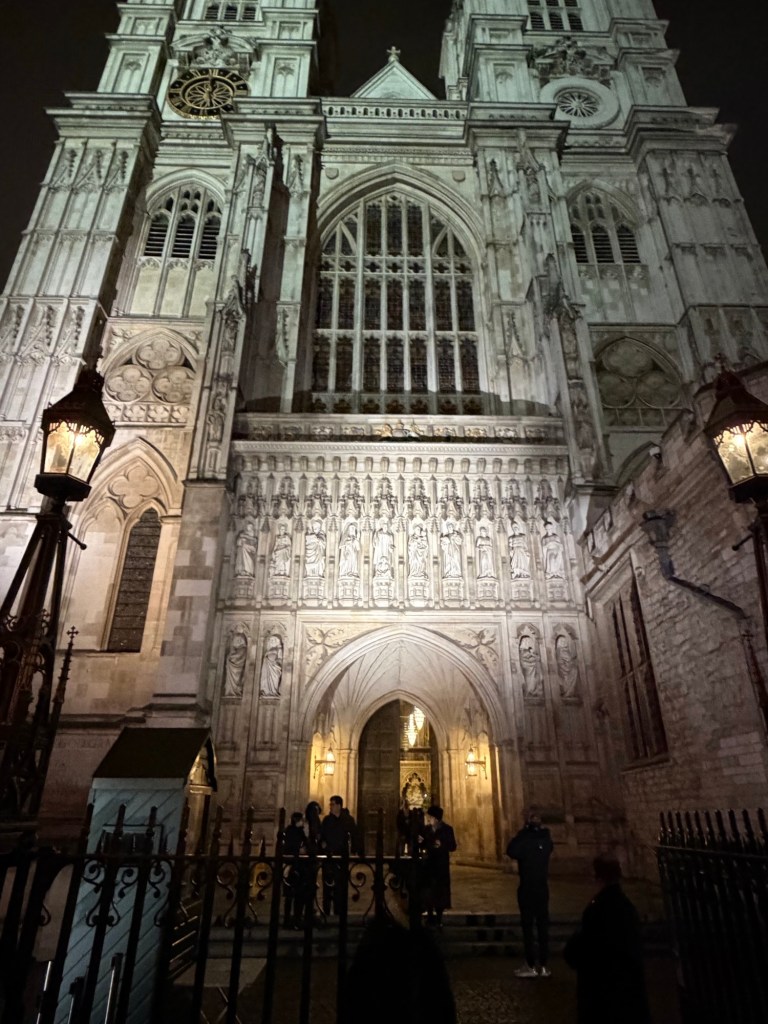
We attended Evensong in the Abbey earlier this year, but attending that ceremony does not allow you to visit the Abbey as a whole.
We’ll visit the Abbey prior to participating in Evensong.
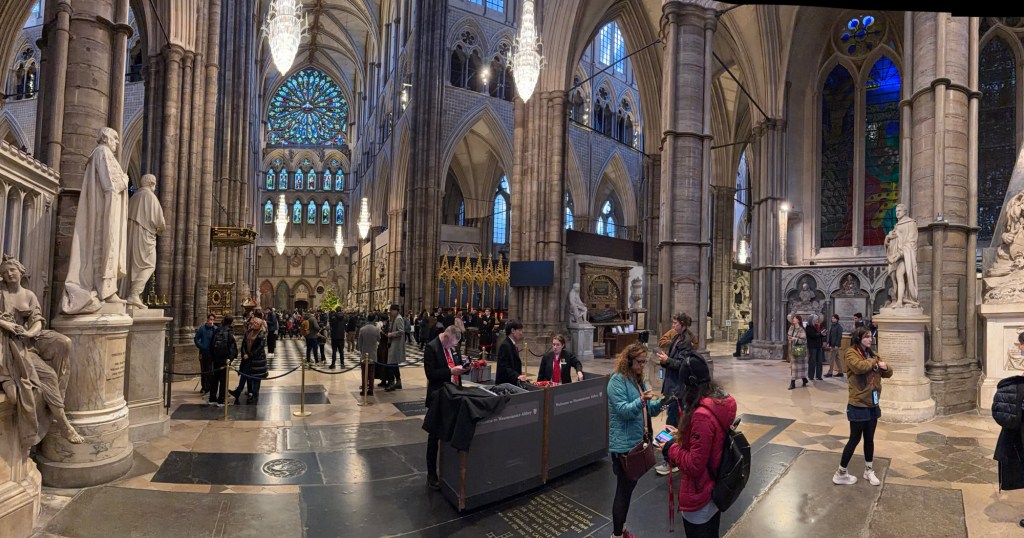
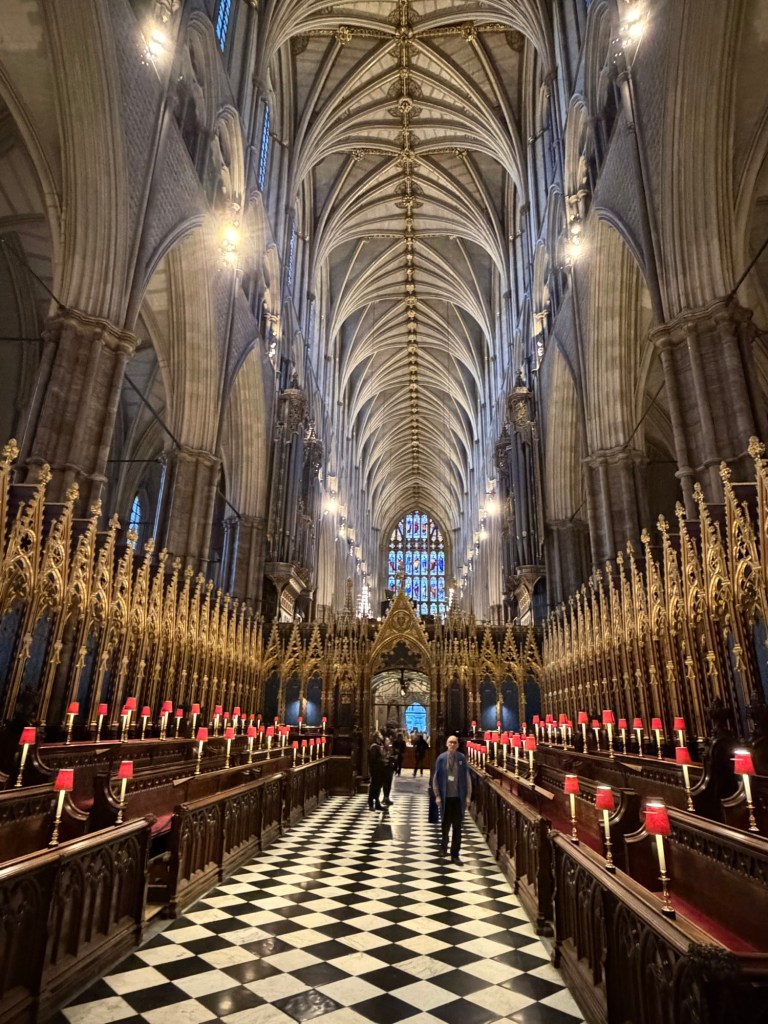
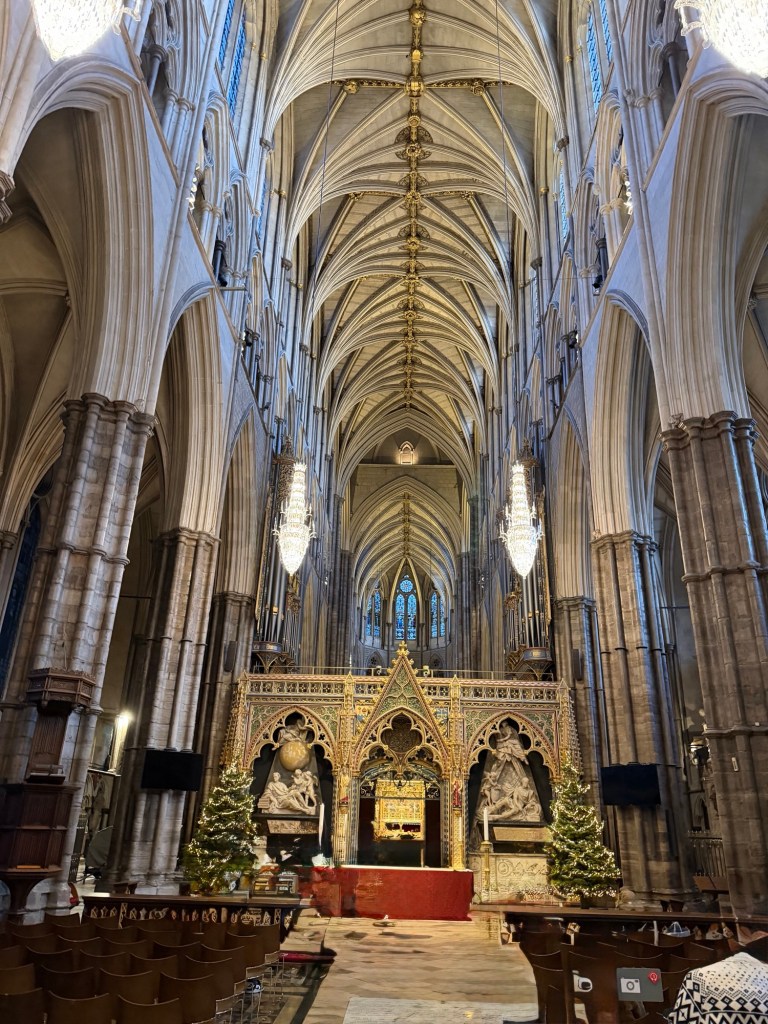
The Abbey has a 1000 year+ history as a place of worship, but began as a Benedictine monastery around 960 AD, with its first significant church commissioned by Edward the Confessor (the Chapel of St Edward the Confessor contains the shrine of Edward the Confessor, with the Coronation Chair above it, which was inaccessible to the public due to its fragility) in the 1040s, consecrated in 1065 and becoming the site of the first coronation (William the Conqueror, 1066). It has been the setting for every Coronation since 1066. The current Gothic structure started in 1245 under Henry III. It was designed as a royal church for coronations, burials, and worship, evolving into a national symbol of British monarchy (the Evensong ceremony even includes hommage to the Royal family). The ceremony, beginning at 5pm did not include a choir tonight, but did include biblical canticles (Magnificat, Nunc dimittis), alongside scripture readings, prayers, and a short sermon.
There are quite a few famous individuals with tombs here and some are commemorated, though buried elsewhere. The oldest ones I could find had unknown exact placements (like Geoffrey Chaucer), while there were many statues devoted to English royalty (including the tombs of Queen Elizabeth I and Mary Queen of Scots , notable military commanders, politicians and scientists.
Issac Newton and Stephen Hawking are both buried here, as well as a memorial to the scientists (Fleming and Florey – both buried elsewhere) who discovered penicillin.

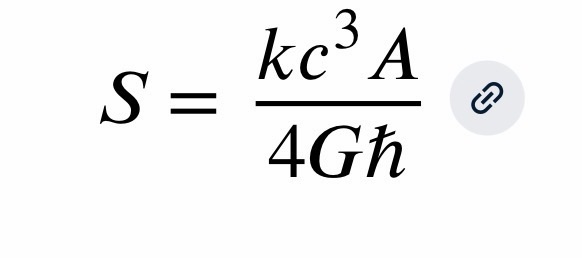
Stephen Hawking is buried close to Newton, but did not have a grandiose sculpture, but rather a large circular (dark material like a black hole) memorial in the floor, with an inscription of his greatest discovery relative to blackholes (a formula that describes black hole entropy.
Black hole entropy is a measure of the disorder or information within a black hole, crucial for upholding the Second Law of Thermodynamics)
Following down the transepts, you’ll find other chapels, large and small.
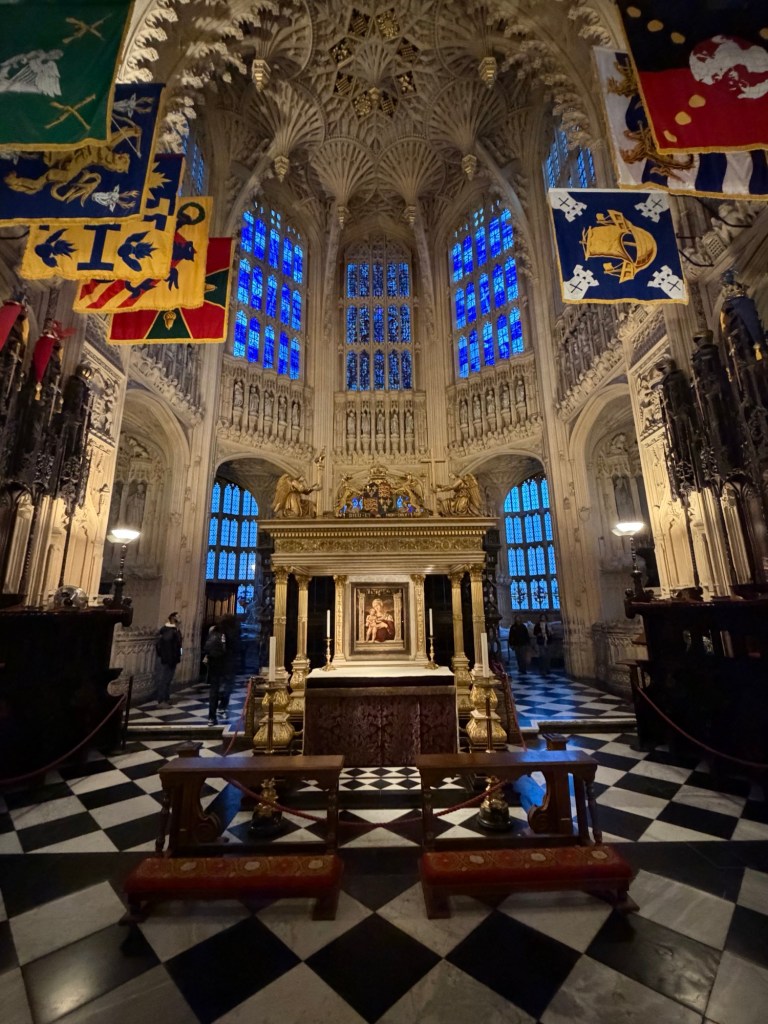

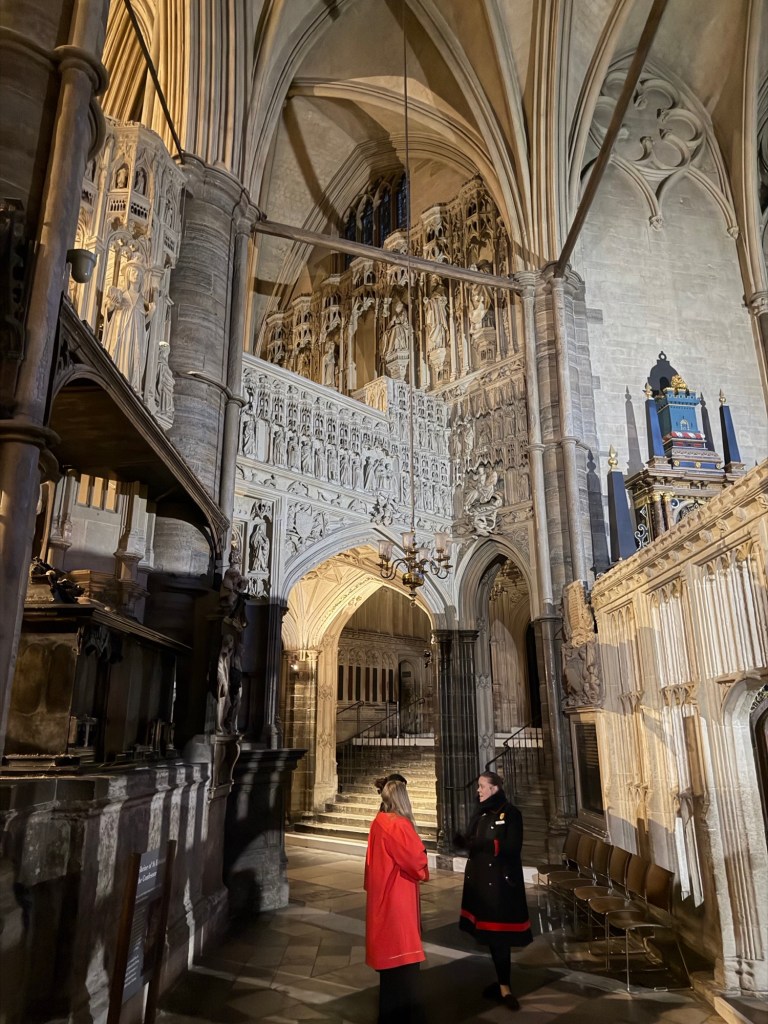
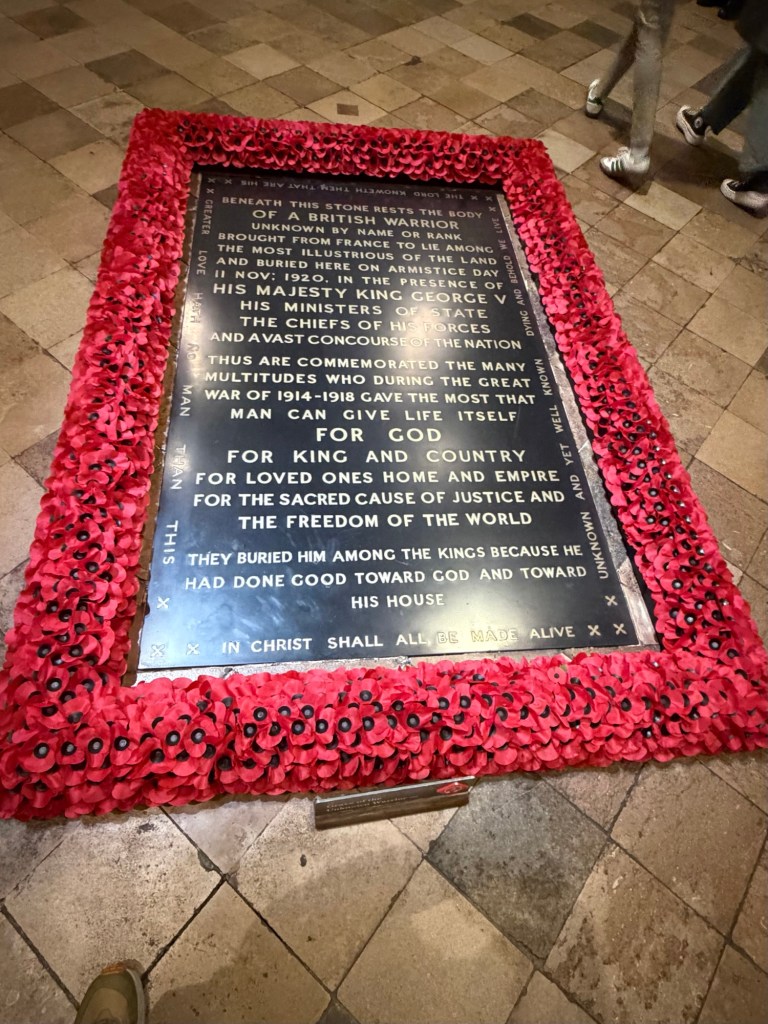
The spaces are vast and the history deep. If I knew how to read Latin, some more of the more ancient memorials would have been decipherable.
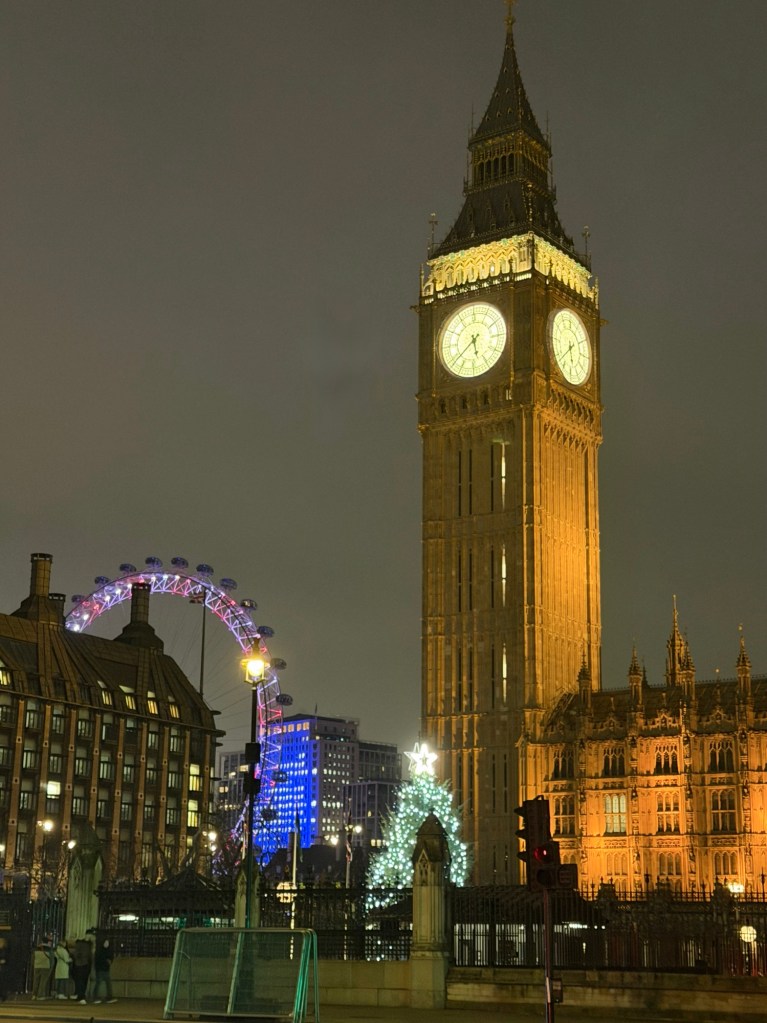
Across from the Abbey is Parliament with the Elizabeth Tower (Big Ben), while in the distance, the London Eye is lit with Christmas colors
 TerraTraveler