
Trip 52
December 20, 2025
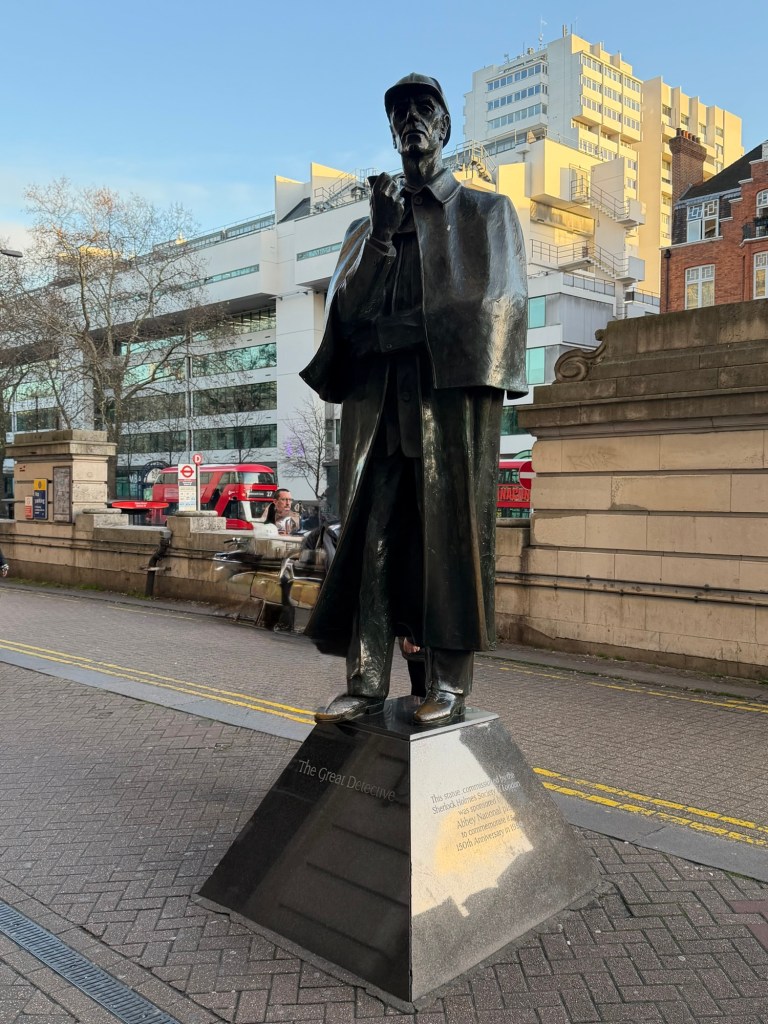
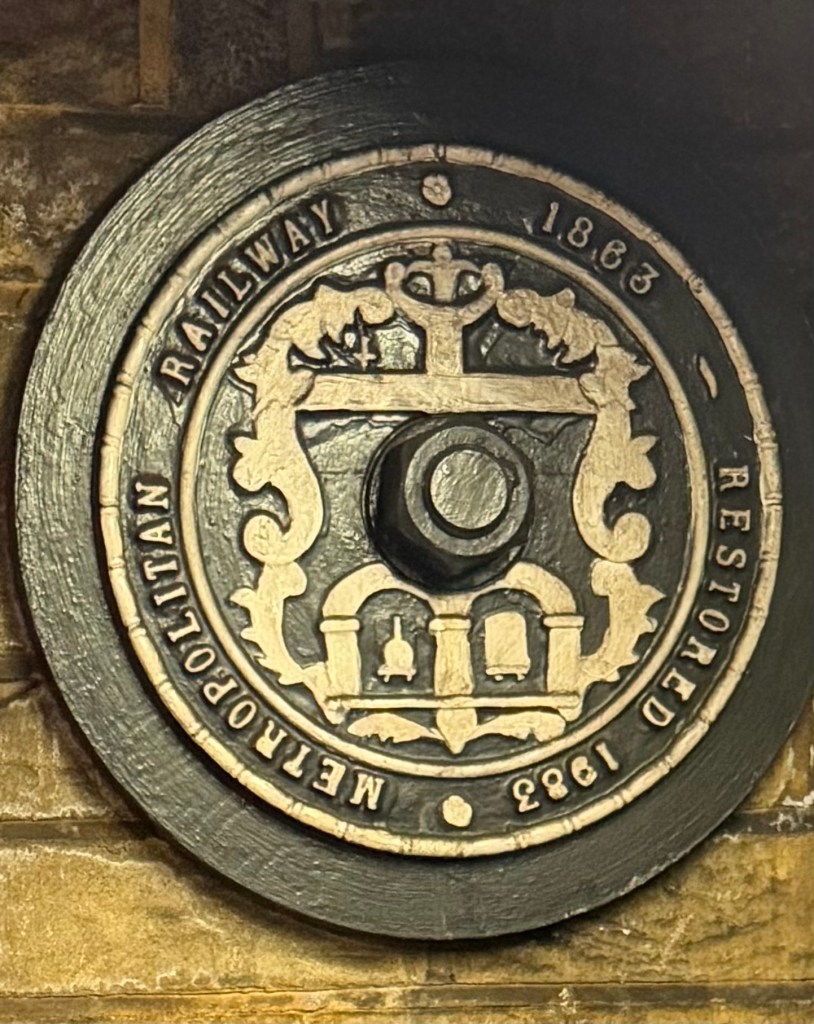
The Baker Street Tube station is not far from where we’re staying. Baker Street was the first underground station and as part of the original Metropolitan Railway, the world’s first underground railway, which opened on January 10, 1863. Our tour of the “hidden” London Underground lasted about 85 minutes. It was a great look back at the history and jumbled evolution of mass transit in one of the world’s largest cities.
In the 1860’s trains were not allowed into central London due to due to parliamentary bans and fierce opposition from property owners/local authorities, concerned about noise, smoke, disruption from construction, property demolition, crowding and congestion. This made travel into the city extremely time consuming once you got to the outlying stations from elsewhere in the country, taking 90 minutes or more to travel five miles.
The initial solution was to connect these peripheral stations (like Paddington, Euston, King’s Cross) and ease congestion, the Metropolitan Railway (the first underground line) was built using the “cut-and-cover” method, opening in 1863. “Cut” meant digging up an existing thoroughfare. building the lines in the tunnel below, and then “covering“ the excavation. A trench about ten meters (33’) wide and six meters deep was dug. Brick walls were then constructed, and the cutting, roofed over with a brick arch. A two-meter (6.5’) deep layer of topsoil was laid on top and the road above was rebuilt. This underground line bypassed the central bans, creating the world’s first underground railway and paving the way for the London Underground network.
These underground rail lines, though revolutionary for inner city travel (and hugely popular) created some substantial engineering and health hazards, as the trains were steam powered and ventilation and air quality was a huge concern. At the time, the competing (private) rail companies operating these lines rapidly expanded the reach of their networks, even going so far as to build housing on the outer perimeter of London so they could 1/ sell property 2/ sell tickets to travelers who could then travel to work in the city.
Eventually, the number of competing construction plans had to be approved by Parliament. The first section of the District Railway opened in 1868, but rivalries between the two companies meant the Circle line was not completed until 1864. But these lines still did not cross the city (“circle line”) . The only alternative was to build lines deeper underground in order to travel beneath the centre of the city.
The next crucial technological development, in the 1880s, was a clean, efficient and reliable source of power: electricity. Electric motors made the world’s first deep-level electric railway, the City & South London Railway, possible. The Baker Street & Waterloo railway was the first underground electric railway running under the Thames. The C&SLR opened in November 1890, with a pair of 3 meter diameter tunnels running between King William Street in the City and suburban Stockwell. Hydraulic lifts were installed at the stations to transfer passengers between street and platform. Trains were made up of three carriages and hauled by electric locomotives. The carriages were narrow and furnished with tiny windows just below the roof, because it was thought that passengers would not need to see out. Carriages have evolved (we have large windows, but there’s nothing to see anyway when going from station to station). By 1905 there were no more steam engines running in the underground tunnels.
Tunneling itself required new engineering methods to safeguard those digging , with a shield and water tight doors using huge screw jacks to push forward the front end of the shield. The newly dug section of tunnel was then lined with cast-iron segments to form a cylinder, or ‘tube’.
But this new technology of electric engines brought much skepticism (hmm, skepticism about new technology that uses electricity? Who would think?) . The media (mainstream media then were newspapers) added to this disbelief that steam engines could be displaced, leading to their nicknaming the line to the Baker “Loo” (“loo” is a term for the toilet), a moniker that stuck and now we travel on the Bakerloo line.
But it was an American financier was Charles Tyson Yerkes, a flamboyant tycoon (fleeing fraud charges at home) who, in the early 1900s, rescued London’s failing underground lines buying three lines, forming the Underground Electric Railways Company of London (UERL), electrifying the District Railway, and financing new tube lines (Bakerloo, Piccadilly, Northern) to create a unified, modern system.
Parliament passed legislation enabling the formation, through the London Passenger Transport Act of 1933, which established the public London Passenger Transport Board (LPTB) to take over and merge London’s disparate underground railways, buses, and trams into one cohesive service, unifying them under the ‘London Transport’ brand (now Transport for London TfL).
Among the “hidden” underground (Baker Street Station) history was a pistol and rifle range for the benefit of employees who wished to join, as a means of encouraging employee socialization (employee retention was a concern even then). This benefit was not particularly popular with the tenants (among them H.G. Wells) of the apartment residences built above the underground station (another means the rail company used to monetize their venture) when combined with the noise of the transit system. The London Underground rifle club at Baker Street formerly closed in the early 2000s! Parts of the shooting range still exist (though not in use). The ability to bring firearms onto the London Underground for the purpose of using the staff gun and rifle club ended with the passing of the Firearms (Amendment) Act 1997, a rather amazing thing to believe still existed, now, in our days of heightened security.
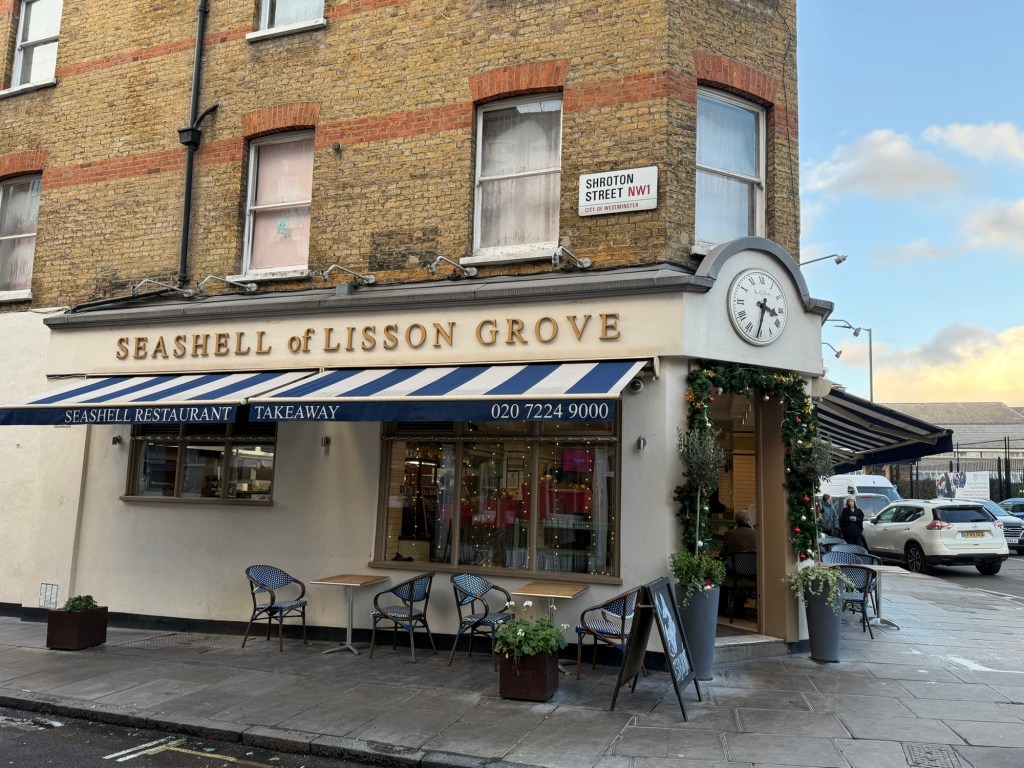
What would a visit to London be without a meal of Fish & Chips? We’ve eaten at Sea Shells in Lisson Grove a number of times. £21.50 for a large serving of freshly fried cod & chips (French fries) , or £15 for just the cod.
 TerraTraveler