Trip 50
April 24,2025
Busy day today. Despite the weather, which will ensure we will not see Mt Fuji (beyond seeing it at 160 mph from the train), we explored just a small part of the Hakone area. I really knew little about the area before coming in hopes of seeing Fuji (realizing that seeing Fuji anytime is chancy) , but it’s obviously quite a resort area. Browsing through some of the sightseeing literature, there are some really nice hotels and resorts. The mountain terrain obscures a lot, but just next door to our resort is a three story apartment building that, until late today, appeared to have no one there – the drapes are closed and no cars. But late today I saw a car with luggage being unloaded . So I’m sure that this is a prime summer vacation area (there’s a golf course on the area map), but as mountainous and wooded as it is, have seen no winter ski runs.
Since we don’t have a car, we found that the hotel shuttle will take us to our activity for the day- the ropeway (cable car) up one of the slopes , then change , and down to the lake, where we’ll take a lake cruise around Lake Ashinoko.
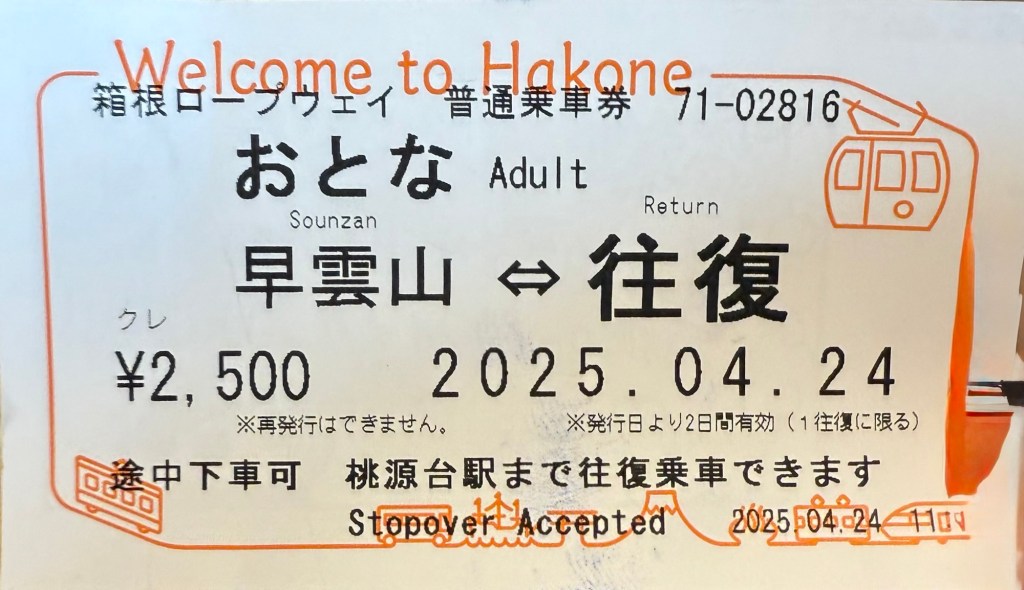
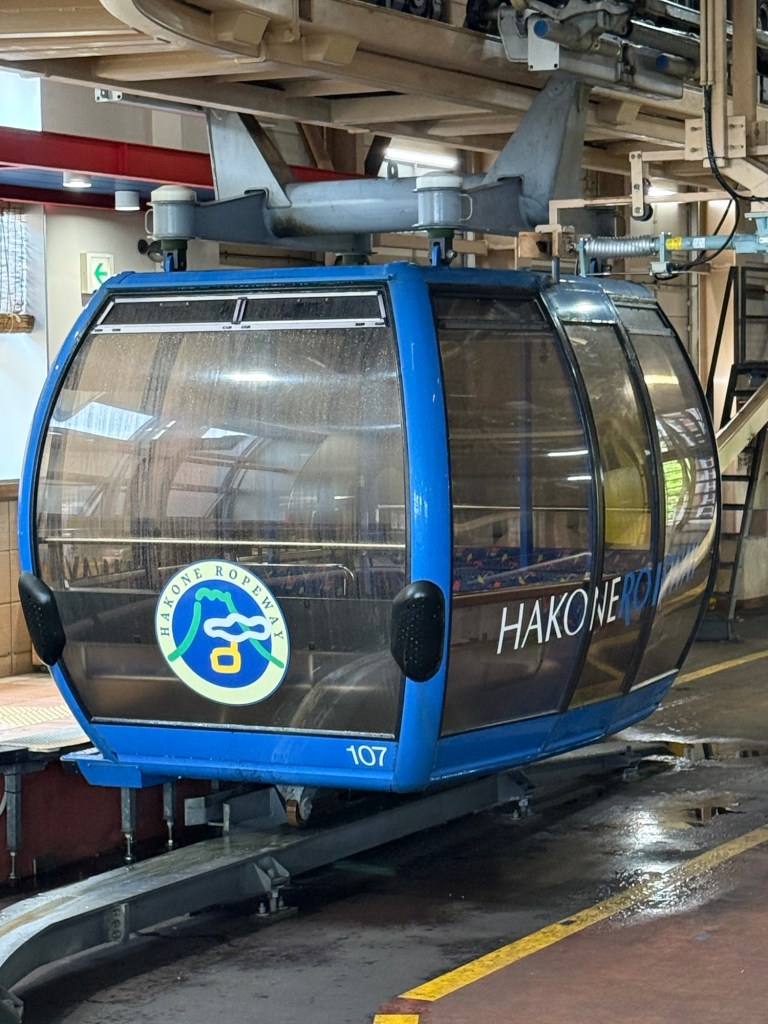
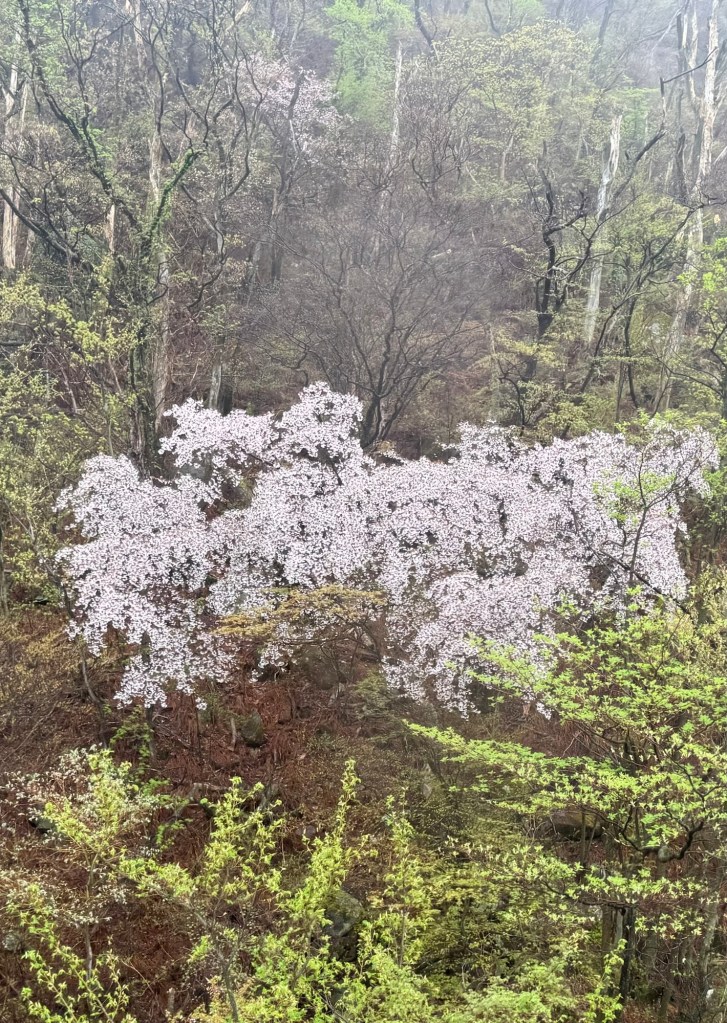
The cable cars take us up and over the mountains, where there are huge evergreen trees and deciduous trees that are only starting to bud out; the forest is peppered with blooming cherry trees and dogwoods.
The clouds that moved in yesterday ensured we didn’t have views of the entire mountain range, but the tallest mountain is Mount Hakone, with its highest peak Mount Kami (1438m ~4700’). truncated by two overlapping calderas, the largest of which is 10 × 11 km (~33,000’ x 36,000’) wide. The calderas were formed as a result of two major explosive eruptions about 180,000 and 49,000–60,000 years ago. Lake Ashi lies between the southwestern caldera wall and a half dozen post-caldera lava domes. We saw a warning sign at several of the cable car stations about volcanic gas. Mount Hakone’s last significant eruption occurred on June 29, 2015.


Once we arrived at the final cable car station, we bought tickets for the lake Ashinoko cruise. There are two large “pirate “ ships that make the circuit.
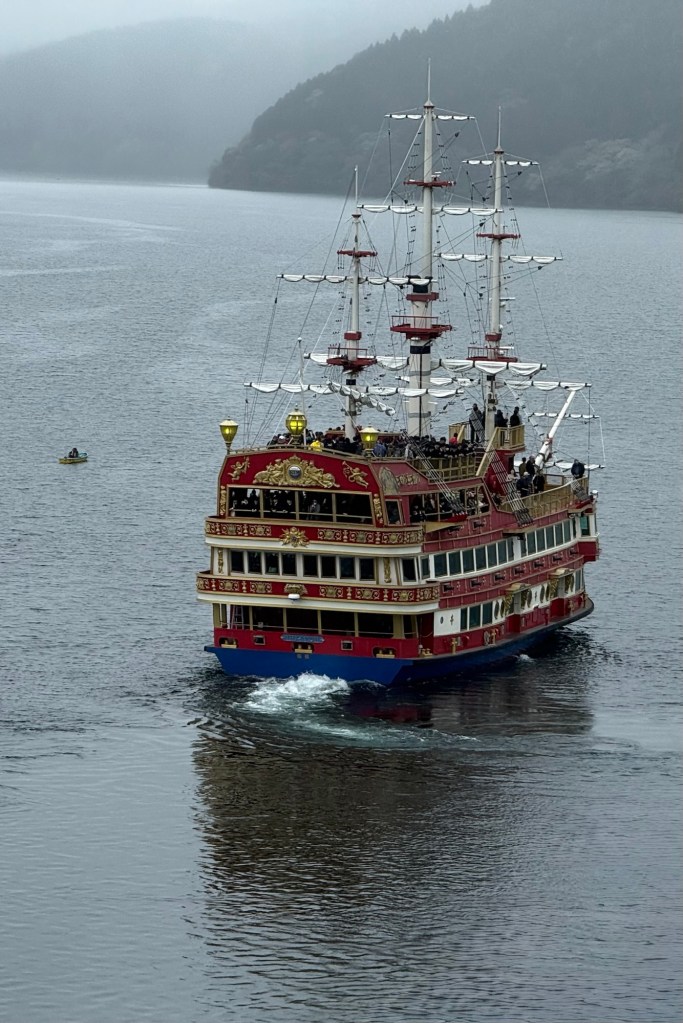
This one departed just before our arrival at the gate, but another was leaving in 30 minutes.

I bought first class tickets so we sat just behind the bow.

Scattered around the lake we could see some (what I presumed were) large resorts. We stopped at two small ports to disembark/embark more passengers before continuing on. Each location had more hotels nearby.
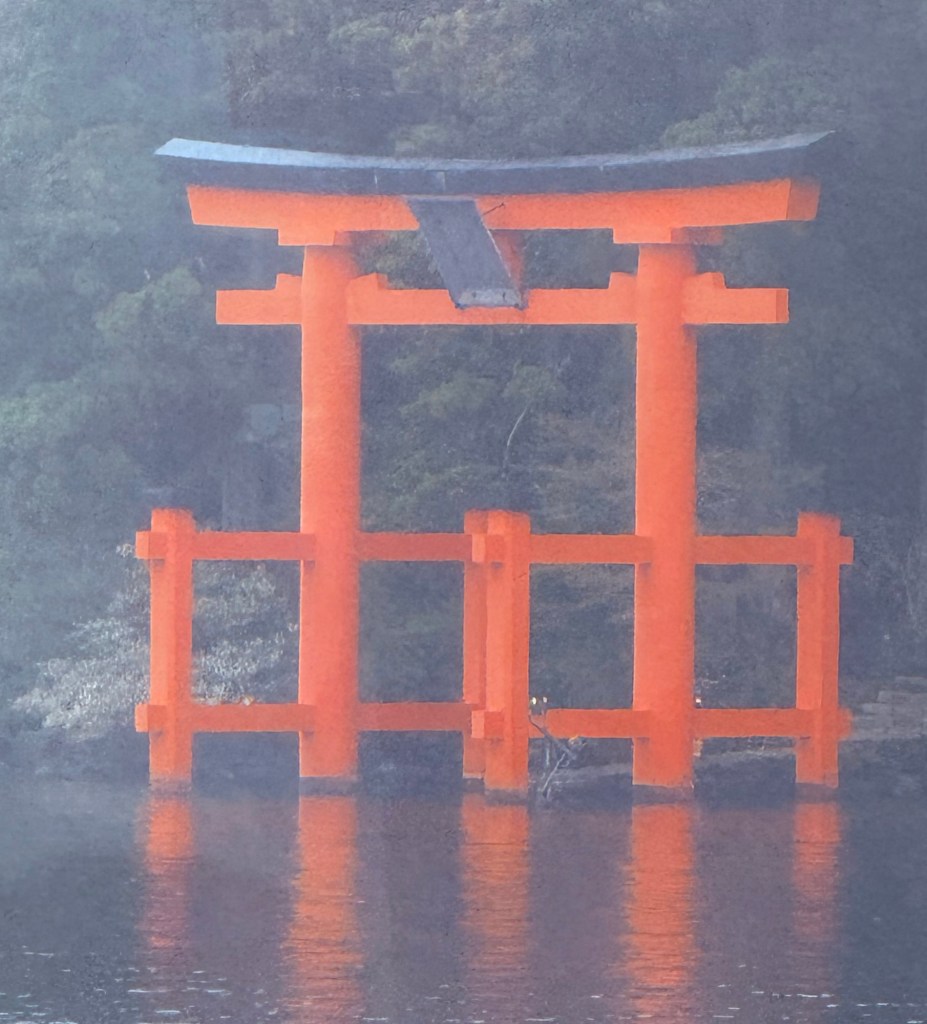
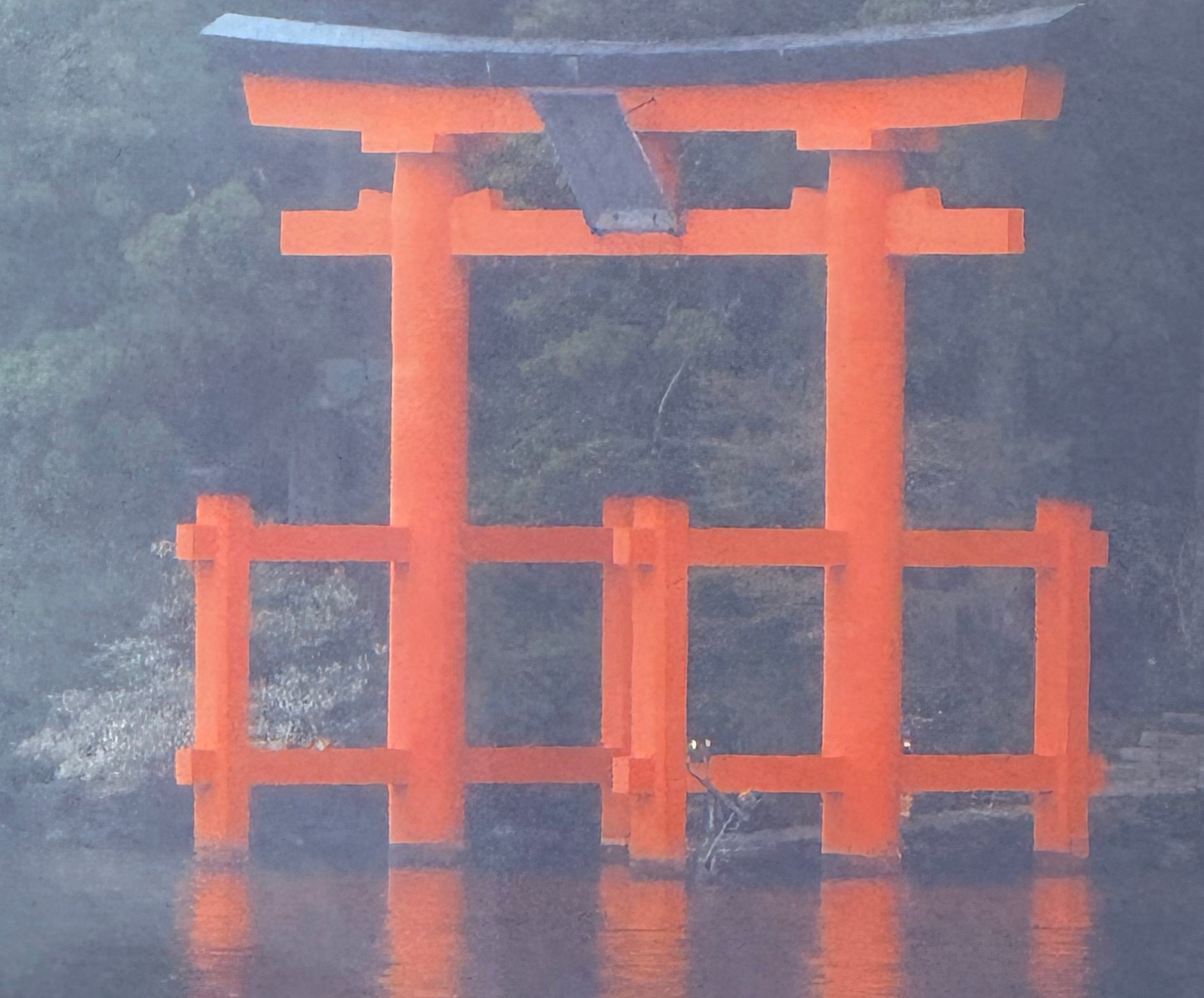
Torii gate – “red gate of peace” (heiwa no torii)
We did not disembark at this last stop around the lake, but near the Torii gate you see, there is a shrine called the Hakone-jinja shrine and it dates back to the year 757. Many military commanders prayed at this shrine devotedly, which brought it fame throughout the country. Another group of worshippers were travelers, who regularly visited the Hakone area, and often came here to pray for a safe trip.
A torii gate is a traditional Japanese gate most commonly found at the entrance of or within Shinto shrine;It symbolizes the transition from the mundane to the sacred, marking the boundary between the everyday world and the spiritual realm. When passing through a torii, it’s customary to bow slightly and walk on the sides, not directly in the center, which is reserved for deities (similarly, when walking through the paths to a shrine , the center is reserved for the gods). Torii gates are an integral part of Shinto shrines, marking the entrance to sacred spaces and representing the presence of deities. Traditionally painted red, In Shinto, red is associated with protection and vitality, warding off evil spirits and symbolizing the vitality of the shrine.
Shinto is a Japanese religion dating from the early 8th century and incorporating the worship of ancestors and nature spirits and a belief in sacred power (kami) in both animate and inanimate things. It was the state religion of Japan until 1945. The word Shinto comes from the Chinese, shéndào ‘way of the gods’.
Shrines are dedicated to Shinto deities (kami) and are often marked by a torii gate. Temples are Buddhist and often feature a sanmon gate. While historically intertwined, these traditions are now largely separated, with shrines primarily focusing on the worship of kami and temples on Buddhist teachings and practices.
The mountainous scenery and lake cruising experience reminded us so much of cruising around Lake Luzern in Switzerland.
Arriving back at the “pirate” landing, there’s another group waiting to board, though it is now starting to drizzle, so we’re happy to be finishing up rather than staring out. We reverse course on the ropeway cable cars until we reach our home station. Now time to call the hotel shuttle to take us back.
 TerraTraveler