
Trip 50
April 17, 2025
Our first full day after arriving, we consulted the concierge about some sightseeing options over the next few days and how to get to each.
In so far as we’ve discovered , Kyoto does not have an extensive light rail or subway system, but does seem to have good coverage with its city bus system. For tourists like us (who mainly use public transportation), this makes traveling across the city fairly time inefficient. It took an hour to travel by bus from the Ryōanji Temple back to our hotel and even a taxi there took 30 minutes.
Some observations about “differences”, not that they are good or bad, just observations.
- Cars are righthand drive. This is apparently because the British helped establish the rail system and we know the Brits drive on the wrong side of the road. 😉
- Taxis are quite different- most have nice clean (white) seat coverings and the rear passenger door swings open (and closed) as controlled by the driver—don’t touch the doors! The taxi we took from the train station to our hotel even had the inside door panels covered with clear plastic.
- There are very few “foreign” cars, the vast majority seem to be Toyota, followed by other Japanese brands like Honda, Mitsubishi, Mazda, Nissan. I’ve seen a handful of imports – one Chevrolet Camaro, a few BMWs, Mercedes, one Maserati. The question is whether there are high import duties on foreign cars. The answer is there are no import taxes on foreign cars, but
there is a consumption tax imposed at the rate of 10% (standard tax rate) or 8% (reduced tax rate) on, in general, all goods imported into or manufactured in Japan. - Electric vehicles- I’ve seen very few. I understand that electricity costs are somewhat higher here than in the US (28¢/kWh), though gasoline costs (as of April, 2025) are just under $4.65 US /gallon (184¥/L) , while passenger car fuel efficiency is about 2x US averages, at 23.5 km/l (55 mpg). Japanese cars also don’t weigh what many American car and pickup trucks weigh (and no big SUVs). Saw one Tesla, some Ioniq5 taxis.
- Payment systems – much greater use of cash, and not just at small businesses. The parks and museums we visited were cash only and while big stores took credit cards, often, no touch to pay (though most vending machines take credit cards, and some, touch to pay ). We used our debit card to obtain currency at an ATM at 7-11 (7Bank) When we bought some food at 7-11 (cash), it’s “touch free “ as you place the bill in some sort of scanner, and your change (both bills and coins) come out at the bottom. Coins, ugh (you need a coin purse) One prepaid card is widely used- Suica, which we loaded to our Apple Wallet and to which we loaded ¥ using a credit card. We use Suica to pay for bus & train transit (touch to pay). On a bus, you simply tap out when you exit the bus (flat rate 230¥), while trains require tap in and out as in London.
- Convenience stores – There are three that dominate: 7-11, Family Mart and Lawson’s. 7-11 dominates in terms of numbers. In an urban environment, I only saw one large grocery store.
- Trash – The city is very clean, but there are no public waste bins. You carry your trash home.
- Electricity and plugs – Japan uses the same plugs as the U.S. though typically only 2 prong. Their voltage is 100V which is just about 10% less than the U.S. 110-120v and they have either 60hz or 50hz frequency (US is 60hz). Tokyo and N and E are 50hz and S and W of Tokyo (Osaka and Kyoto etc) are 60hz. Most modern electronics are made for 100V-240V now (check the power adapter) and don’t care about the frequency, though an appliance built for 60hz plugged into a 50 hz outlet will run more slowly.
So, after all that, we walked across the bridge over the Kamo River to the underground station (tapping in with the Suica card) and made sure to take the “local” , as the express train takes you to Osaka. This took us near the Imperial Palace.
The palace was the former residence of the Emperor of Japan; the residence for the Emperor was moved from Kyoto to Tokyo in 1869. Since the Meiji Restoration in 1869, the Emperors have resided at the Tokyo Imperial Palace. The origins of the Restoration lay in economic and political difficulties faced by the Tokugawa shogunate. These problems were compounded by the encroachment of foreign powers in the region which challenged the Tokugawa policy of sakoku, specifically the arrival of the Perry Expedition under orders from U.S. President Fillmore. Under subsequent treaties , Japan was forced to open to the West, questioning the shōgun‘s political authority over maintaining Japanese sovereignty. The city of Kyoto was home to the Imperial Residence from the time of the relocation of the capital by Emperor Kanmu in 794. The present Kyoto Imperial Palace had been used as the residence of Emperors for 500 years since 1331 until the capital moved to Tokyo in 1869.
The Palace is part of a large garden (Kyoto Gyoen) and a good walk from the park entrance to the Palace.
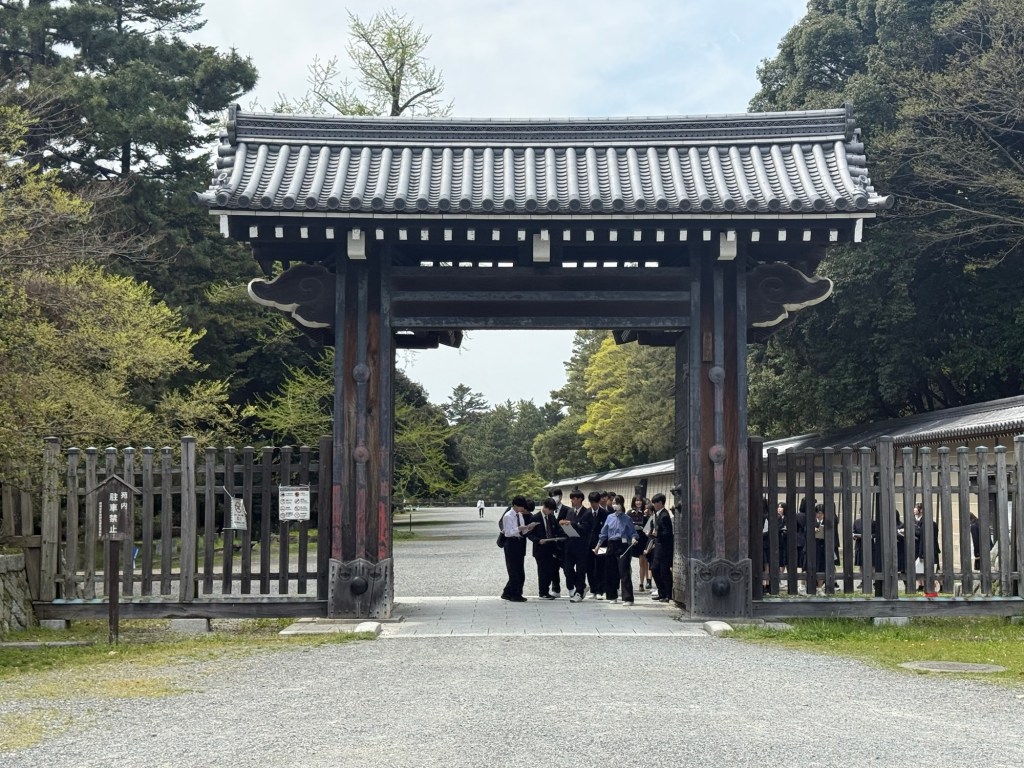
As we walked towards the entrance to the palace, we saw a fire engine cruising slowly down the side of the palace. We found out why, later in the tour , as the palace (constructed of wood) has burned and been rebuilt , multiple times in the course of its history.
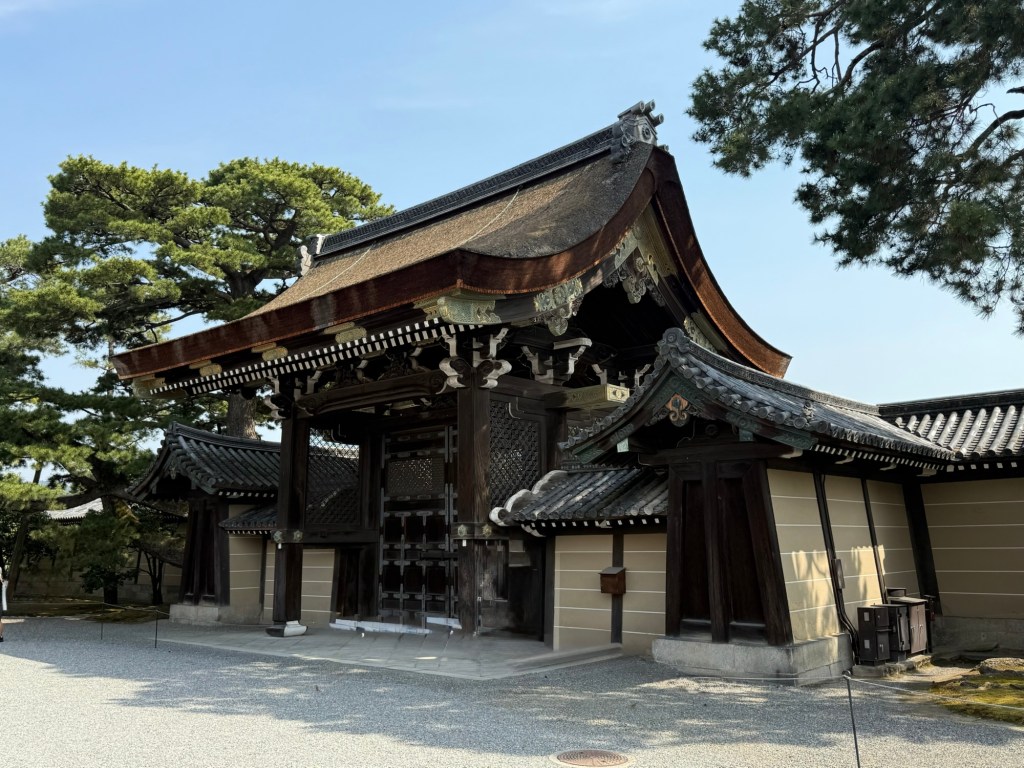
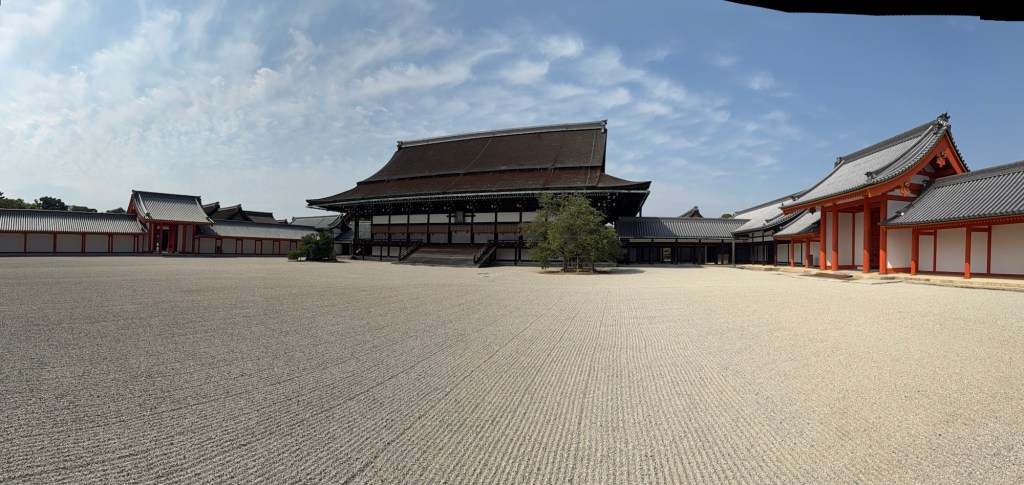
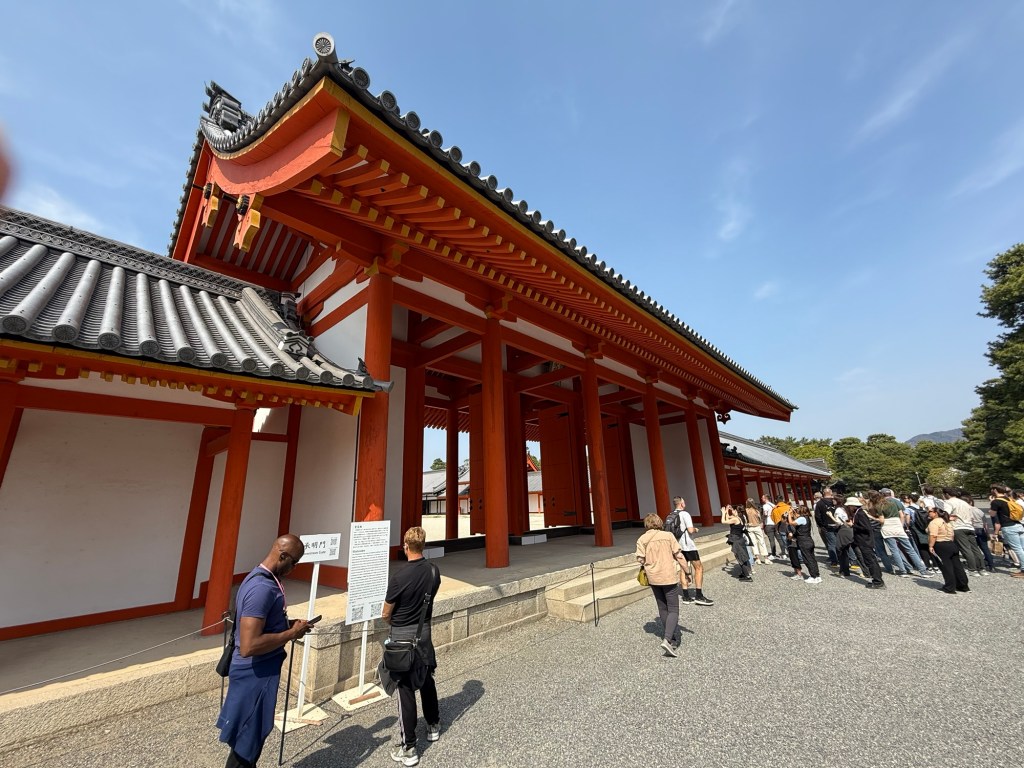

We had a good English speaking guide, but the pace of the tour did not lend itself to simultaneous picture taking and tour content.
The palace should really be thought of as a very large compound rather than a large central building , and though the Emperor moved to Tokyo in 1869, the palace is still a highly prized part of history. As told , the center part of the compound was removed (as much as one third during the second world war) to minimize fire risk in the event of Allied bombing. Kyoto was spared from Allied bombing during World War II, including the atomic bombings, primarily due to the intervention of Secretary of War Henry L. Stimson; Stimson advocated for Kyoto’s preservation, citing its historical and cultural significance, despite it being a top target initially. Nagasaki, another city with military and industrial importance, was then selected as a replacement target.
One interesting part of that reconfiguration was the removal of some of the connecting passageways between buildings. All of the buildings are raised off of the ground so that the Emperor’s feet never had to touch the ground and you could still see some of the foundation stones where a part of one building would have connected to another, across a passageway, now removed.
There are of course, gardens within the compound of the Palace.
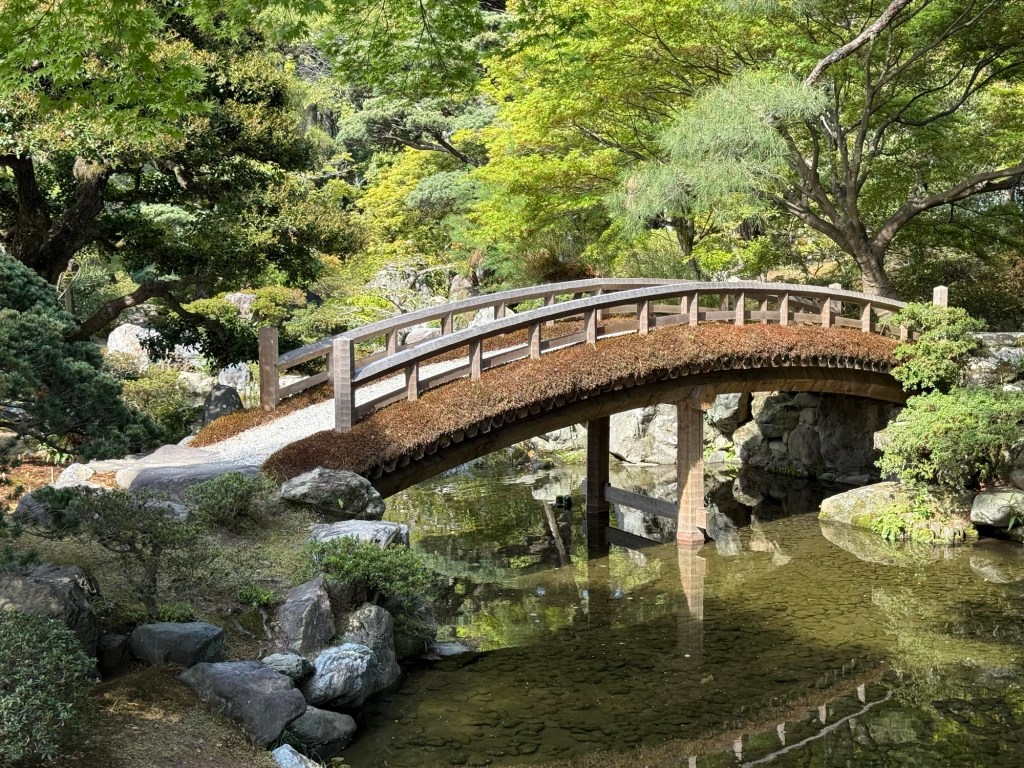
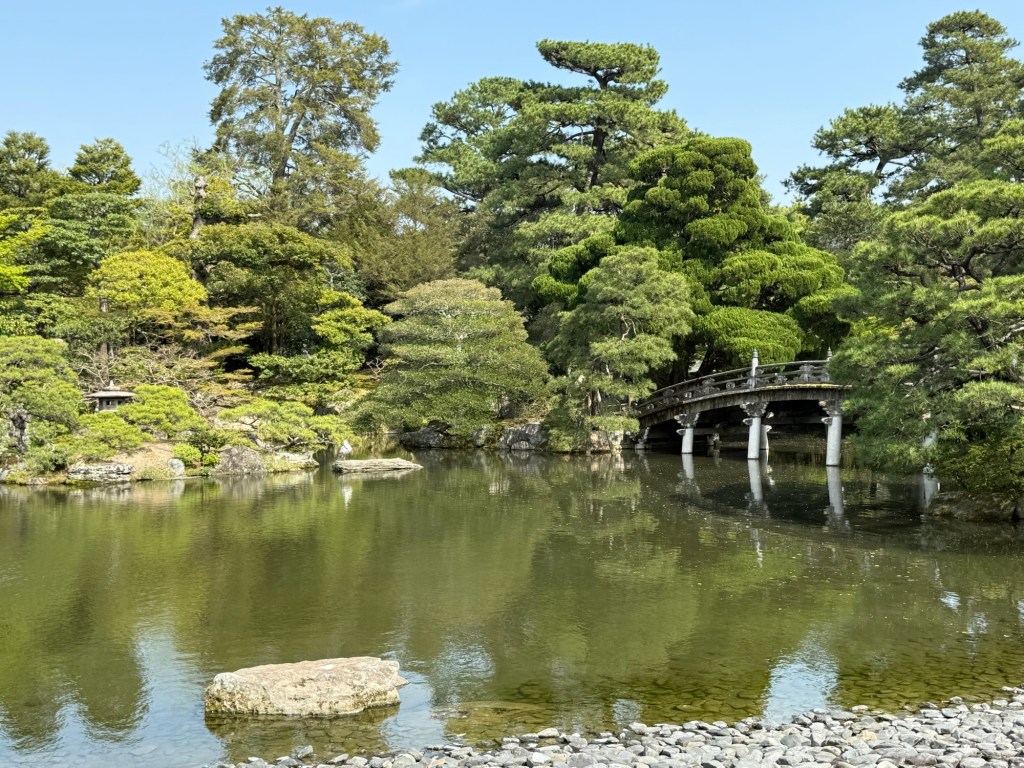
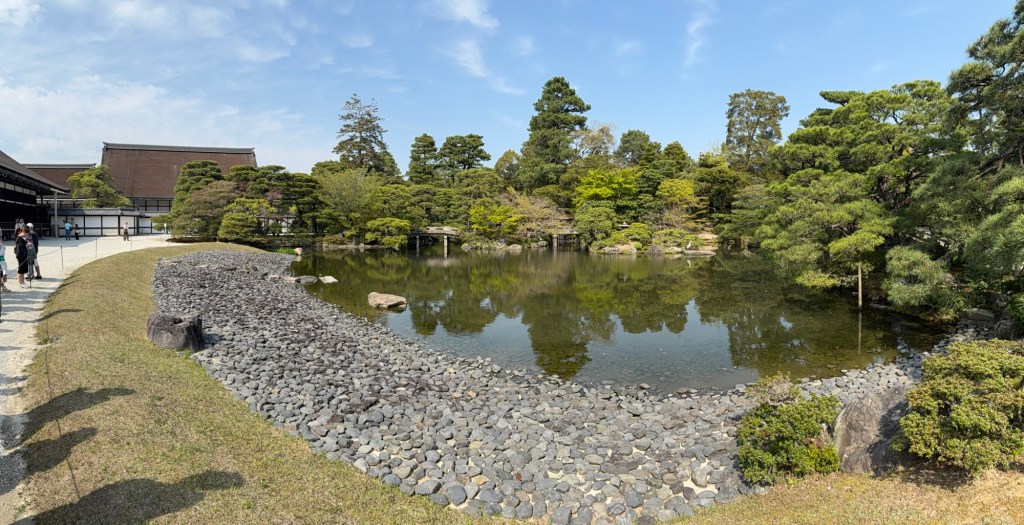
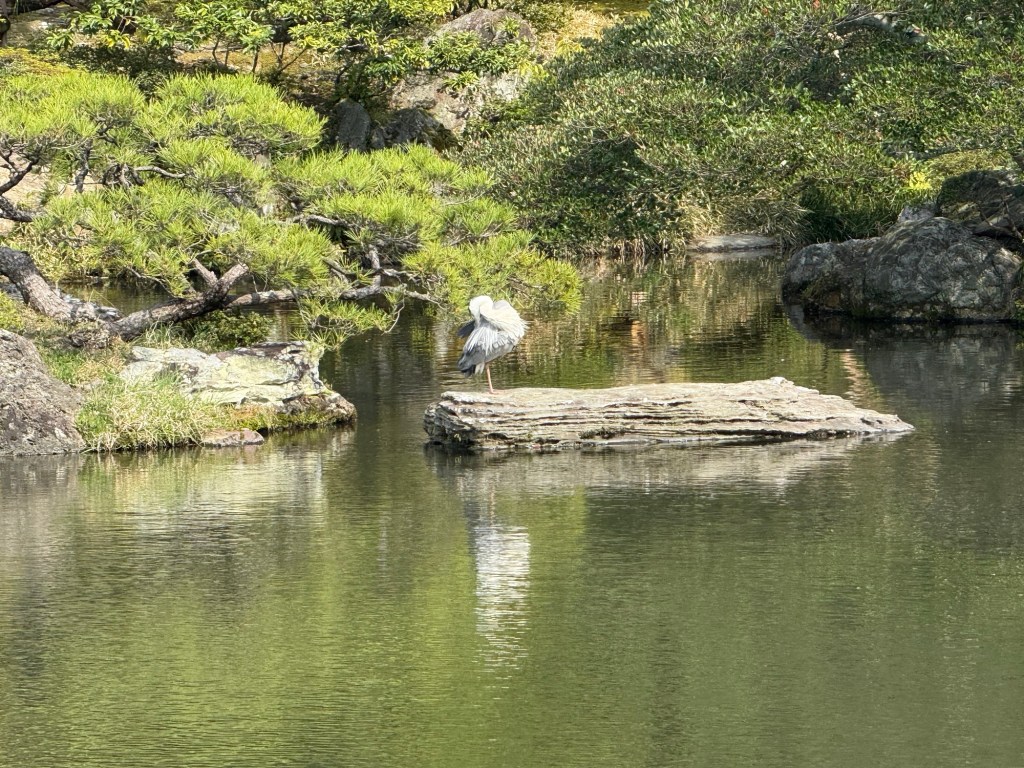
The tour does not give entry into any of the buildings, but about an hour long tour around the perimeter of the various buildings and gardens.
 TerraTraveler
Everything looks breathtaking!
LikeLike
Thanks for all the commentary and beautiful pictures!
LikeLike