
Trip 50
April 16, 2025
We left our “Super” hotel early, even though it was but a few blocks to Tokyo central train station, as we wanted to eat breakfast and find the tracks for the Shinkansen “bullet train” to Kyoto.
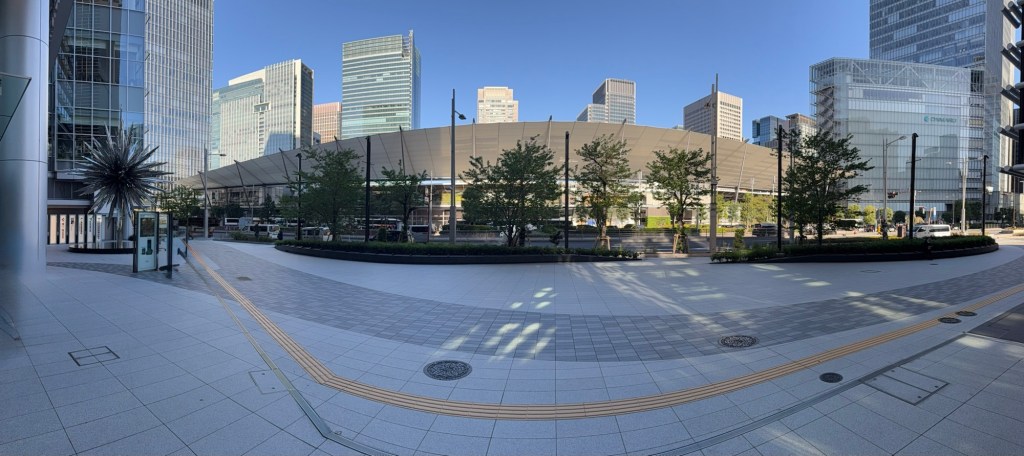
Although there is a lot of shopping inside the station, most of them don’t open until 9:30am, but we also wanted to buy food for the train to Kyoto since the journey is a bit over 2 hours and will span mid day. There’s a “Delicious Deli” open and doing a brisk business for travelers like us, needing a bento box.
Lunch secured, we needed to find the right train line and tracks for the Shinkansen and use one of the ticket machines to exchange the QR code we received when we bought our tickets online at Baolau.com for physical tickets to go thru the gates. This did not take long, but we waited until the track was posted before going thru the gates. There are quite a few departures to Kyoto, with another one leaving 20 minutes before ours, giving us a chance to look around the track. One thing that stuck in my mind from our 2017 trip to Tokyo were the variety of things sold in vending machines and there were three machines near our departure area, one with ice cream and the other, drinks and a third with coffee. We see these vending machines elsewhere in the cities, on the sidewalks as well.
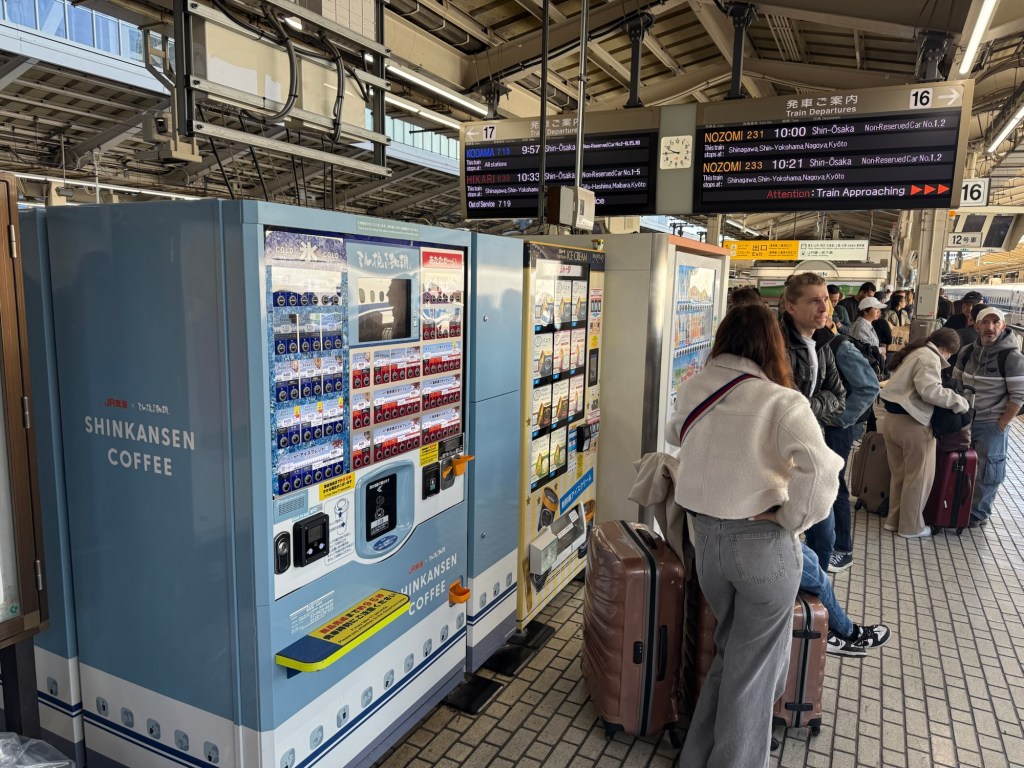
The Shinkansen require a seat reservation, so our ticket gives us the car number and seat number. Since you know your car number, you stand at the marked place trackside; the train stops exactly where each car number is marked on the area, trackside. There are barriers that automatically rise and descend to allow and close off boarding, which is quick.
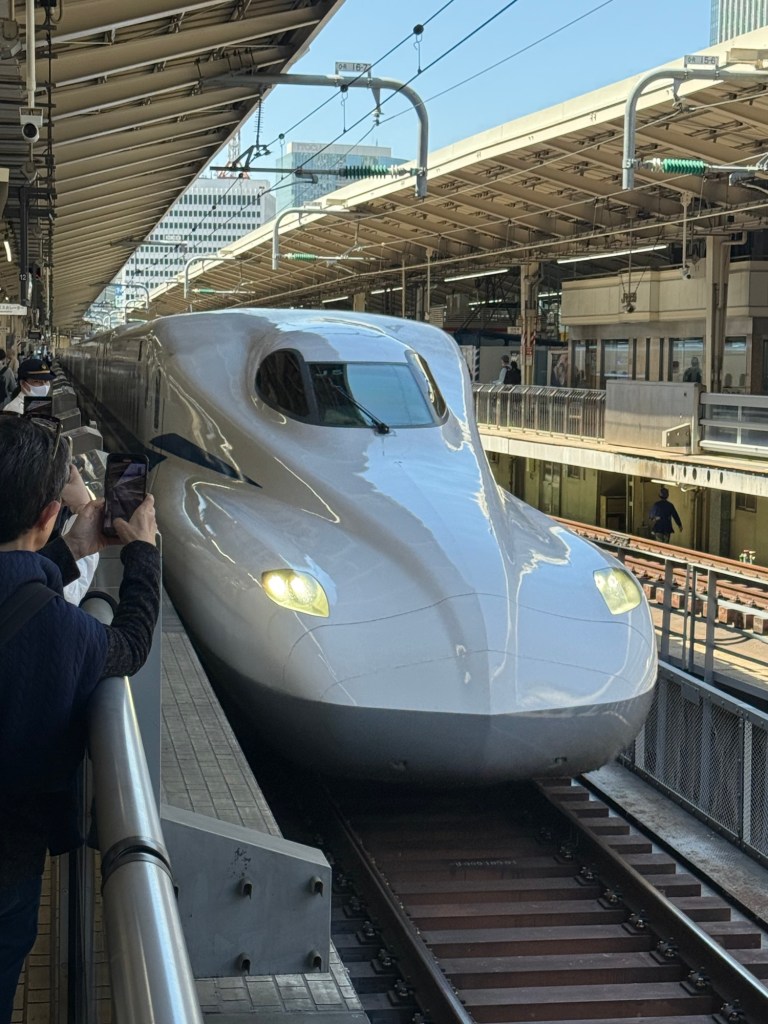

There is a luggage storage area as you enter the car, with individual combination locks. We did not use that feature, but there was an announcement (in English as well), that if you forgot your combination, you had to ride to the end of the line to get your lock disengaged.
The Shinkansen stopped a few times before the longest part of our journey, where it reached 167 mph. For a lot of the trip, the scenery ripped by as we passed farms, smaller cities, manufacturing facilities and warehouses. In the distance, we began to see some mountains and about 11:00 (about 40 minutes after we departed) we could see Mount Fuji, snow capped in the distance.
At 162 mph, this is a glimpse of Fuji and we were lucky it was a clear day , or we’d have seen very little. If you go this route and want to hope to see Fuji, sit on the right side of the train!

Is this Maglev coming soon?? Wow! https://www.instagram.com/reel/DIWLRMtMndX/?igsh=Y2JtN2RjdTN2b3Y=
We arrived in Kyoto central train station midafternoon and elected to take a taxi to the hotel since we’ve had little real sleep over tts last two days. The taxi stand line was….long, but the ride to the hotel was not. Still, even for a 3:30pm arrival, our room was not ready, so we ventured off to a nearby temple, Sanjusangendo.
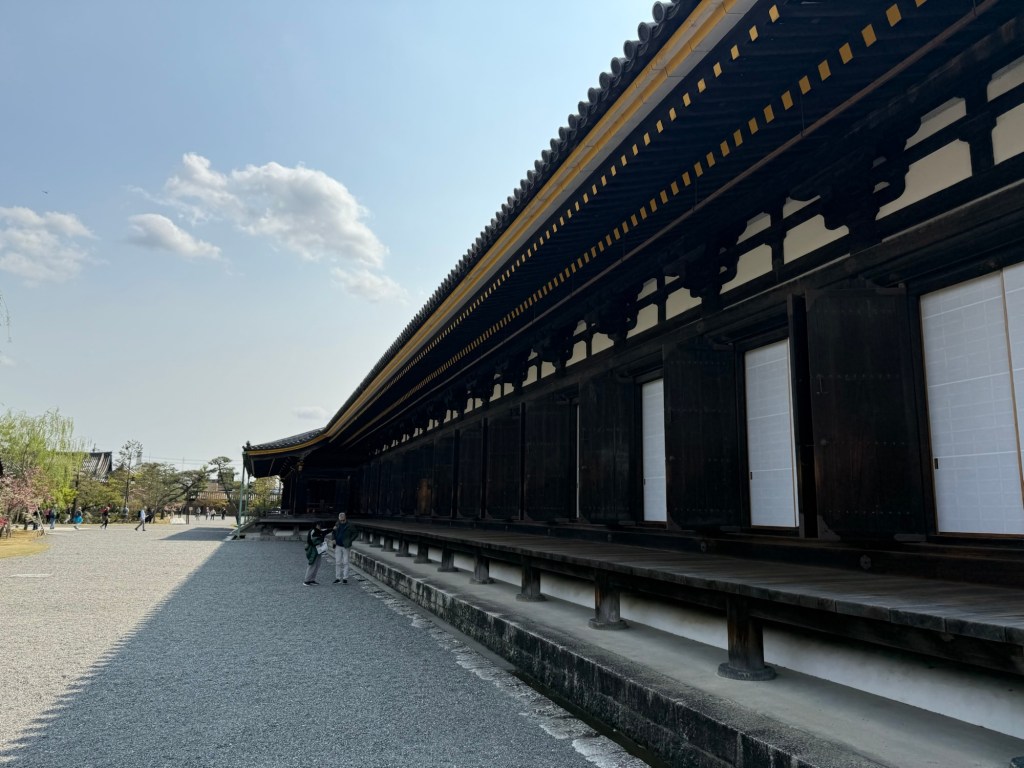
Sanjūsangen-dō is most famous for its massively long hondō (main hall) dating from 1266. Sanjūsangen-dō was founded by the famous samurai and politician Taira no Kiyomori (1118-1181) in 1164 for the cloistered Emperor Go-Shirakawa. He built the temple in the emperor’s own compound Hōjūji-dono in order to gain a noble title, that of Chancellor of the Realm, becoming the first samurai to do so. As is customary in Japan in temples (even our hotel room in Tokyo had slippers), you must take off your shoes; there is a very large shelving area for shoes. Now shoeless, we begin the self guided tour of the temple. Rounding the first corner of the main hall (unfortunately, no photos allowed inside) we see
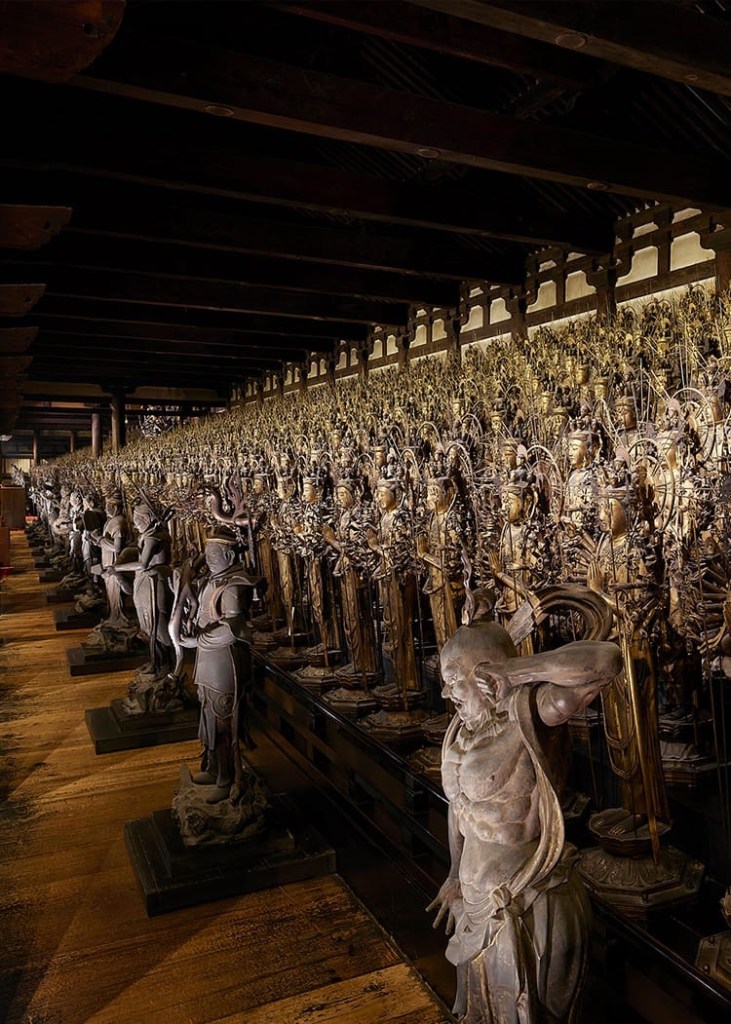
1001 statues of Kannon
My jaw dropped.
Kannon (God or Goddess of Compassion) personifies compassion and is one of the most widely worshipped divinities in Asia and Japan in both ancient and modern times. Kannon’s origins are unclear, but most scholars agree that Kannon worship began in India around the 1st or 2nd century AD and then spread to Southeast Asia, China, Korea, and most other Asian nations. Veneration of Kannon in Japan began in the late 6th century, soon after Buddhism reached Japan by way of Korea and China. In Japan, Kannon’s paradise is known as Fudarakusen.
There were descriptions of each of the statues representing the eight guardians of Buddhism, but since there were no pictures allowed, I cannot share pictures of them, nor those descriptions. The “Eight Guardians of Buddhism” typically refers to eight prominent Bodhisattvas ( a person or spiritual being who is able to reach nirvana , but delays doing so out of compassion to save suffering brings) who are revered for their protective roles and teachings within the Buddhist tradition. These figures include Avalokiteśvara (Compassion, representing the boundless compassion of all Buddhas), Vajrapani (power and strength, often depicted wielding a thunderbolt), Ākāśagarbha (Space), Maitreya (Future Buddha, who will appear to teach the Dharma when the current age is over), Samantabhadra (Universal Benevolence, representing the universal aspiration of all Buddhas), Kṣitigarbha (Earth, vowed to liberate beings in the realms of suffering), Manjushri (Embodiment of wisdom and a guardian of the Dharma (teachings), and Sarvanivaranavishkambhin (Removing Obstacles, helps practitioners overcome hindrances on the path to enlightenment). Each of these eight guardians of Buddhism were depicted in almost life size form.
In the center of the main hall sits a large, wooden statue of a 1000-armed Kannon (Senju Kannon) that is flanked on each side by 500 statues of human sized 1000-armed Kannon standing in ten rows. The thousand armed Kannon is depicted with a thousand arms and sometimes eleven heads, signifying his ability to see and help all beings in need. The 11 heads represent different aspects of Avalokiteśvara’s compassion and awareness. The ten lower heads are often seen as representing the stages of enlightenment or the ten virtues of the Bodhisattva, while the top head symbolizes the Buddha of Infinite Light. This statue has 40 smaller arms sprouting from its sides in addition to the two arms with hands pressed together in prayer in front of its chest. Each of these smaller arms is believed to have the strength of 25 arms, meaning that 40 of them are equal to 1,000 arms.
In January of each year, the Ōmato National Archery Competition is held in the long courtyard outside to see which archer can shoot the most arrows the longest distance. A display of some of their bows and there certificates, is inside the main hall.
 TerraTraveler
One thought on “Tokyo, Kyoto and Sanjūsangendō Temple”