
Trip 49
January 17, 2025
Sir John Soane was a renowned 18th century English Neo-classical architect who left his design legacy in many still extant buildings, including the Bank of England (a truly massive building) , but the most vivid examples of his style and work are in his own residence, now a museum located in the Chelsea neighborhood (It is the smallest borough in London and the second smallest district in England and one of the most densely populated) in Lincoln’s Inn Fields.
There was a -20 minute queue for the free entrance into the museum. His residence became a museum upon his death as he was able to achieve thru an act of Parliament. What other personal residence could have come into existence as a museum thru an act of the national legislature?
The Act of Parliament that established Sir John Soane’s Museum was passed in 1833. The act preserved Soane’s house and collection as they were when he died, and made the museum free and open to the public.
What the act did-
- Established the museum as a private act of parliament
- Preserved Soane’s house and collection in perpetuity
- Kept the museum open and free to the public
- Settled the museum for the benefit of students and amateurs of architecture, painting, and sculpture
Sir John’s wife passed away long before he did, as did his eldest son. He was estranged from his youngest son and used this mechanism to ensure his son did not gain access to his estate (though he tried) , while preserving his vast personal art and sculpture collection. The museum is Britain’s smallest national museum. Virtual tour.
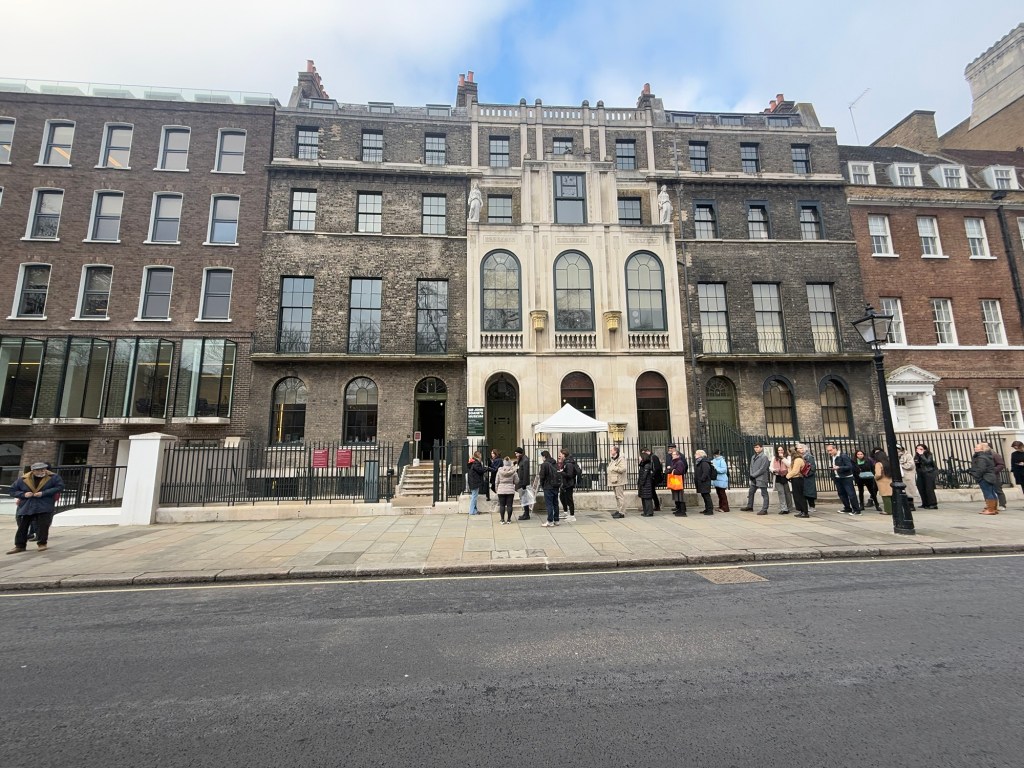
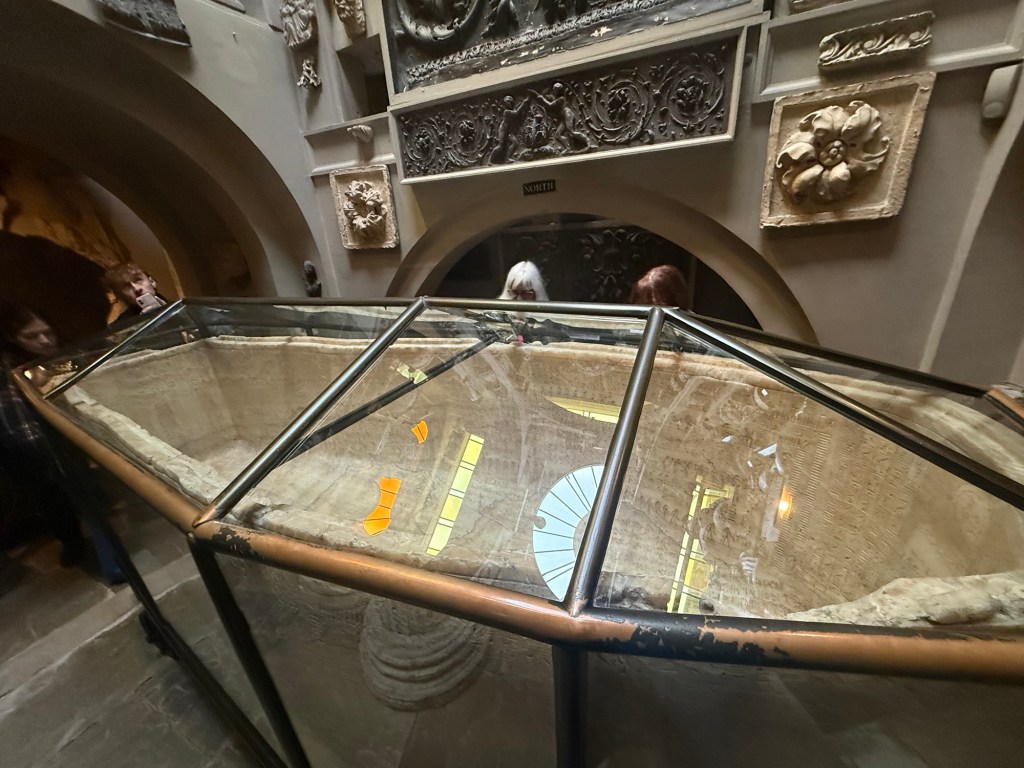
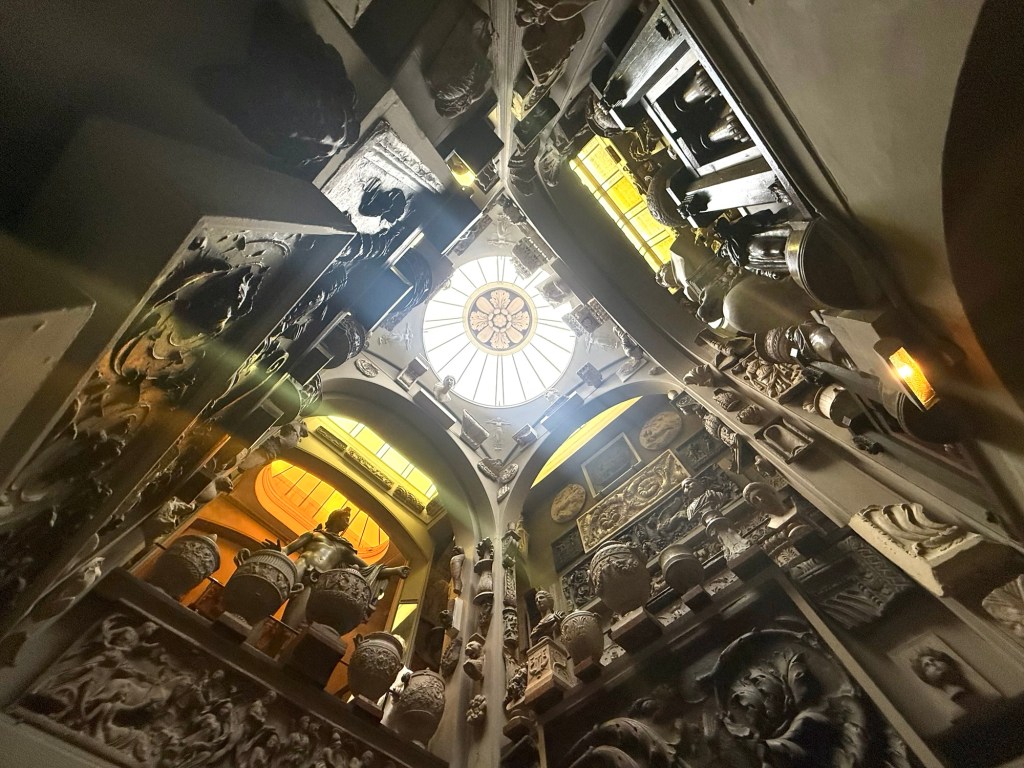
While the physical size of the museum is small (arranged across three homes and three + floors ), it’s a labyrinth with an intensity I’ve not seen before. There are drawing rooms and living spaces on the first floor (not the US convention of first floor) near the front of the buildings, but as you make your way back , every bit of wall space, floor to ceiling, is covered with his antiquities collection of sculpture, on down to the basement, where there is an Egyptian sarcophagus of SETI 1, not something what you would have expected to see in an individual’s art and architecture collection! He purchased the sarcophagus after the British Museum was unable to do so, having spent so much money on other artifacts. He acquired the SETI I sarcophagus for the sum of 2000£ in 1824 , more than he paid for his adjoining residence.
Soane dealt directly with Giovanni Belzoni, the explorer who discovered the sarcophagus, and was able to make a swift decision without going through institutional processes the British Museum would have done.
The sarcophagus remains one of the centerpieces of Sir John Soane’s Museum in London today. It’s made from a single block of alabaster and is intricately carved with thousands of hieroglyphs.

Did I mention “floor to ceiling” collection?
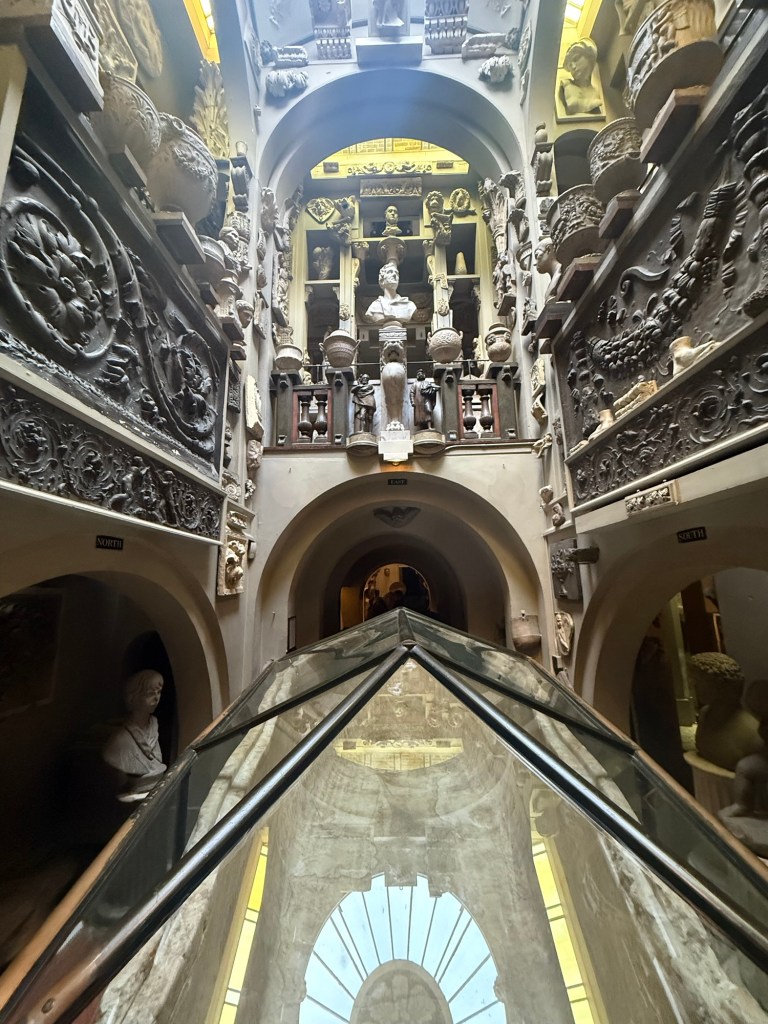
Drawing room
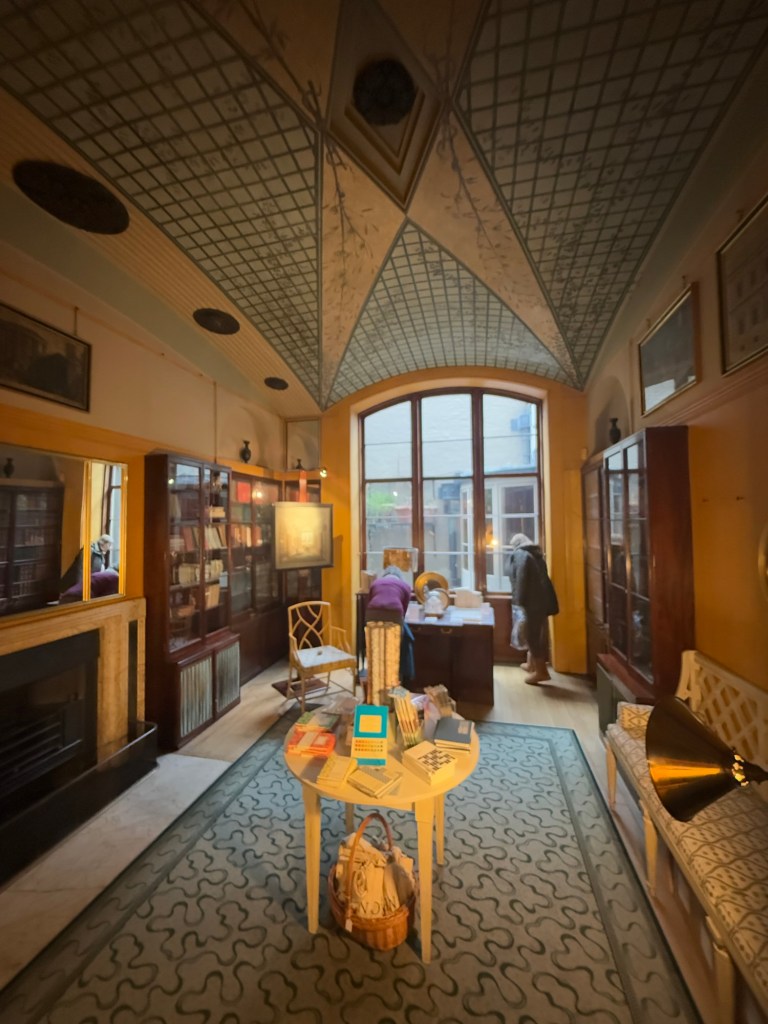
We spent a few hours here, but the intensity of the collection is more than you can appreciate on a single visit, so we need to come back.
The museum is across the street from the Lincoln’s Fields Park, about 7 acres of green space nestled into this densely packed area.
The present square was originally open fields – Cup Field, part of Fickett’s Field to the south and Purse Field to the west. As early as 1376 these fields were a common walking and sporting place for the citizens of London and there is some tradition of jousting. By the reign of Elizabeth I, Cup Field and Purse Field were pasture grounds in the hands of the Crown.
From the middle of the 19th century a public campaign was waged to open up the central garden to non-residents. In 1894 the newly-formed London County Council acquired the central garden, paying compensation to the Trust. Management of the garden passed to the Greater London Council on its creation in 1965 and to the London Borough of Camden in 1970.
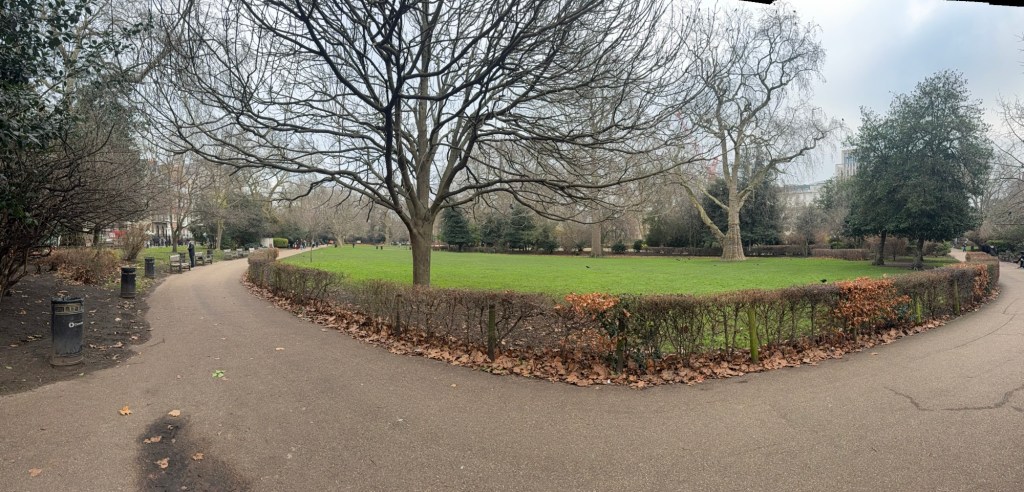
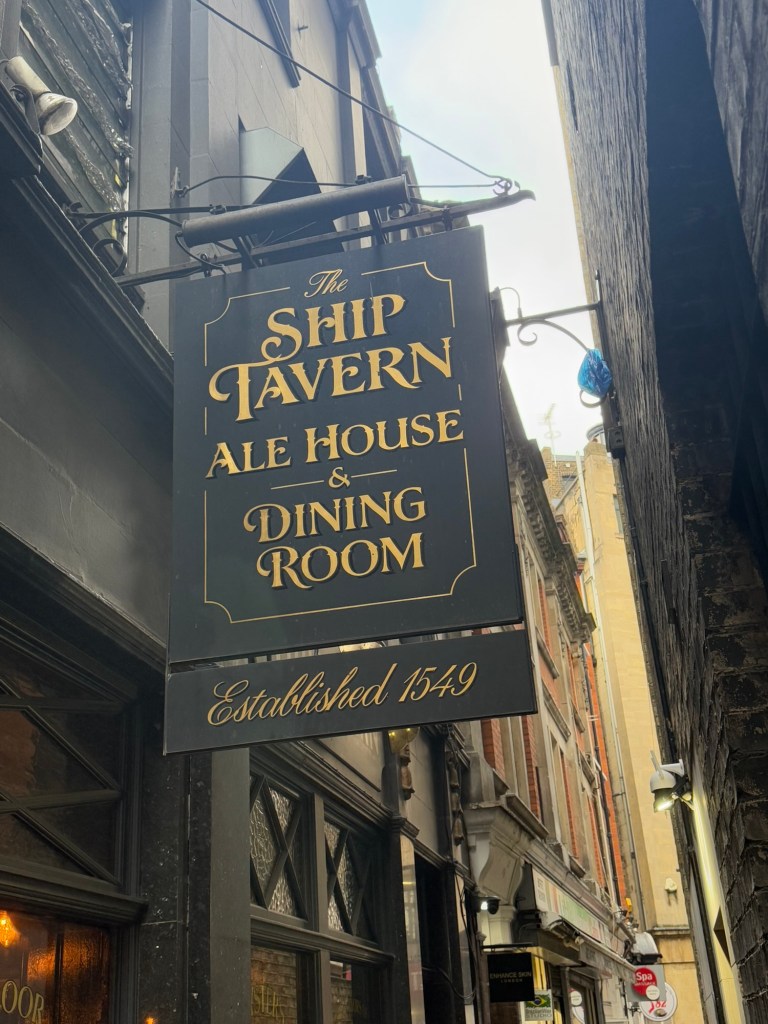
As we make our way back towards the Seven Dials markets, Neal Street and the theatre area (passing by the theatres where we attended the plays Mousetrap and Harry Potter Cursed Child), we pass an historic pub
Not to be missed in the area of the former ☹️Belgo Centrale is Humble Crumble.

Seven Dials area is a fascinating area of restaurants, pubs, coffee shops.
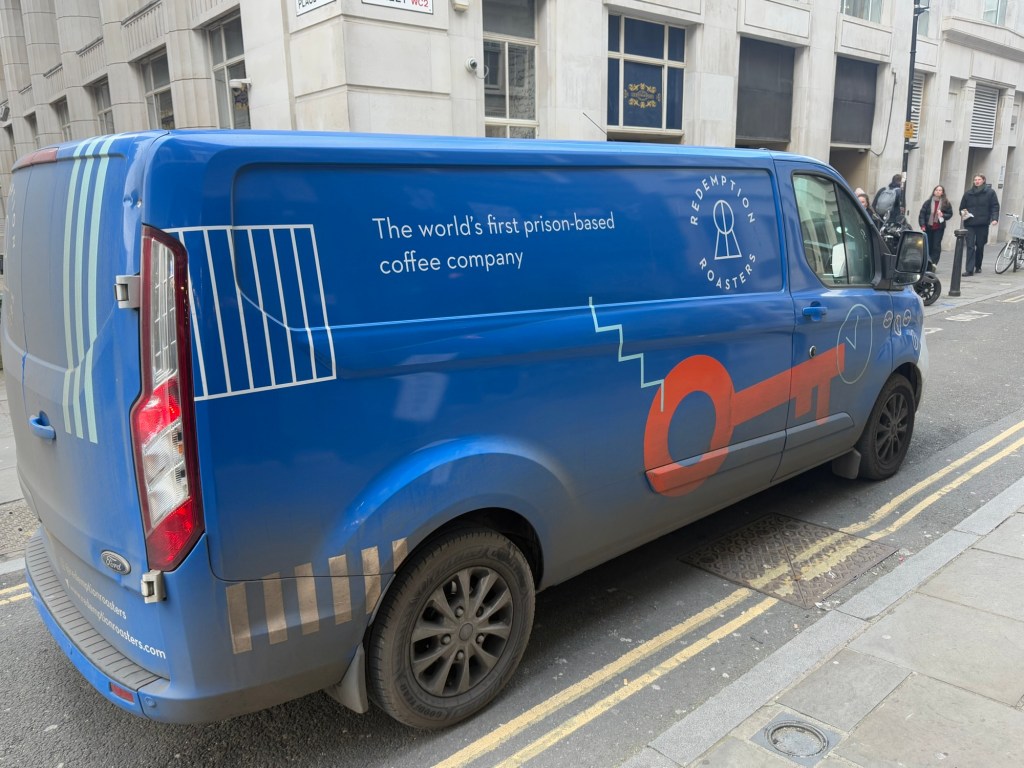
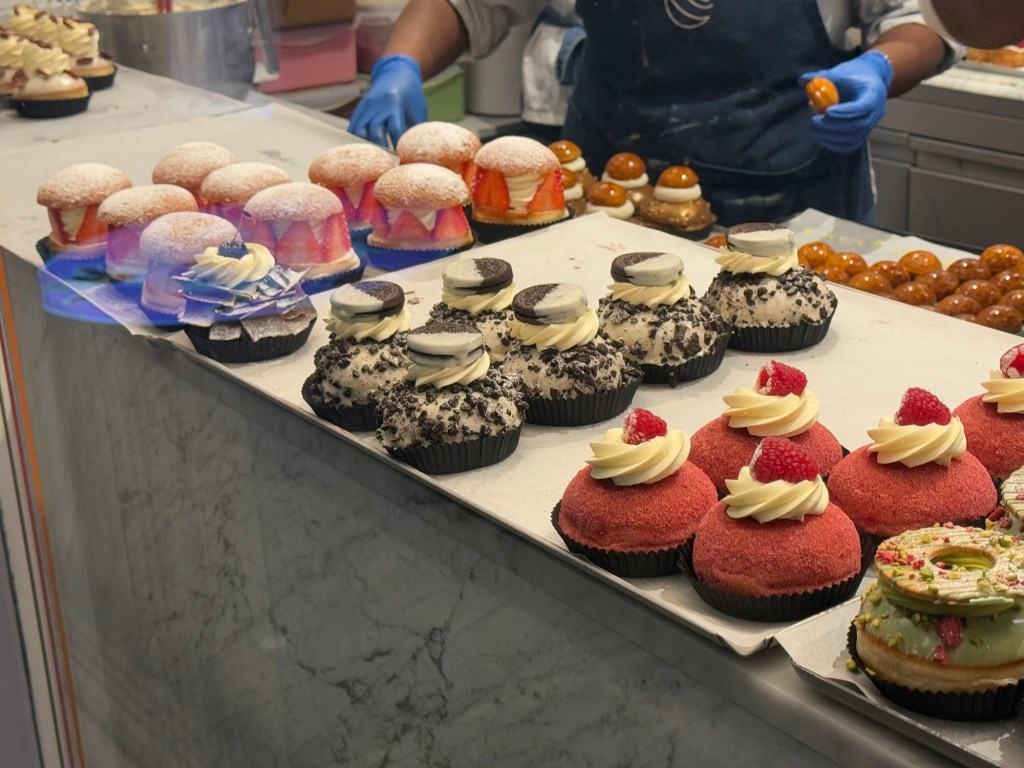
and bakeries
 TerraTraveler