Trip 48
November 5, 2024
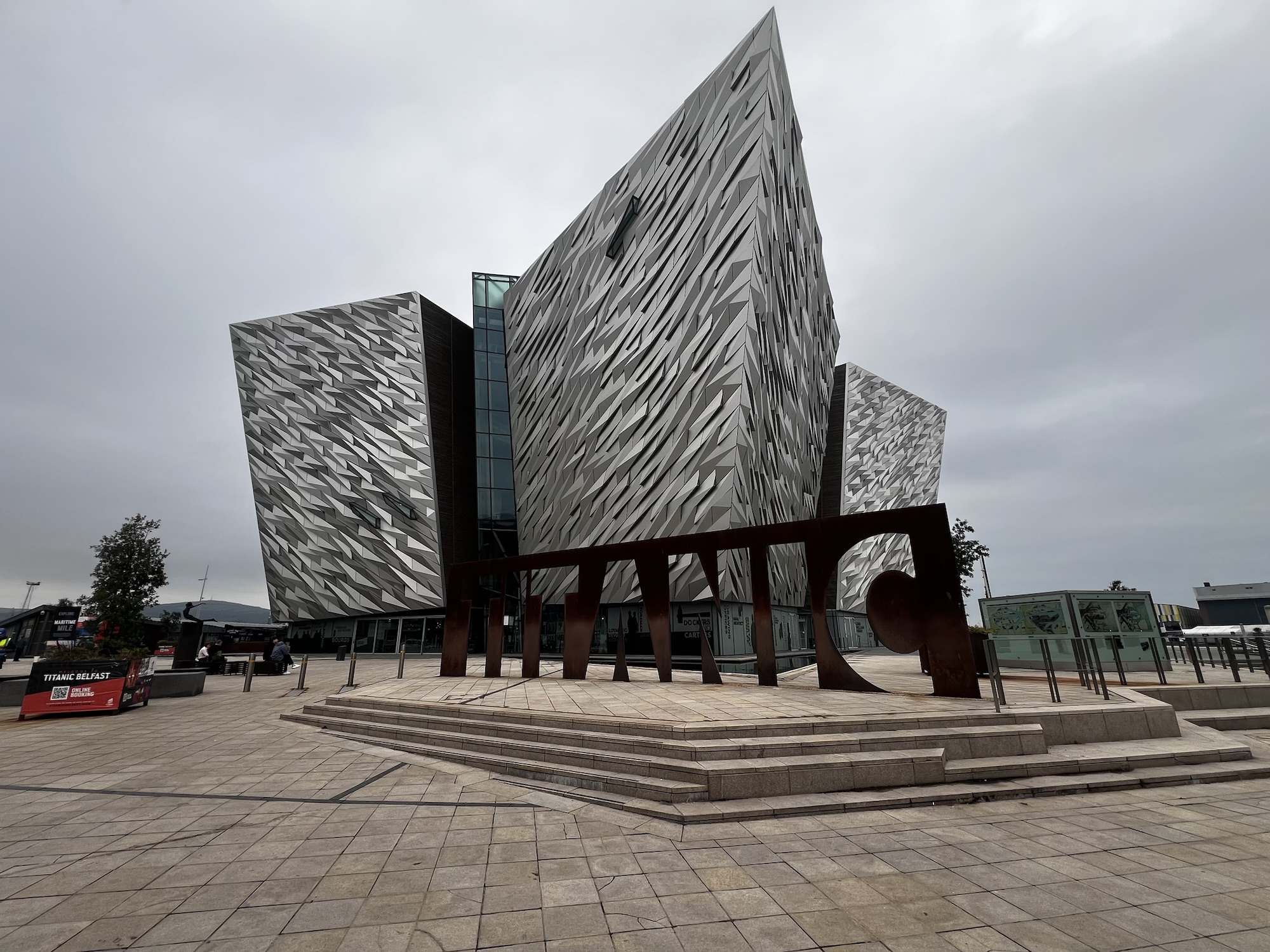
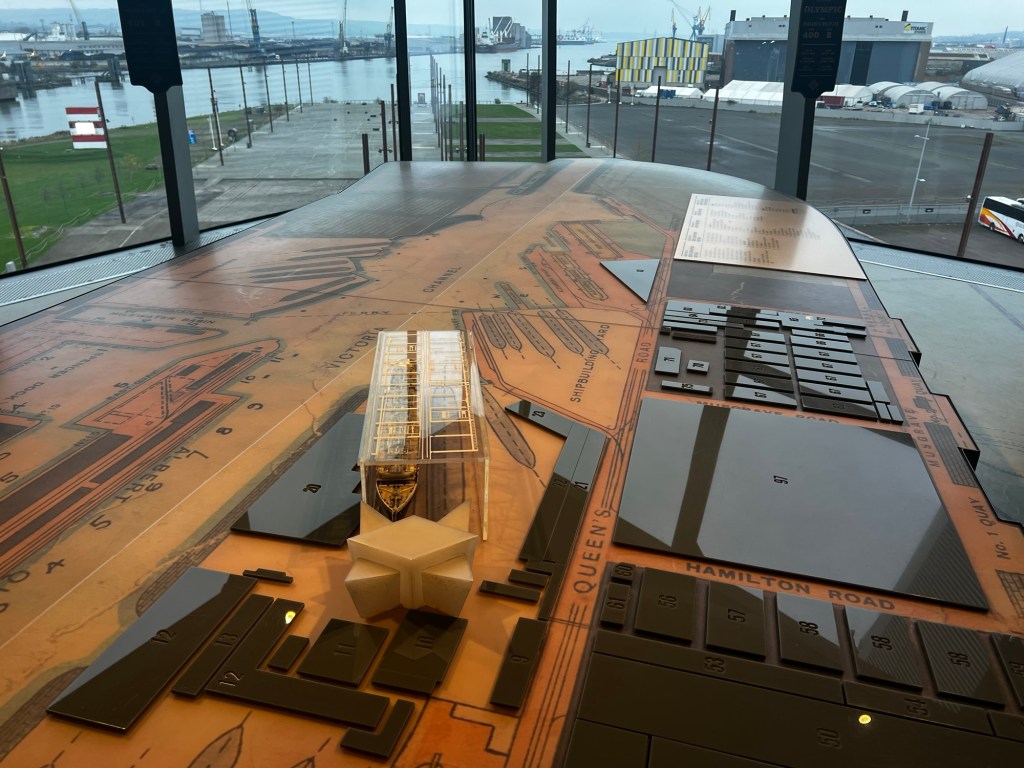
The “Titanic Experience” is not far from our hotel, across the river. It is a huge tourist draw, but was not crowded today. The “Experience” is located in Titanic Quarter, surrounded by shipyards, as the Titanic was designed, built and launched on its first (and only voyage) here in Belfast. It was launched (date of construction officially began) on May 31, 1911 and was the largest ship in the world at the time; it sailed on its maiden voyage from Southampton on April 10, 1912, with 2,240 passengers and crew on board.

The museum exhibits are multimedia, focused on Belfast as a ship building and flax spinning center, the design and construction ( YouTube) of the luxury liner. The last two floors as you wind your way down are about the stories of the sinking on April 15, 1912, those lost, the survivors, their personal stories and the rediscovery of the wreckage by Robert Ballard in 1985. There was no inclusion of the story of those lost in 2024 in an exploratory mini sub (Titan) , adding to the tragedy of the Titanic’s history.
The Titanic was one of three Olympic class vessels built by the White Star Line. All three were designated to be the largest as well as most luxurious liners of the era, devised to provide White Star an advantage as regards to size and luxury in the transatlantic passenger trade. Both the Olympic and the Titanic enjoyed the distinction of being the largest ships in the world. Olympic was the largest British-built ship in the world for over 20 years until the commissioning of Queen Mary in 1936.
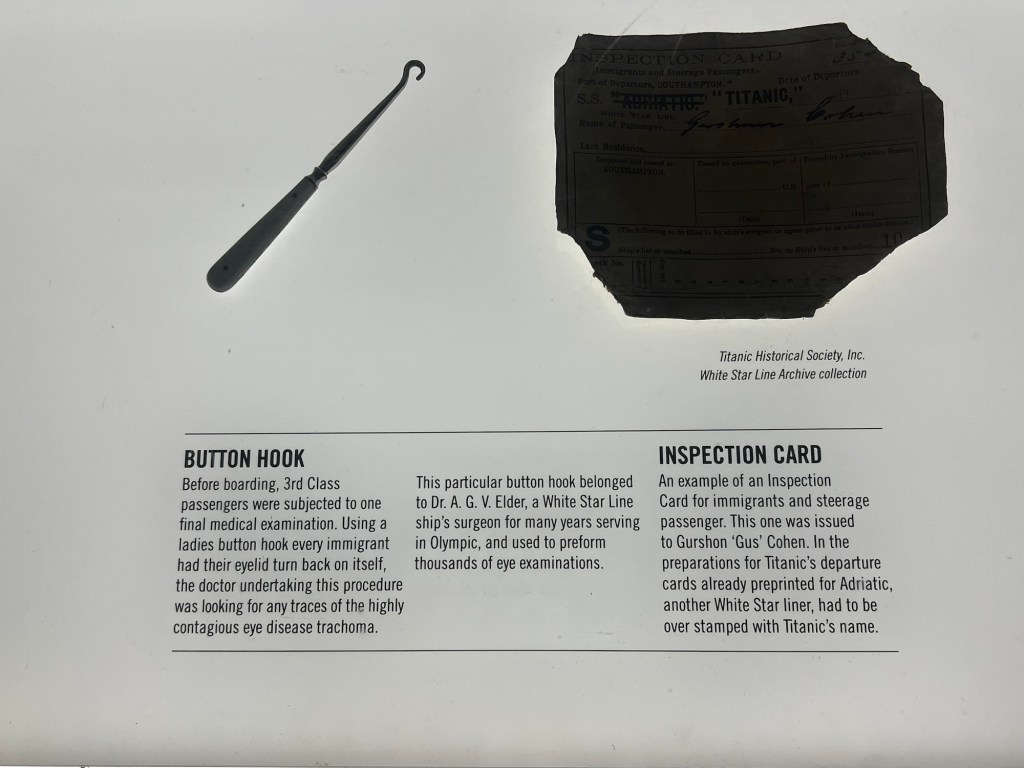
Titanic’s launch for her maiden voyage was watched by an estimated 100,000 people in Belfast. The departure from Southampton (YouTube) was April 10, 1912. The Titanic had three classes of passengers, ranging from the ultra luxurious first class to pretty basic third class. The ship was designed with very high quality fittings and accommodations for (first class) passengers , while the mire class passengers had to endure a medical exam for a contagious eye condition before they were allowed boarding. Using a ladies button hook every immigrant had their eyelid turn back on itself, the doctor undertaking this procedure was looking for any traces of the highly contagious eye disease trachoma.
Passengers ranged from the ultra wealthy to newly weds, entire families , and those looking to start a new life in America.
Titanic’s bathtubs were mostly manufactured by Royal Doulton.
Most passengers who bathed used public bathrooms. A limited number of private bathrooms were provided within First Class staterooms.
Within Second and Third Class, all bathrooms were public, with only two bathrooms provided for all the Third Class passengers.
Public baths used hot and cold salt water. Fresh water shower sprays were provided only with First Class private baths and in the captain’s quarters.
Most cabins had washbasins fitted, with the exception of Third Class single male accommodation. Many First Class staterooms had Royal Doulton (China) washbasins set in marble. Some First and Second Class washbasins could be folded away within a wash cabinet.
A limited number of private Royal Doulton manufactured toilets were available within First Class accommodation. Each passenger class had access to public free-standing flush toilets and accompanying washbasins. Royal Doulton urinals were fitted in all the men’s public lavatories.
As there were no facilities on board to wash linen, Titanic needed to carry all the linen for the voyage with her. There were also linen stores for dirty and clean linen. The linen was then to be taken ashore for laundering when the ship docked.
Though it was 1912, the ship had the most modern communication equipment at the time, the Marconigram (wireless telegraph) which could communicate up to 1000 miles away. This was a huge novelty for the passengers, who could inform their friends and family about their voyage.
There was a lookout in the crows nest, but on a moonless night and with no binoculars, they only sighted the iceberg 1/4 mile away. It would take 1/2 mile for the Titanic, traveling at its cruising speed, to stop.
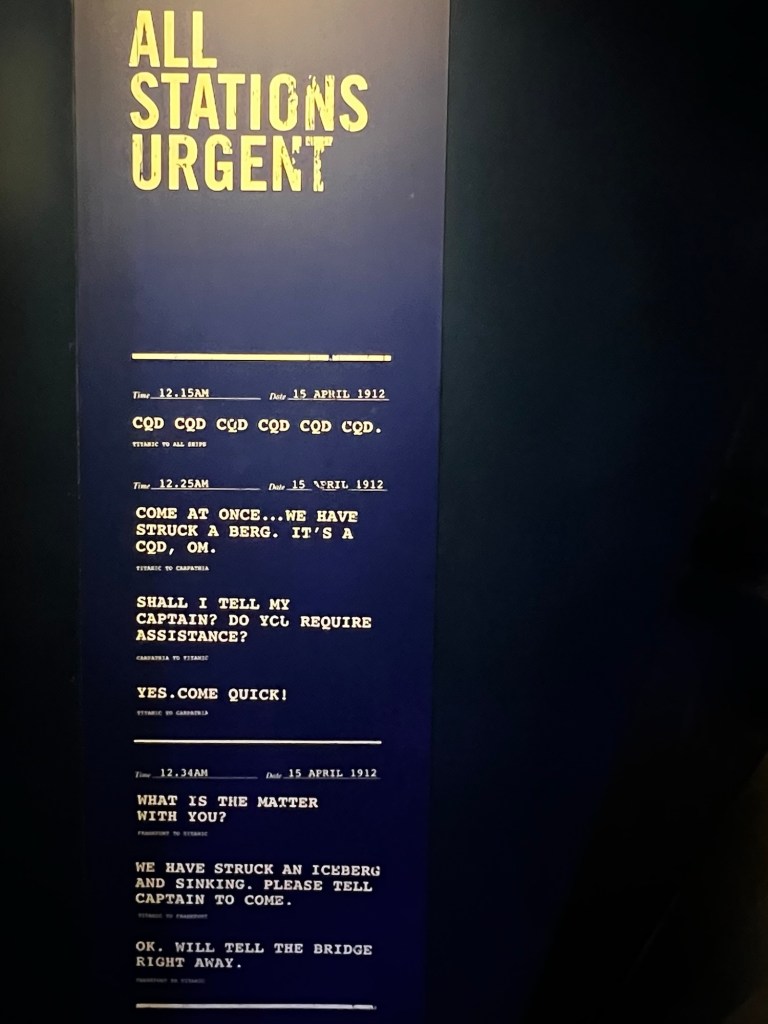
At 12:15 a.m. the Titanic transmitted its first distress call: “CQD (all stations—distress) DE (this is) MGY position 41.44 N.50.24 W
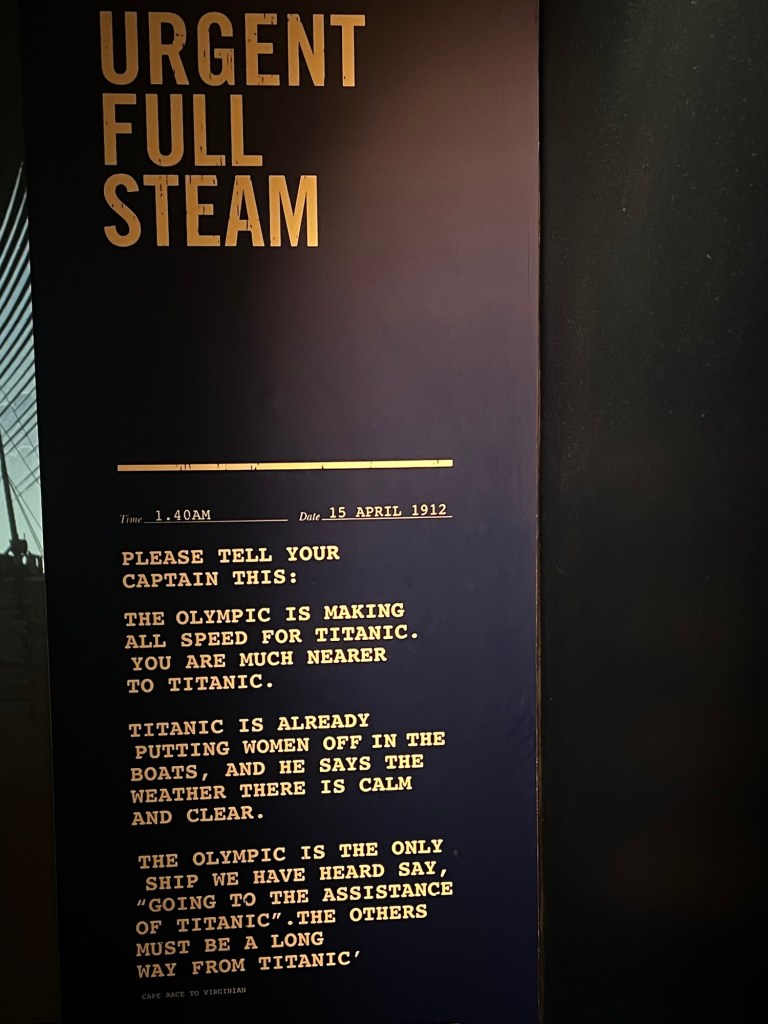

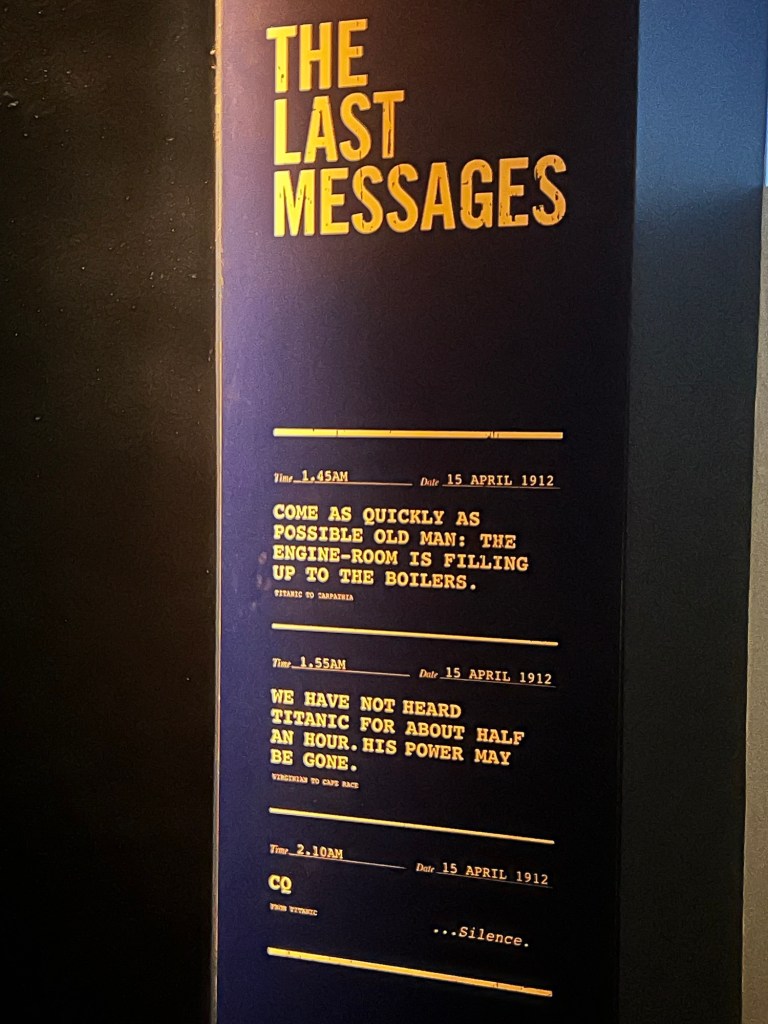
2225 people on board, 713 saved, 1512 lost
20 lifeboats on board, 18 launched, 2 collapsible lifeboats floated off deck.
The most number saved were those in first class due to them being on the upper deck closer to the lifeboats, but so many things we now take for granted on passenger ships were not in practice then –
- There were no drills to familiarize passengers with lifeboats or life vests. Titanic never held a lifeboat drill, and passengers and crew were totally underprepared for the evacuation. Lifeboats were loaded haphazardly, half-filled, and many passengers struggled to find their way to the Boat Deck, especially Third Class passengers in the lower decks who had furthest to travel.
- There were not enough lifeboats for all passengers (Lifeboat 1 which had a capacity of 65 launched with 12). It was thought that if the ship got into difficulty she would sink slowly, leaving time for passengers and crew to be transferred to a rescue ship.
- Speed should have been reduced when warned of ice.
- UNHEARD DISTRESS CALLS
During the disaster, Titanic’s crew fired rocket signals and repeatedly radioed for help. Several ships in the region answered the call and headed to Titanic’s position, except the Californian, whose wireless operator had gone to bed for the night. Titanic’s distress call went unheard by the ship closest to help.
The Carpathia was the first ship to reach the scene of the disaster. She picked up 713 survivors from the lifeboats and made for New York.
Arthur Rostron, captain of Cunard’s liner Carpathia, was heading from New York to the Mediterranean. As soon as he was told of Titanic’s distress signals, Rostron turned Carpathia around and went to Titanic’s aid.
At 4.10am Carpathia sighted a lifeboat. The first passenger rescued, Elizabeth Allen, informed Carpathia’s purser that Titanic had sunk.
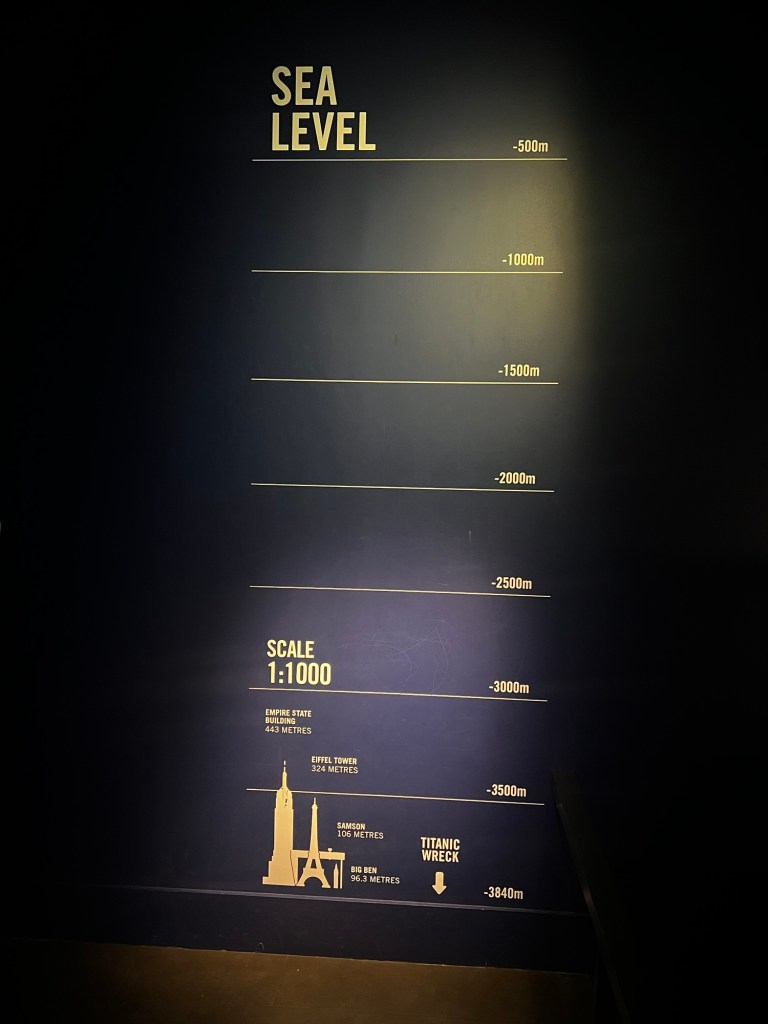
Four hours later, Carpathia had found the 18 boats and rescued 713 passengers and crew. That afternoon four people who had died in the lifeboats or on board Carpathia were buried at sea.
Hearing the spoken accounts of some of the survivors and reading the stories of some of those lost is a pretty somber experience.
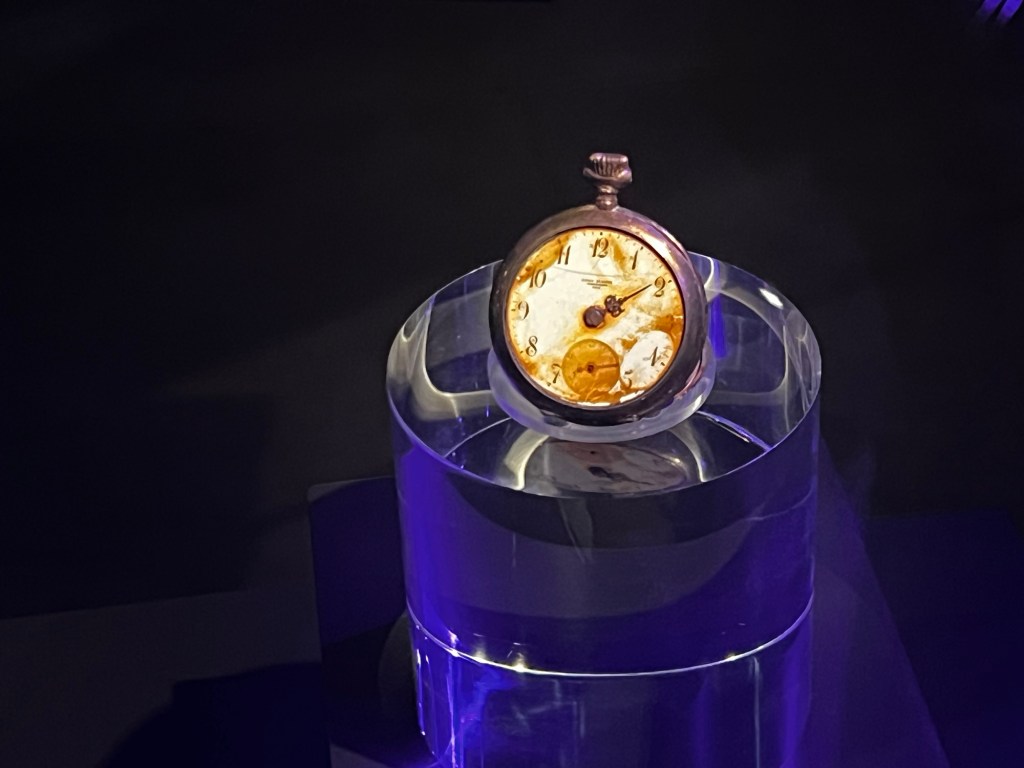
Joakim Johnson, who died on Titanic. Watch stopping when he entered the water
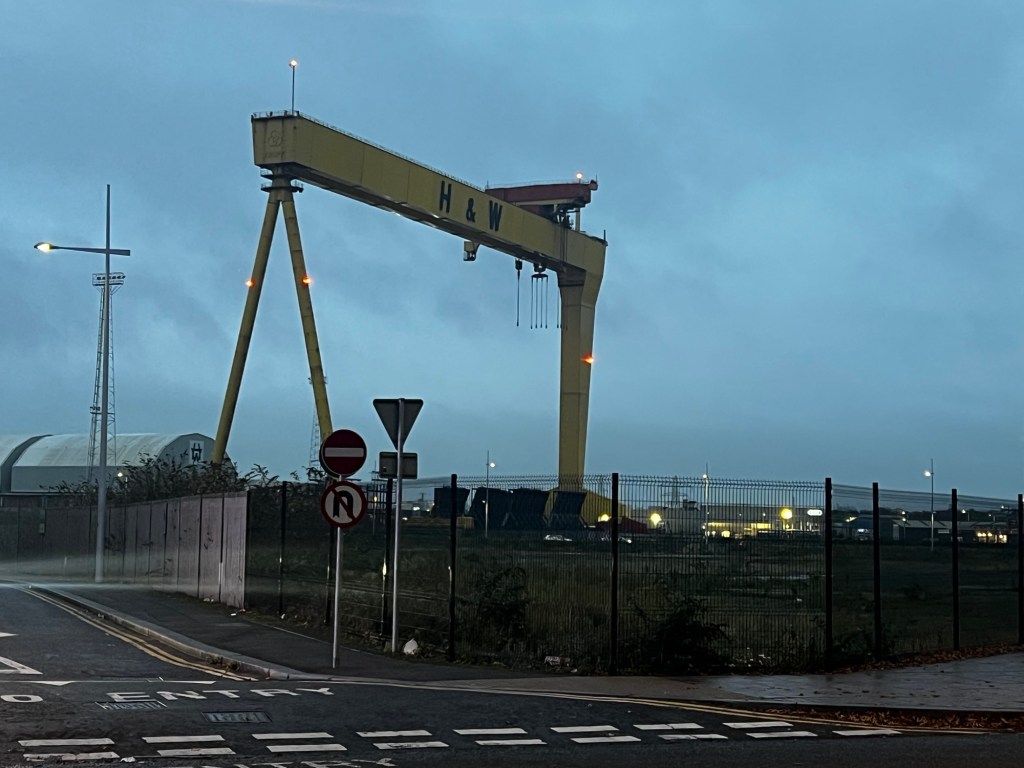
The shipyard where the Titanic was built no longer builds ships (last ship being built in 2003) and is mostly dedicated to ship maintenance and offshore work. The 6600 ton gantry crane structure used to build the Titanic, which could be seen from most of Belfast, was town down in the 1960’s and the skyline is now dominated by Samson & Goliath.
The Titanic Experience is well worth your time to visit.
 TerraTraveler
One thought on “Titanic”