Trip 48
November 1, 2024
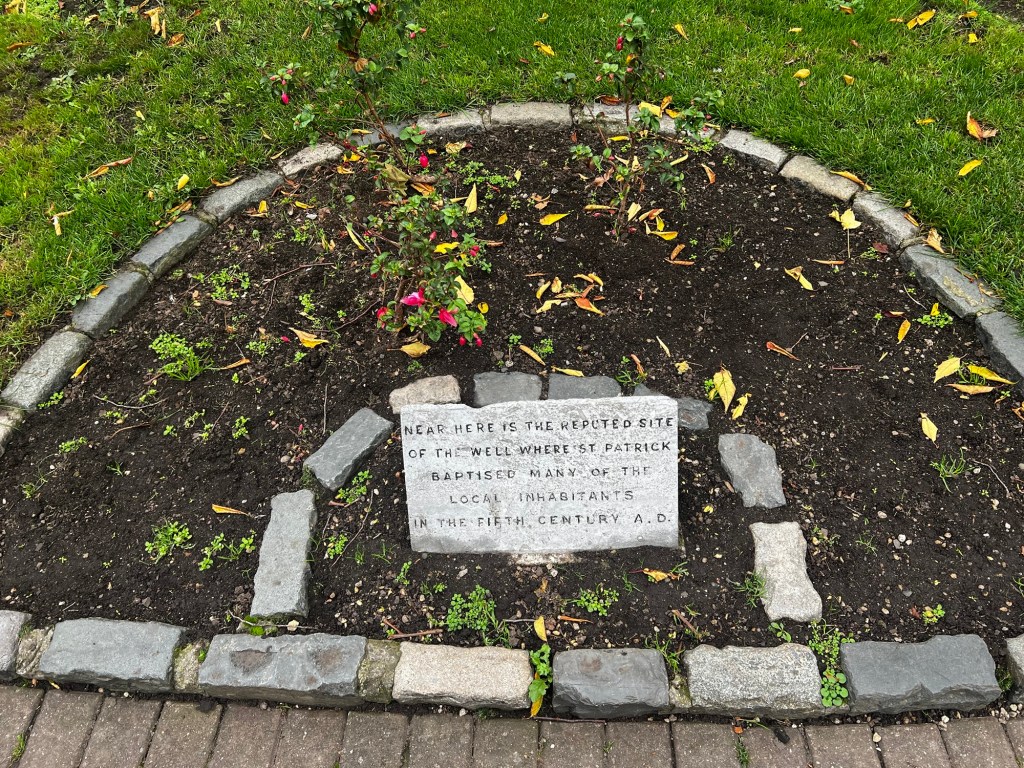
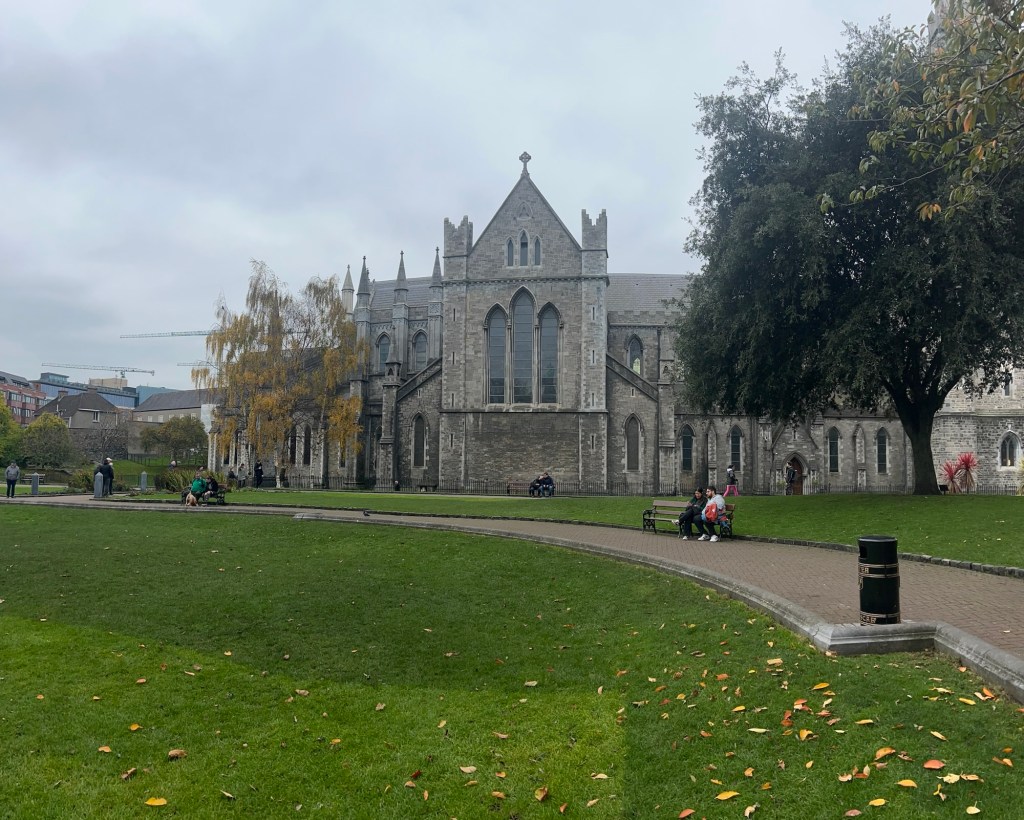
We visited Dublin Castle today, just a ~15 minute walk from our hotel , but on the way, walked through Saint Patrick’s Park (Pairc Naomh Pádraig).
Tradition has it that Saint Patrick baptised the first Irish Christians in a well, situated here in St Patrick’s Park, with water from the River Poddle, which still flows underground. A small wooden church was erected here to commemorate the event. The parish church on this site was known as Saint Patrick’s in Insula (on the island) because it was located on an island between two branches of the River Poddle. In 1191 John Comyn, the first Anglo-Norman Archbishop of Dublin, gave the church the status of a collegiate church.
The church was raised to Cathedral status in 1213 at which time the Lady Chapel was added as part of extensive renovation. About 100 years later the spire was blown down and a fire damaged the church during a period of civil unrest.
We visited the Castle about a dozen years ago when Dublin was celebrating 1,000 years, but at the time, didn’t take a guided tour, something we rectified today.
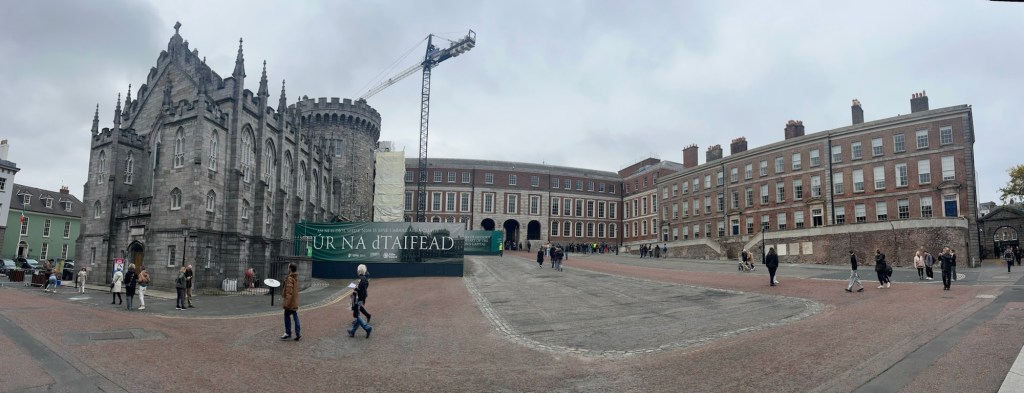

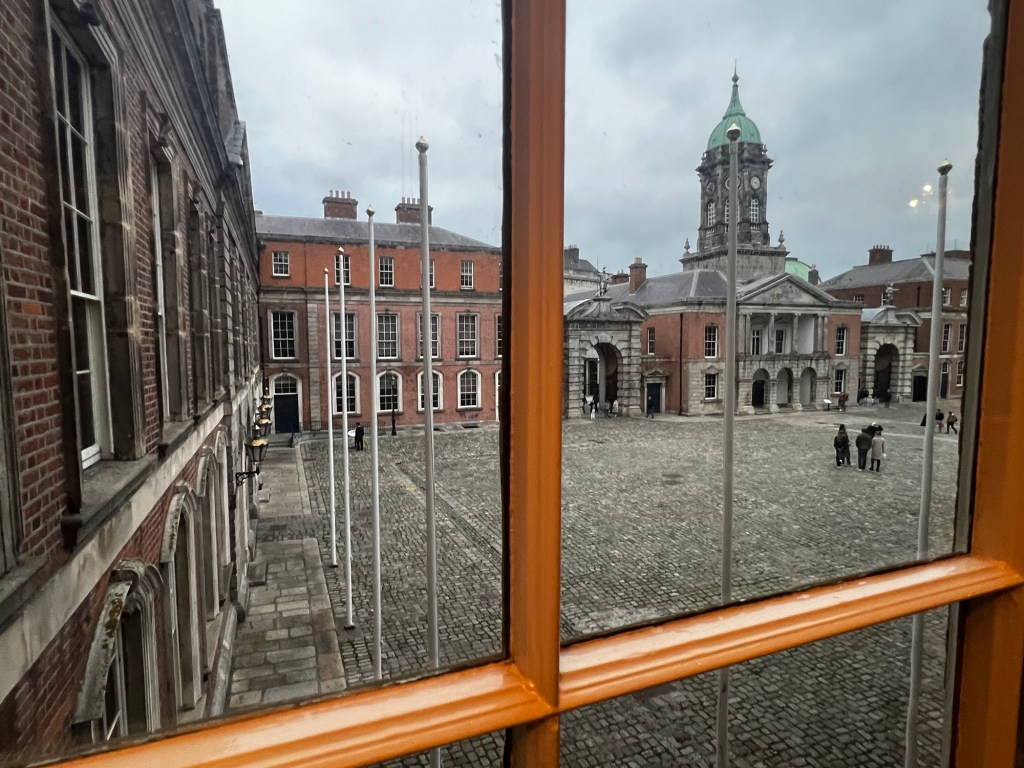
The structures we see are not the original structures, as the “castle “ burned down and blew up (storing the gunpowder in one tower and then having a fire (1684) does that), and has been rebuilt and extended over a 1000 year history. This link provides some background on the history of the castle and its role in Dublin and Ireland. The Vikings constructed the original fortifications in the ninth century on the banks of the Poddle River. Under the castle, the River Poddle still flows through a large brick tunnel, which you can walk through with restricted access. Running all but invisible throughout most of the city, the waterway helped to inspire both the name of the nearby gardens and the city itself. The Vikings named the place where the Poddle and Liffey rivers meet as ‘Dyflin’, meaning ‘black pool’. Later, this took the Irish form of Dubh Linn.
The President of Ireland (Uachtarán na hÉireann) is Ireland’s Head of State. The Office of President was established by the Constitution (Bunreacht na hÉireann). The President is elected directly by the people and serves a seven year term in office. The Prime Minister (Taoiseach) is appointed by the President.
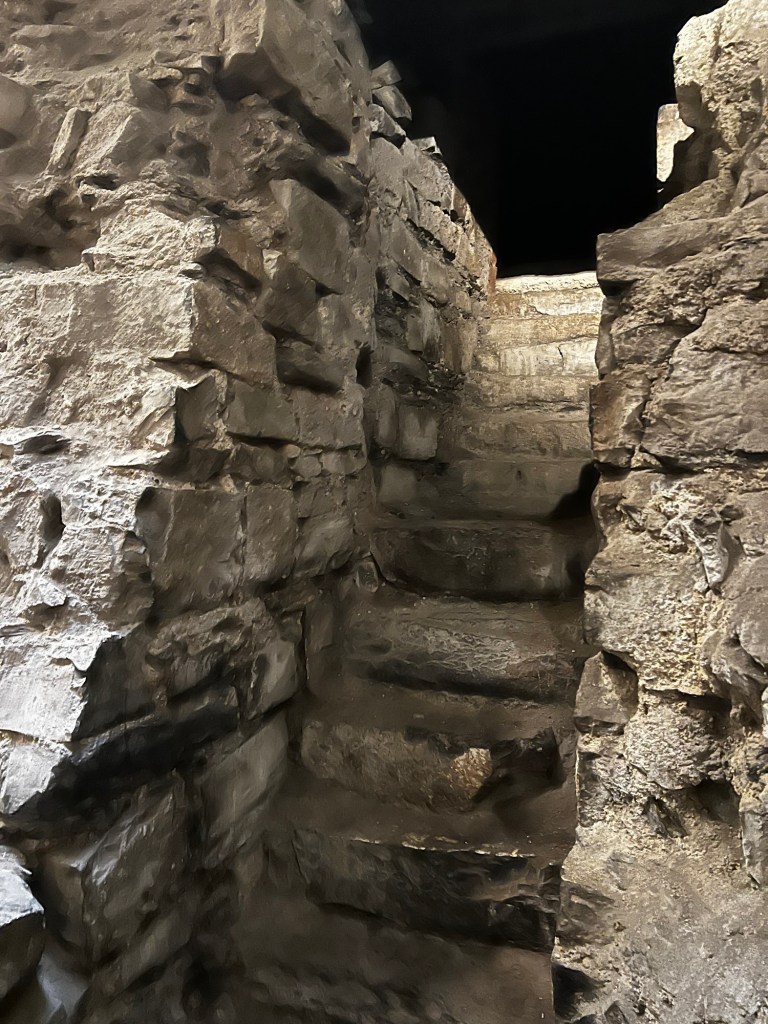
The tour takes you down a couple of levels below street level where some of the original footings of the castle remain and a glimpse of the Poddle, now entirely underground. The Poddle formed part of the moat around the fortifications until the (later) English occupation decided they no longer needed the moat (and after centuries of being a dump, apparently smelled pretty bad ) and was filled in. After the fire, the castle was reconstructed in the 17th and 18th centuries, fundamentally changing the design of the structure from being defensive to ceremonial.
After English occupation of Ireland, the castle turned into the center of English occupation with a series Lord Lieutenants or Viceroys who reported to the Crown. English occupation was not benign. Ireland during the period of 1536–1691, saw the first full conquest of the island by England and its colonisation with mostly Protestant settlers from Great Britain. The conquest of Ireland by Oliver Cromwell between 1649 and 1651, resulted in the confiscation of land from many native landowners and regranting to Parliamentarian (Protestant) supporters. This would eventually establish two central themes in future Irish history: subordination of the country to London-based governments and sectarian animosity between Catholics and Protestants. The English actively tried to stamp out Irish culture and language.
The Lord Lieutenants/Viceroys in Ireland had several key responsibilities:
Political Administration:
- Represented the Crown’s authority in Ireland
- Oversaw the implementation of British policy
- Chaired the Irish Privy Council
Military Authority:
- Commander-in-Chief of military forces in Ireland
- Responsible for maintaining order and suppressing rebellions
- Controlled the police forces
- Had power to declare martial law when deemed necessary
Religious Oversight:
- Supported the established Protestant Church of Ireland
- Helped enforce penal laws against Catholics (during their enforcement period)
Economic Management:
- Oversaw tax collection
- Managed crown lands and revenues
The role evolved over time, particularly after the Act of Union in 1800, when Ireland became more directly governed from London, though the Viceroy remained an important figure until the establishment of the Irish Free State in 1922 (after the Easter Rising of 1916 ) and Irish War of Independence from 1919-1922.
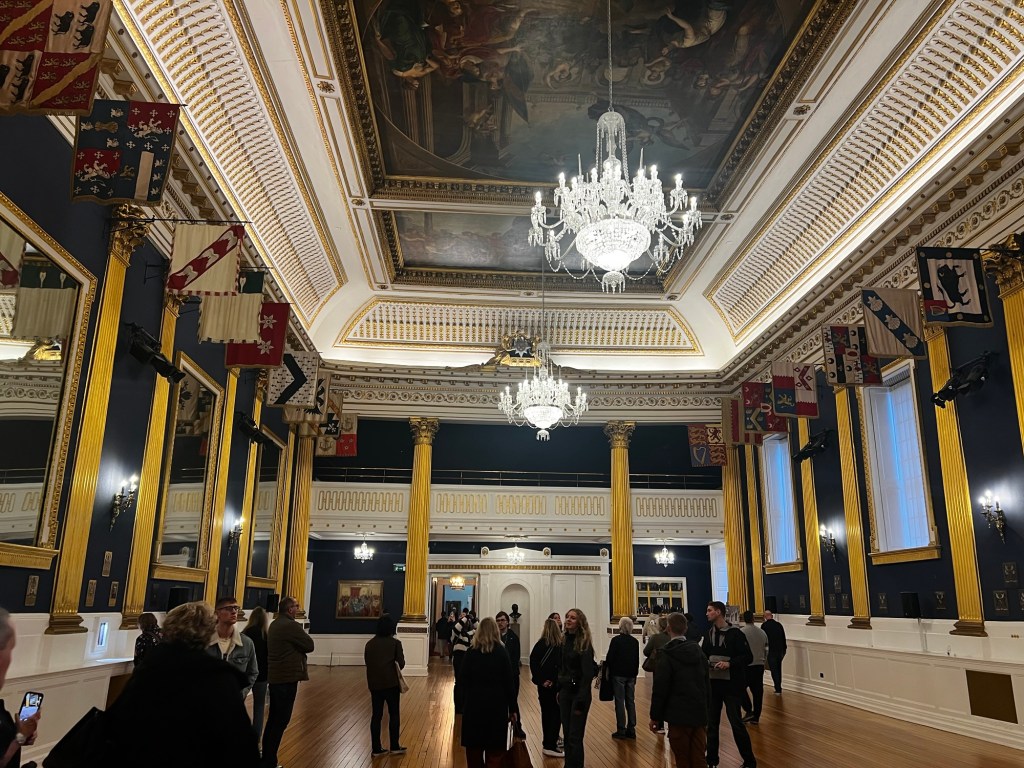
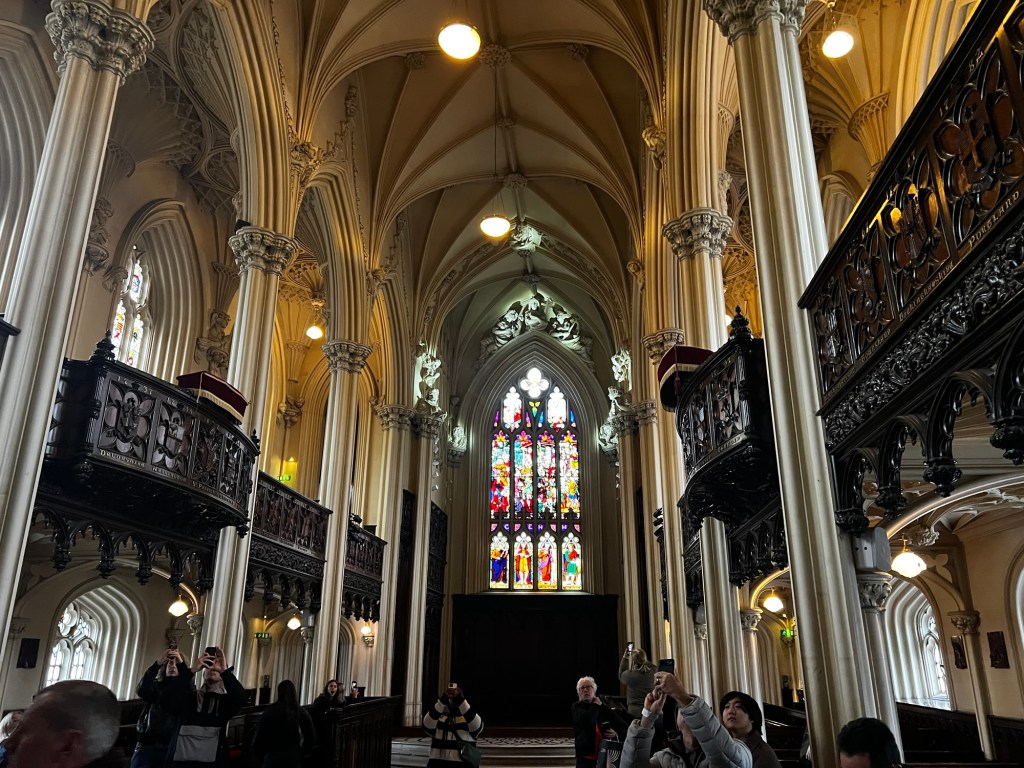
We toured St Patrick Hall, the throne room (England’s George III, George IV visiting ) and the Chapel Royal.
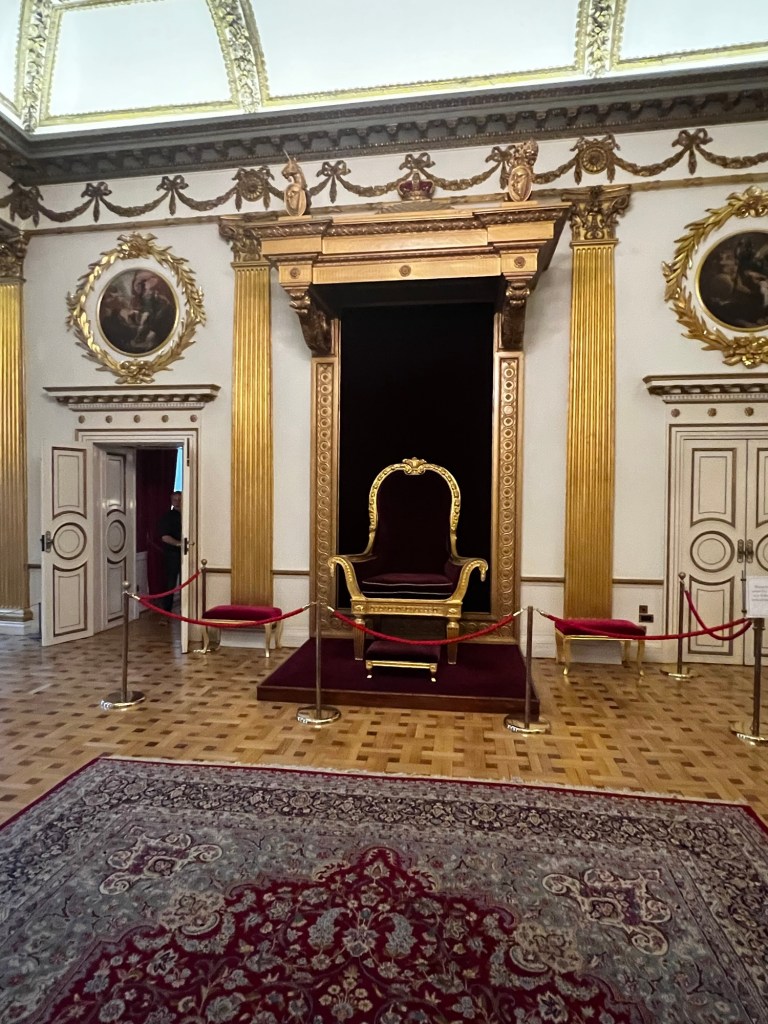

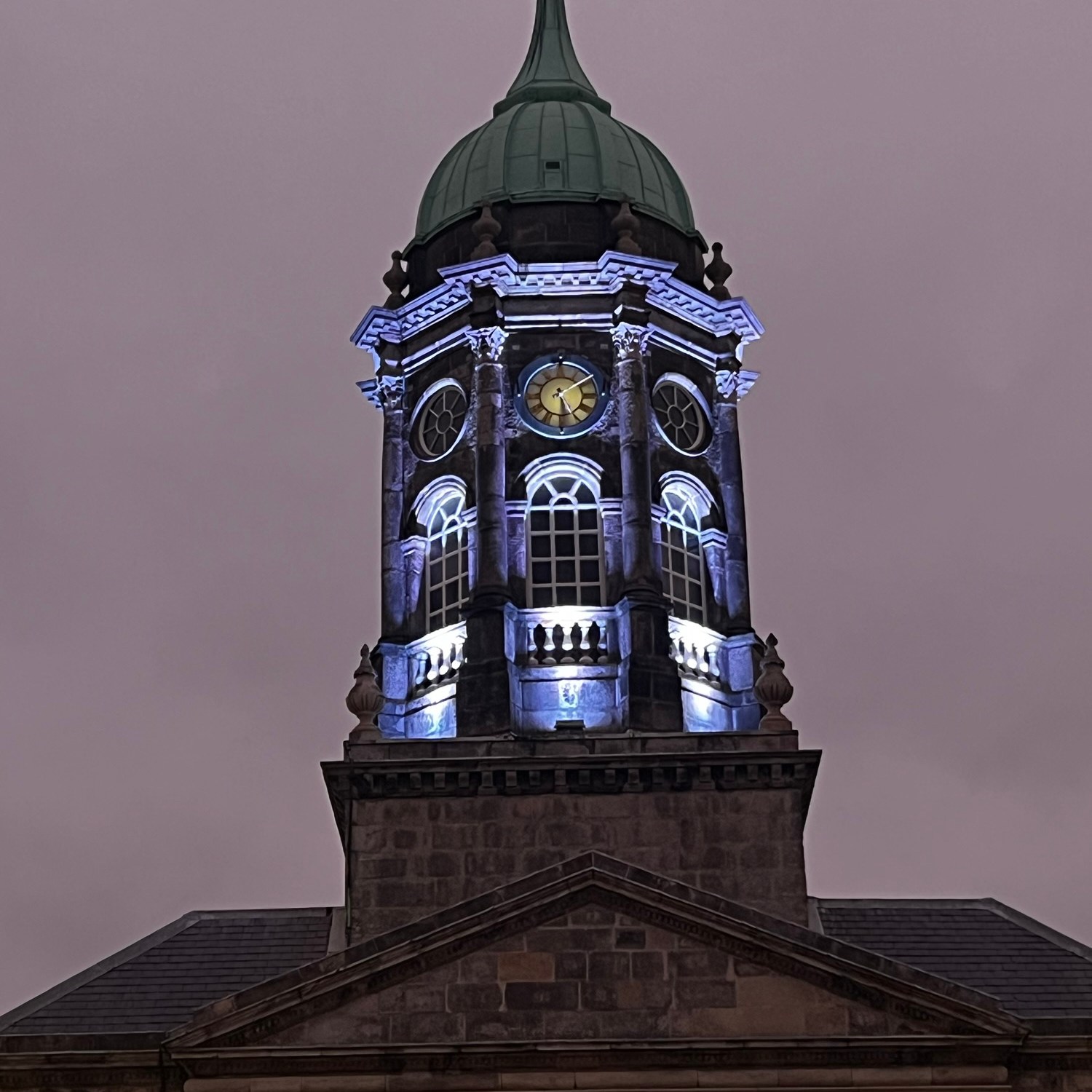
Dublin Castle has witnessed some momentous events in its 800-year history. One of the greatest scandals occurred in 1907, when the Irish Crown Jewels were stolen from the Bedford Tower – the building with the octagonal clock tower in the upper courtyard.
The haul comprised a jewelled star of the Order of St Patrick, a diamond brooch and five gold collars, all belonging to the British crown and valued at £50,000 – over €6 million today.
The theft appeared to be an inside job as the safe had been opened with a key. But Dublin Metropolitan Police were unable to solve the crime and the whereabouts of the jewels remains a mystery to this day. Not jewels you can “fence” ; where are they and where have they been??
The castle itself is now largely ceremonial in use now, serving as the location where the president of Ireland is sworn in, ceremonial banquets are held , etc. Even the Chapel Royal is not used for religious services as it was deconsecrated in 1943. The Chapel Royal in Dublin Castle is a 19th-century Gothic revival chapel which served as the official Church of Ireland chapel of the Household of the Lord Lieutenant of Ireland from 1814 until the creation of the Irish Free State in December 1922, which terminated the office of Lord Lieutenant.

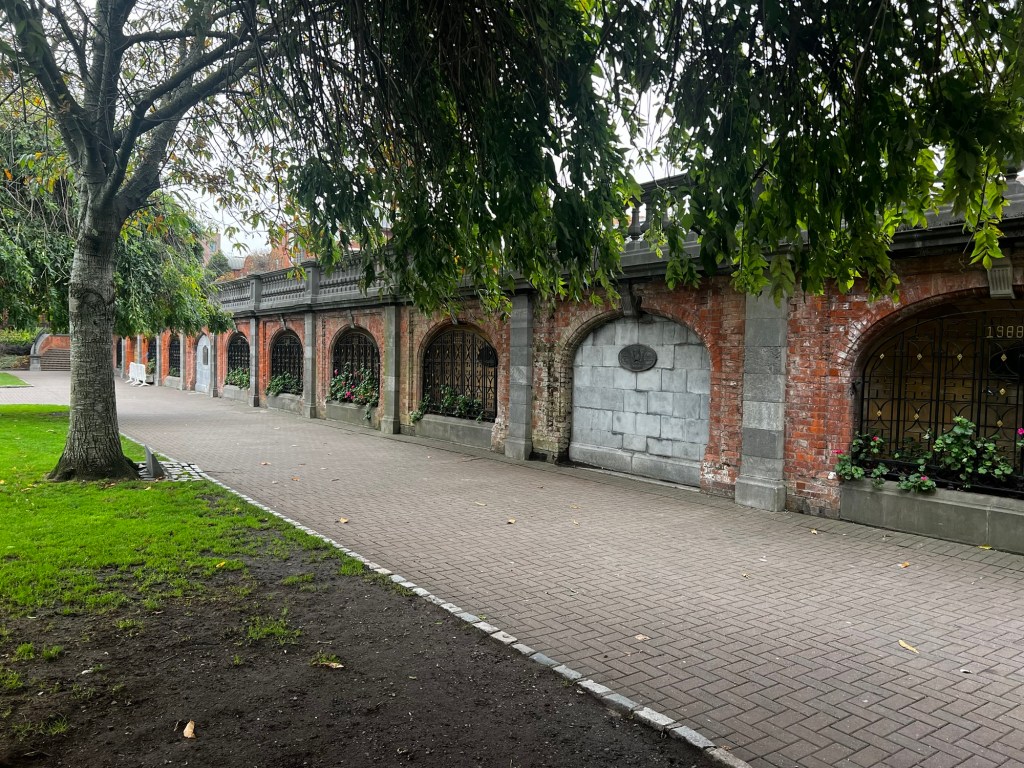
Now 5pm, it’s dark and the Dublin Castle Garden is closing soon. Enclosed behind Dublin Castle, the Dubh Linn garden looks like a formal piece of landscaping. Prior to its creation (primarily to serve as a helipad site), in medieval times, the site itself was a tidal pool that sat at the rear of the Dublin Castle before the waters flowed into the River Liffey. The central lawn is circular, circular grassy garden with a brick Celtic knot pattern with smaller gardens in the corners. One of the gardens is a memorial dedicated to the local Garda, with the names of all Gardai (Irish Police) killed in the line of duty being inscribed on a roll of honor.

 TerraTraveler