Trip 47
September 5-7, 2024
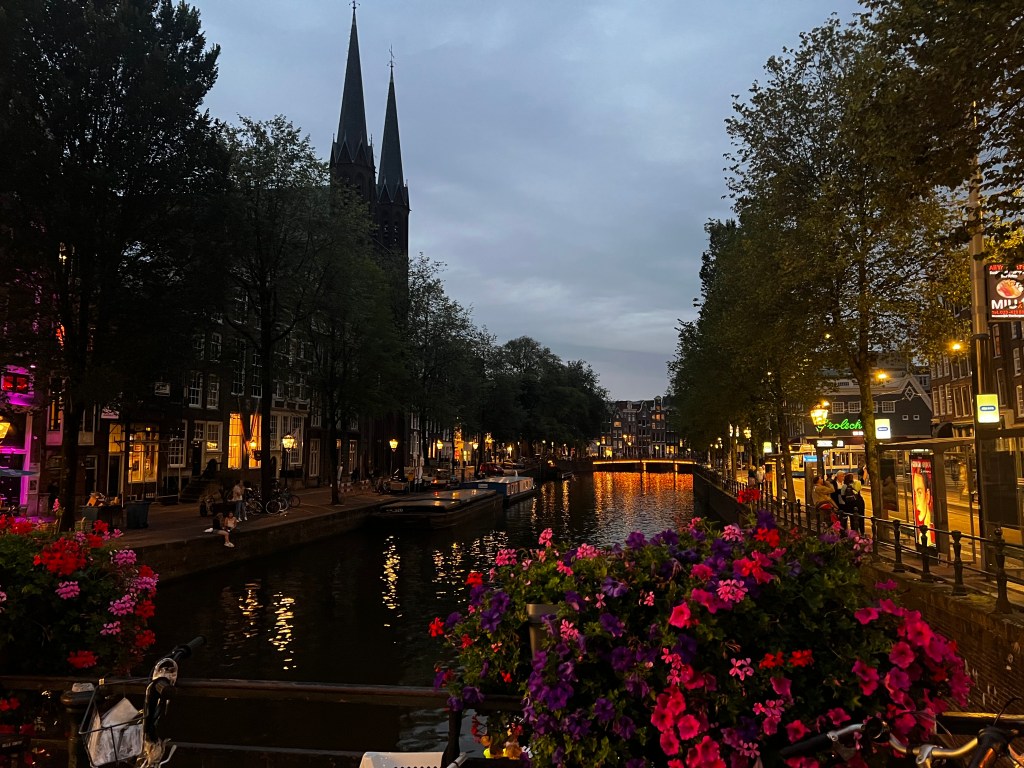
Leaving Amsterdam on the TGV for Paris was a reluctant departure, having enjoyed the late autumn scenery.
But one of our bucket list destinations for decades has been Mont-Saint-Michel in Normandy. It always seemed so awkward to get there, with no direct trains from Paris (or anywhere), but we finally decided to make the journey.

We left Amsterdam on September 5th for Paris, where we’d overnight for our morning trip to Mont-Saint-Michel. Mont Saint-Michel is one of France’s top five tourist attractions. Leaving Gare du Nord on the next day, we planned to take a train to Caen, where we’d change to Pontorson.
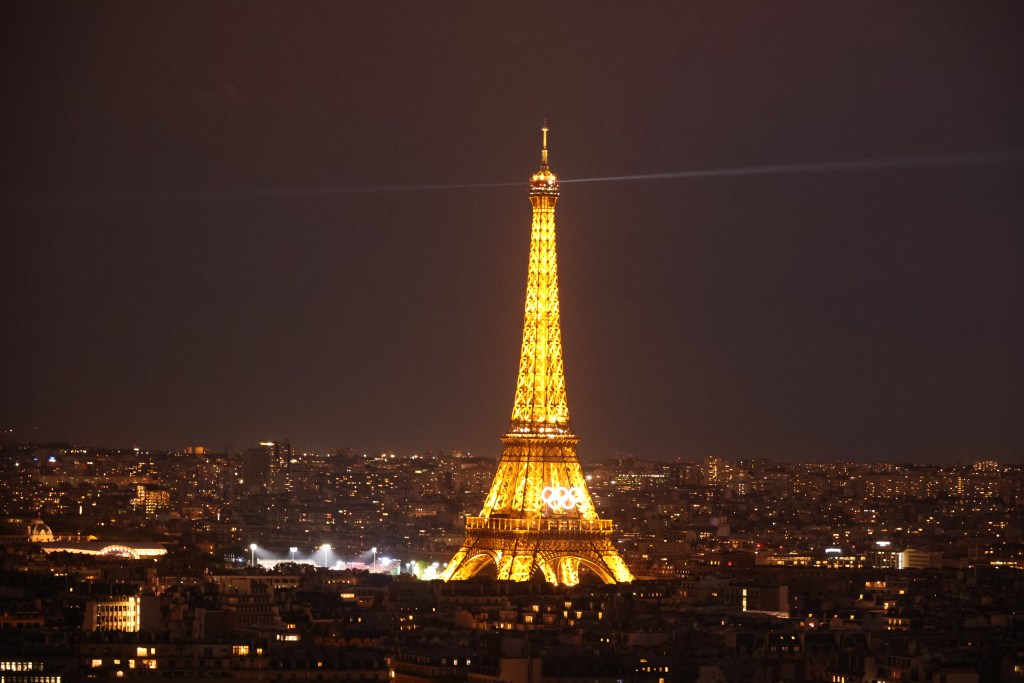
However, prior to our departure, we had a few hours that afternoon in Paris to explore and went to the Tuileries to determine if we could see the lighted cauldron which was part of the special Olympics. You can’t approach the cauldron without tickets (which we did not have), but we got close enough.

We left Gare Montparnasse about 9:30 am for Caen, where we’d change trains for Pontorson, then take a shuttle bus out to the island, where we’d planned an overnight stay.
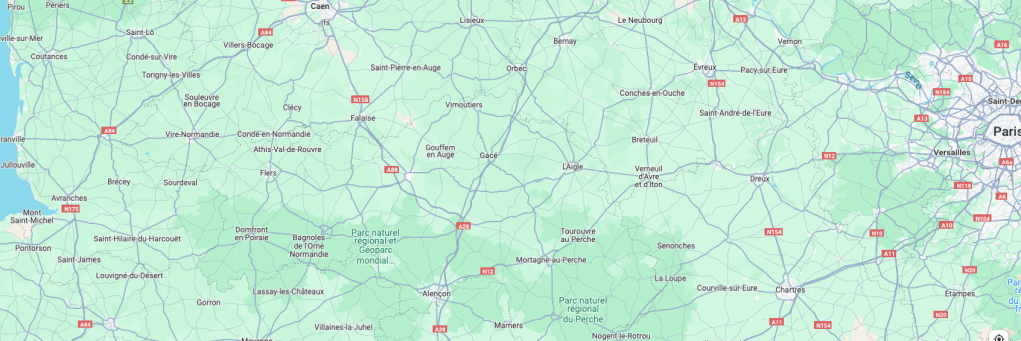
The trip to Caen took until about 1:30, then wait for the connecting train to Pontorson. We emerged at the the small train station at Pontorson and looked for the shuttle bus, but found there was a city bus that takes you out to the pedestrian causeway (only service & emergency vehicles allowed besides pedestrians) built to connect the mainland to the island where Mont-Saint-Michel is located. We got dropped off on the causeway not far from the entrance to the abbey. The causeway was built to allow tourists to get to the island instead of walking across the salt marsh flats at low tide (probably pretty awkward with suitcases 😉). The causeway structure is supported by a series of 134 pillars – each with a height of 12 meters. As the sea levels rise up to around 14 meters, the surface will be allowed to regularly flood over two periods each year, helping to wash away the silt.
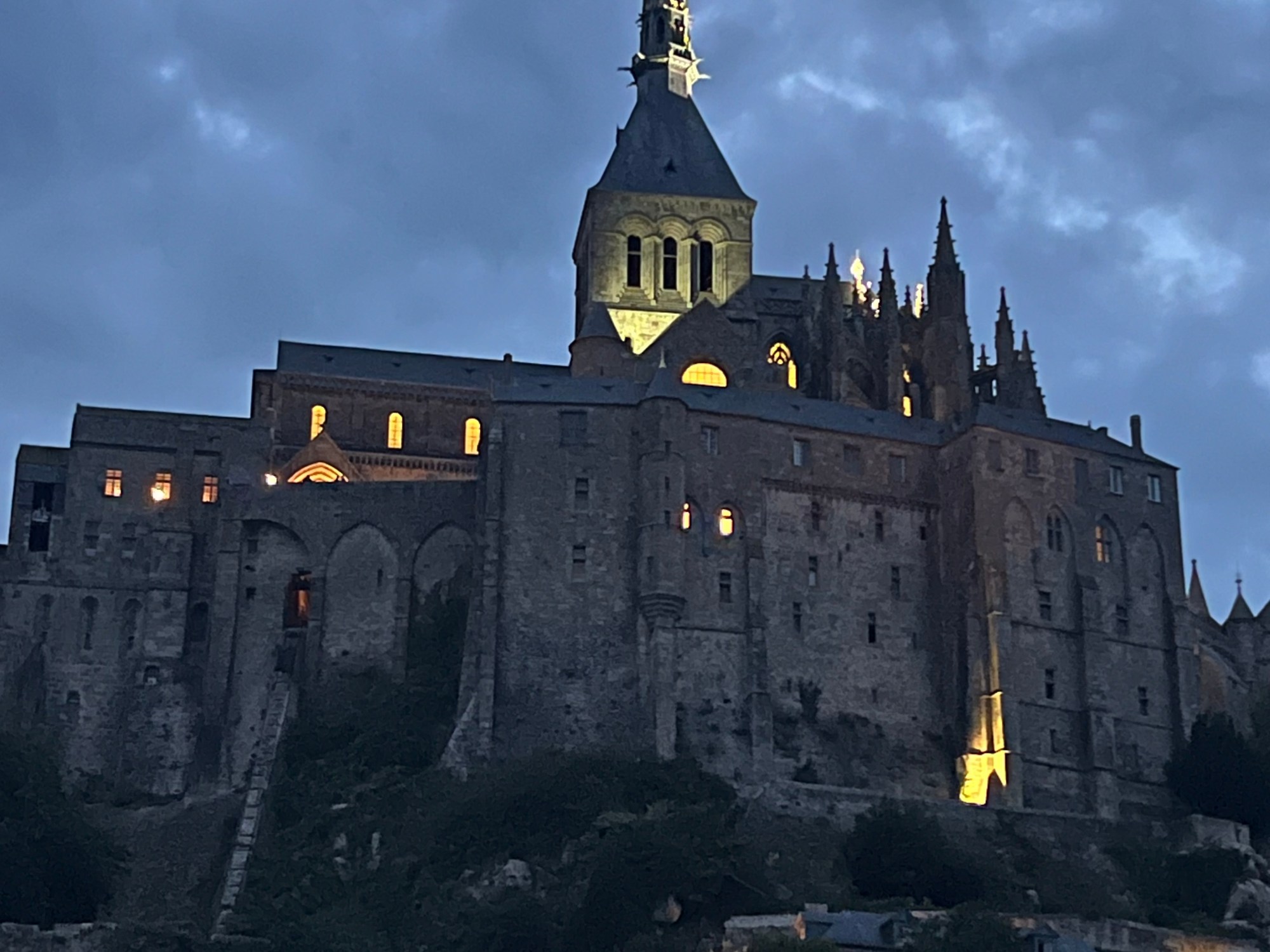
The abbey is a community of about a dozen monk and nuns from the Monastic Fraternities of Jerusalem, who live in the abbey and perform daily services. There are only about 28 full-time residents of the island, contrasting to the millions of visitors there every year. According to legend, the island was originally called Mont-Tombe, but was renamed to Mont-Saint-Michel after the archangel appeared to Saint Aubert in a dream in 708. Saint Michael asked the bishop to build a sanctuary on the island in his honor.
The abbey’s history includes:
- 966: A community of Benedictines settled on the Mount to welcome pilgrims (so the Abbey has a 1000+ year history)
- The island was fortified in 1256 and resisted the sieges of the Hundred Years War and the French Wars of Religion.
- In 1203 King Phillip of France tried to capture the island and partly burned it.
- 1622: Maurists replaced the Benedictines
- 1791: The monks were expelled by the French Revolution
- During the reign of King Louis IX, Mont-Saint-Michel became a detention center for prisoners until 1860. During the French Revolution, it held dissidents.
- During WWII, during the German occupation of France, soldiers used the church as a lookout post.
- 1966: The monks reoccupied the premises for the monastic millennium celebrations
- 2001: The Monastic Fraternities of Jerusalem replaced the Benedictines
As the number of pilgrims increased, the original church became too small to accommodate them. The 11thcentury builders accomplished a real architectural feat: they built four crypts around the tip of the rock, before constructing a large abbey church on top of these. In the 13th century, a donation from the King of France, Philippe Auguste, following the conquest of Normandy, allowed the Gothic development of the Merveille to be constructed. This is formed of two three-storey buildings, crowned by the cloister and the monks’ refectory.
Reflecting the steep geography of the island, there are LOTS of stars and steps.
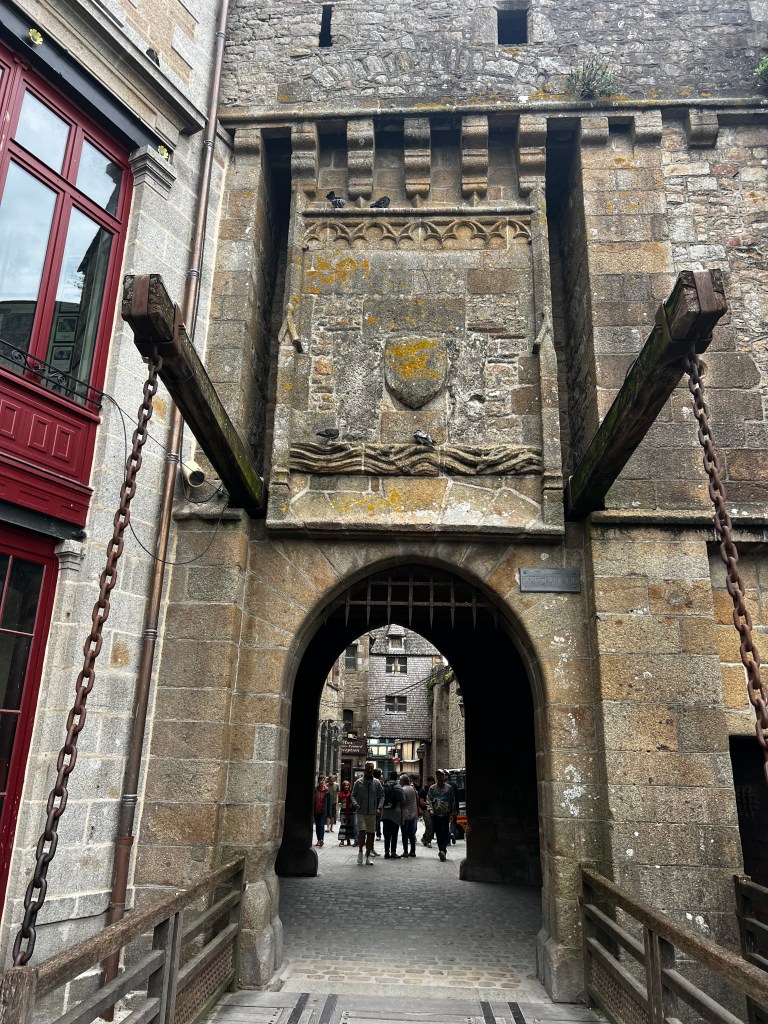
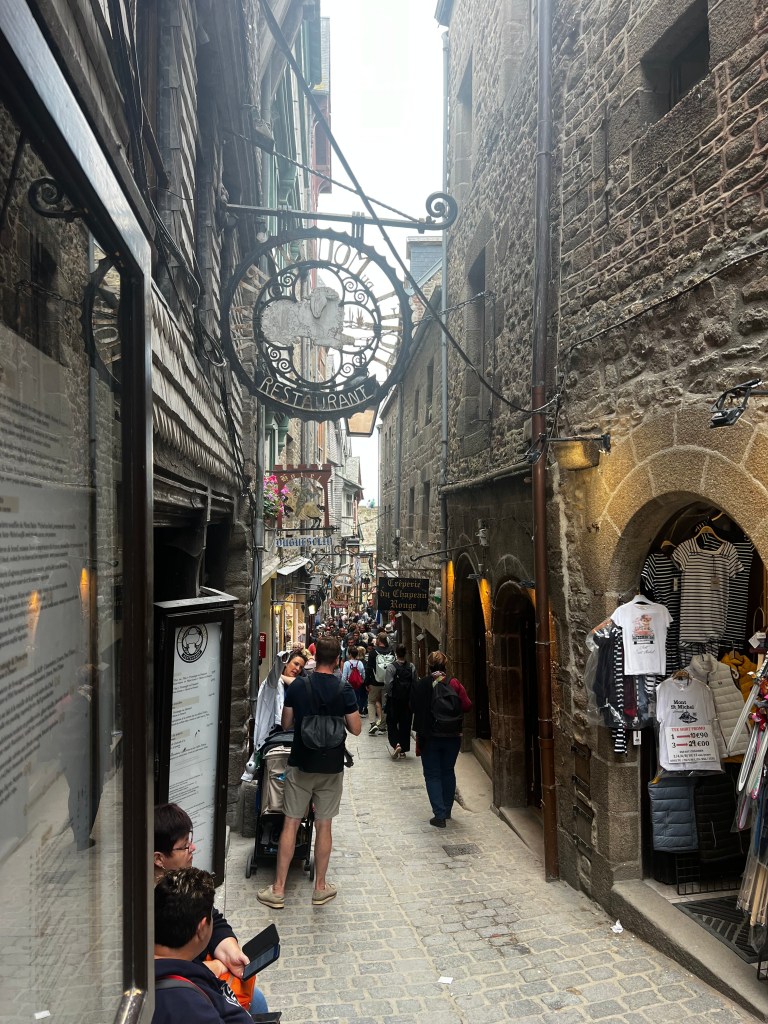

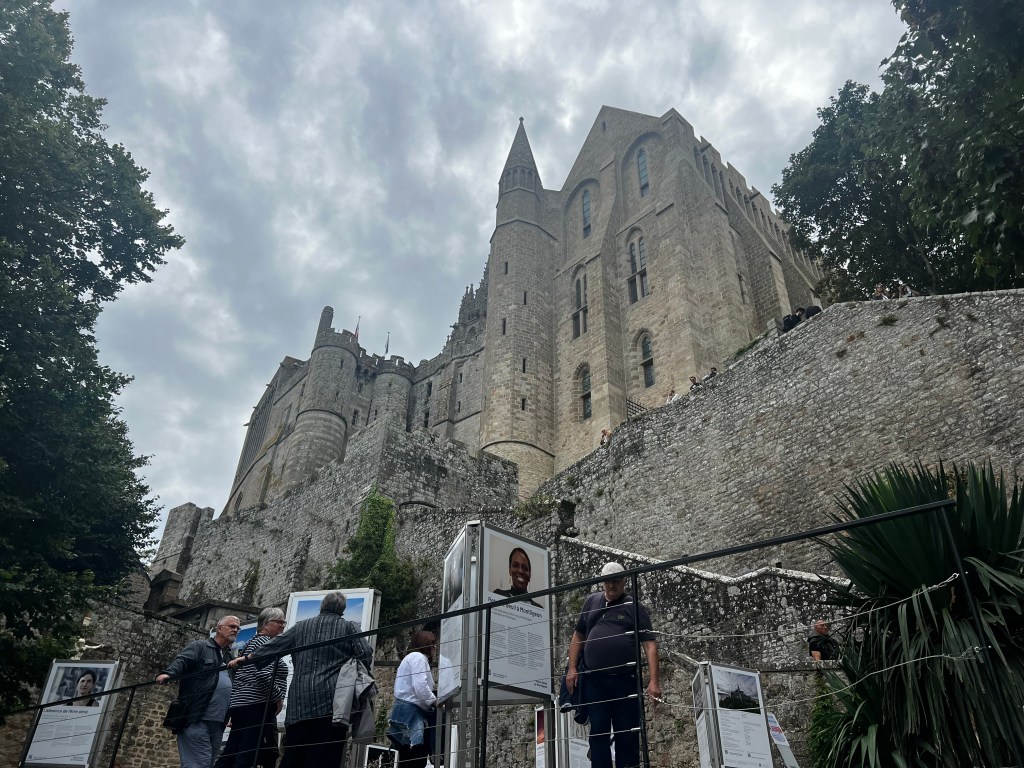
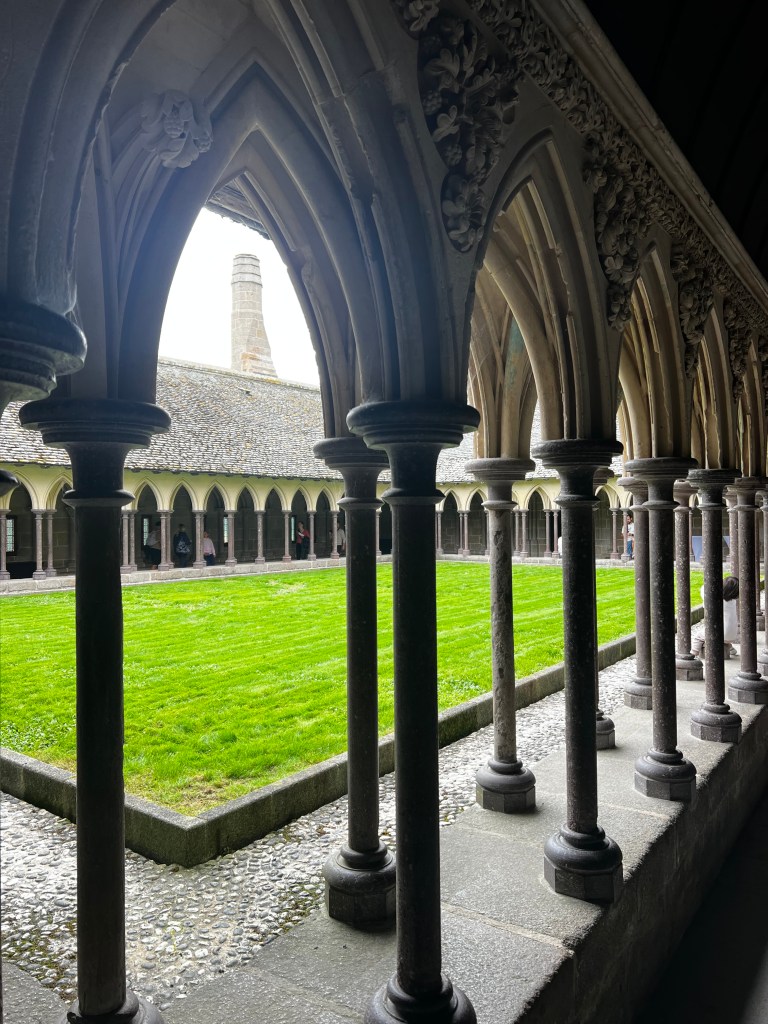
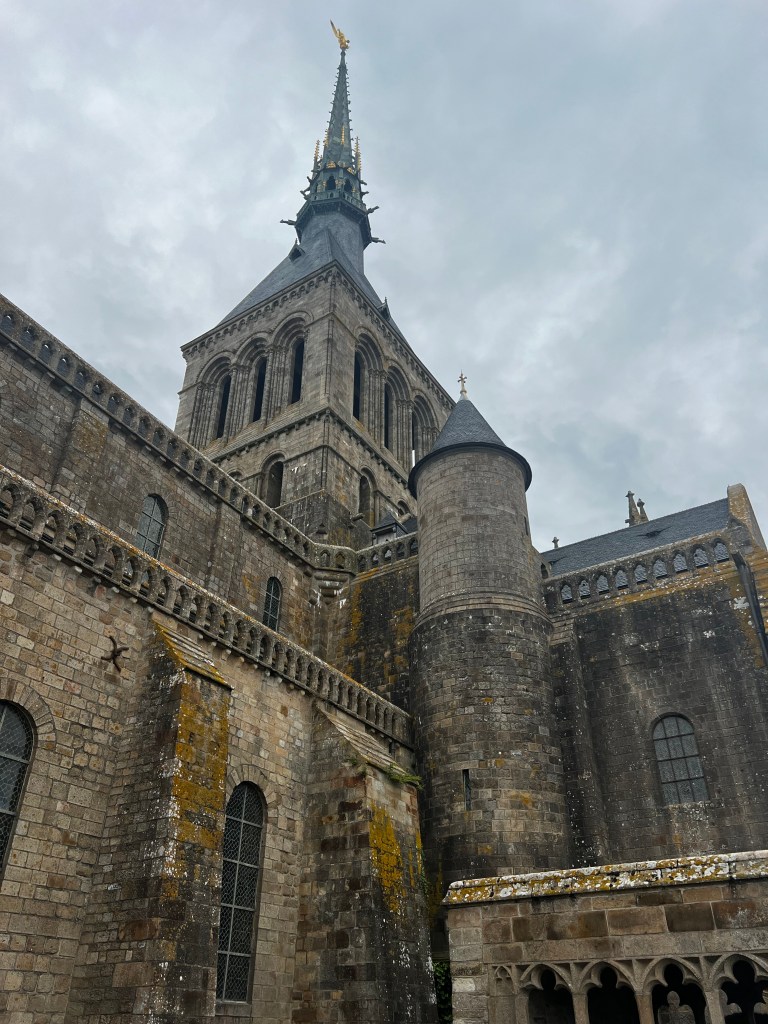
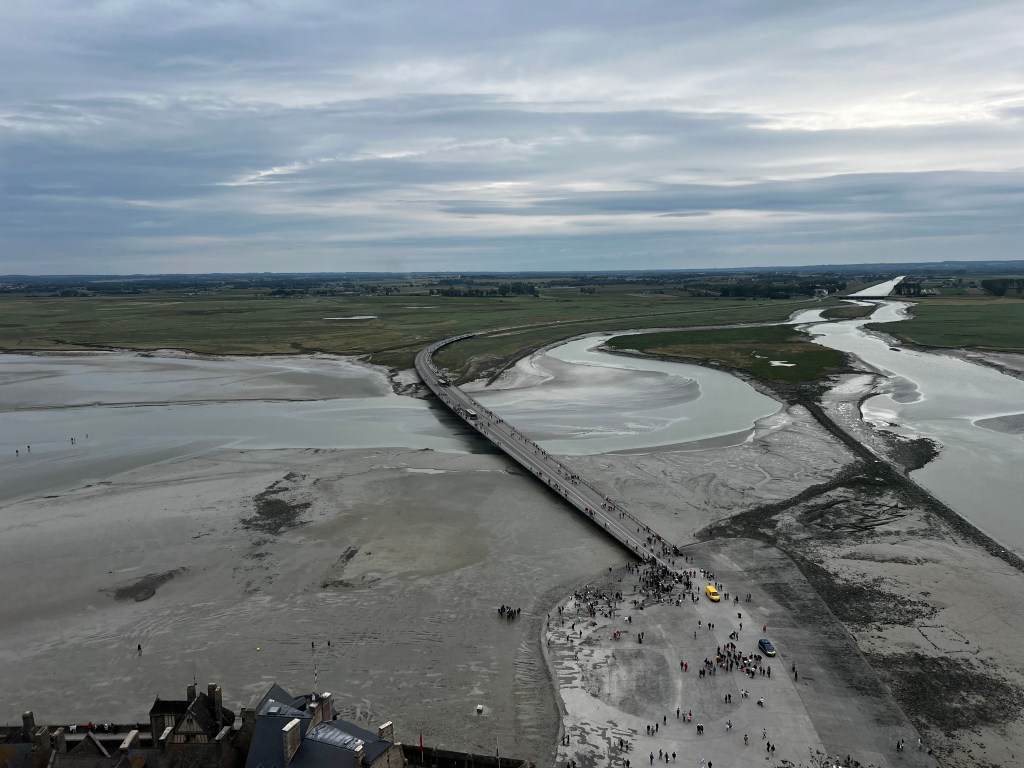
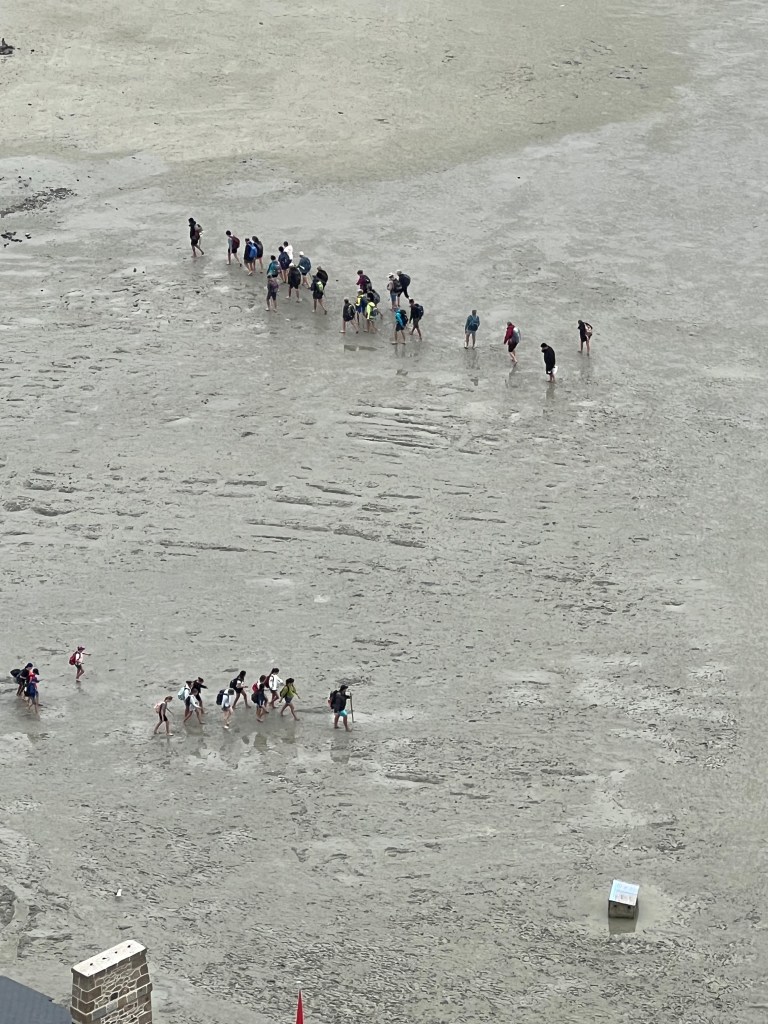
By late afternoon, the tourists (like us) who are not stating overnight (like we are), leave the island, leaving the island much less crowded (though in early September, much less so than in peak season), leaving us free to wander the steep and meandering paths of the island and salt flats.
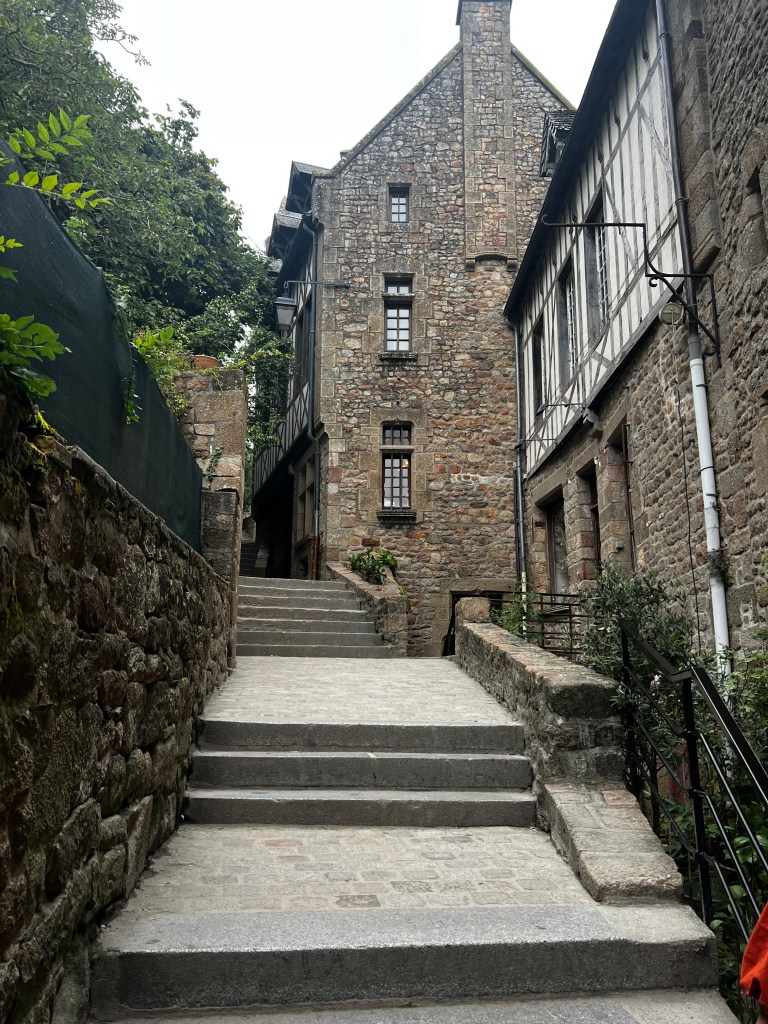
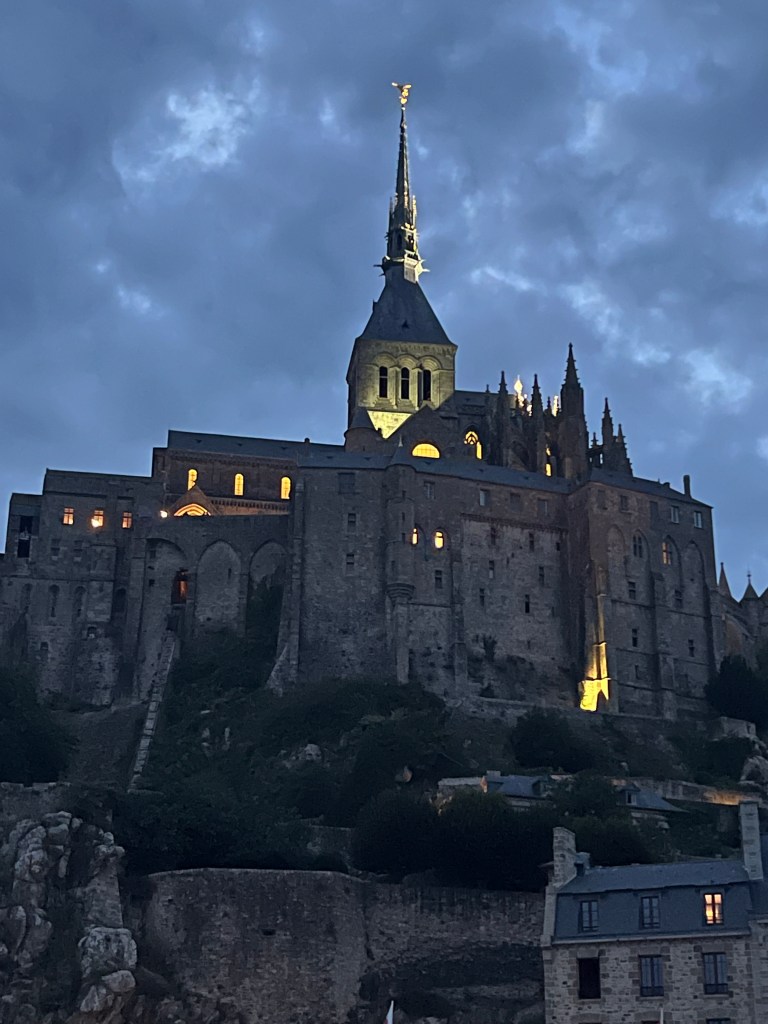
We planned to have dinner at the famed La Mere Poulard restaurant on the island, one of the few open in the evening hours. It is both a restaurant and a hotel, though we stayed elsewhere, the object of our dinner was their famous omelette.
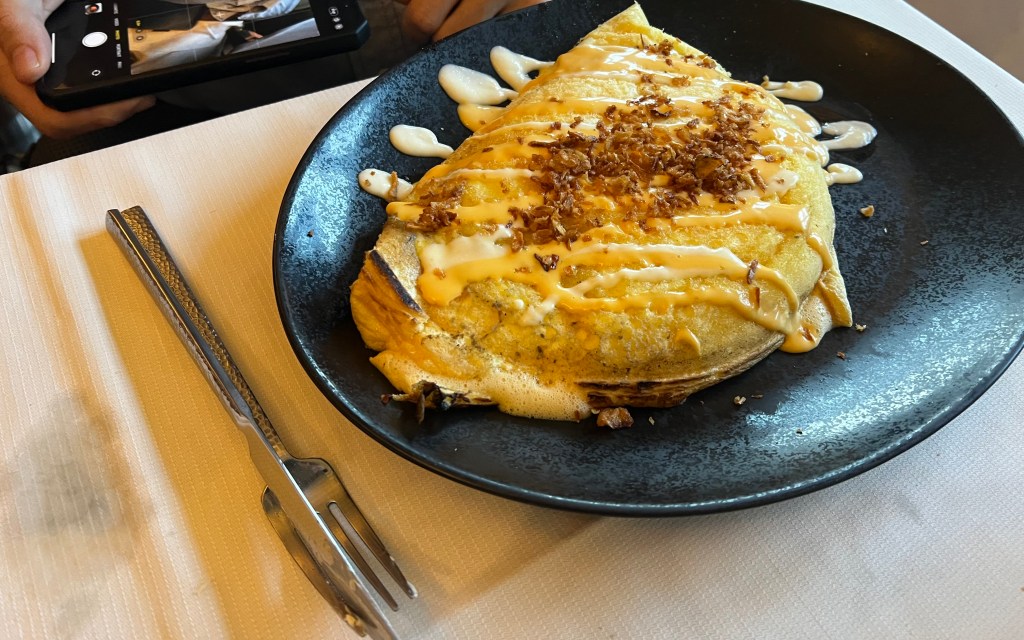
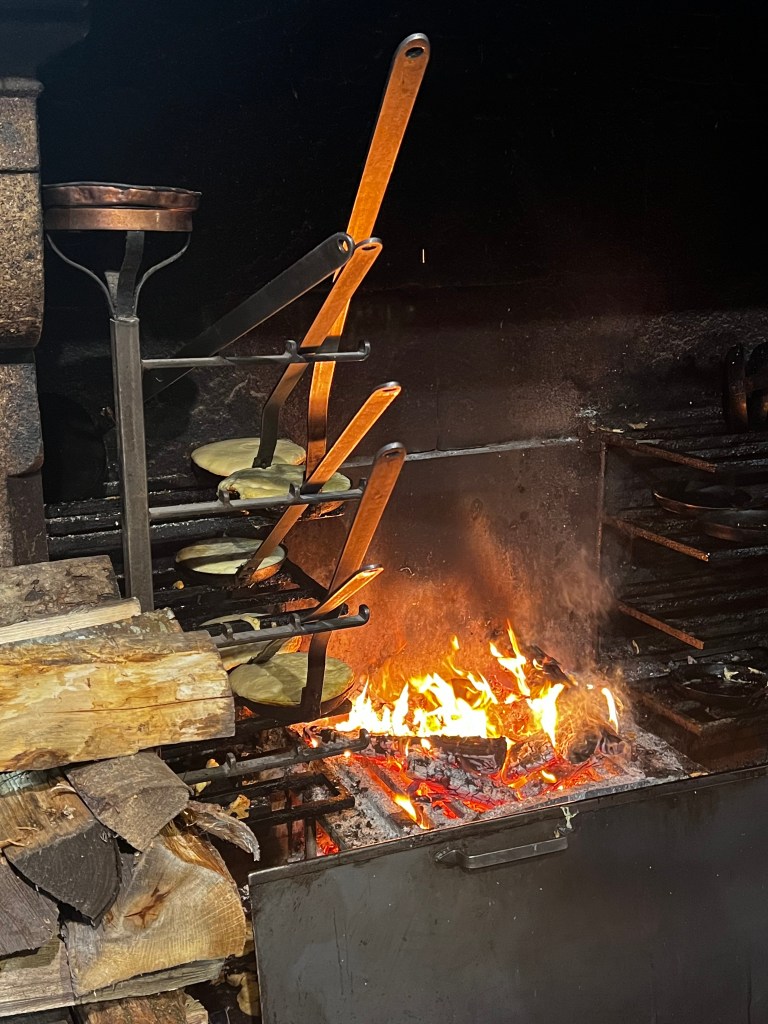
Cooked over an open wood fire after being whipped in a copper pan, it’s supremely light.
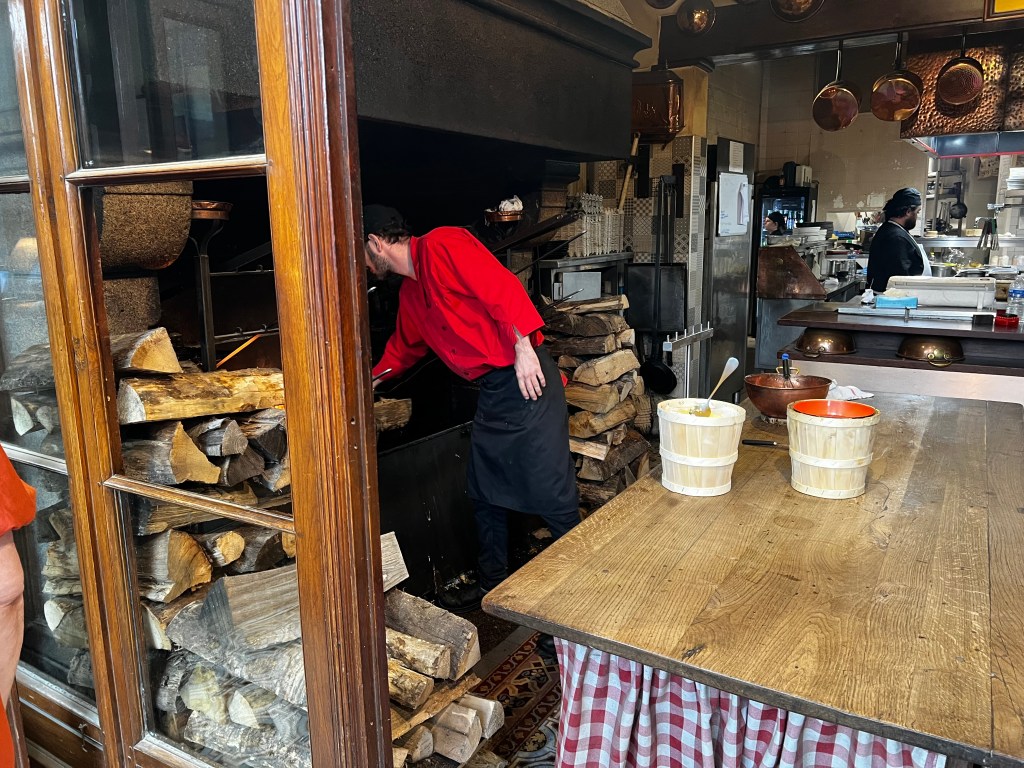
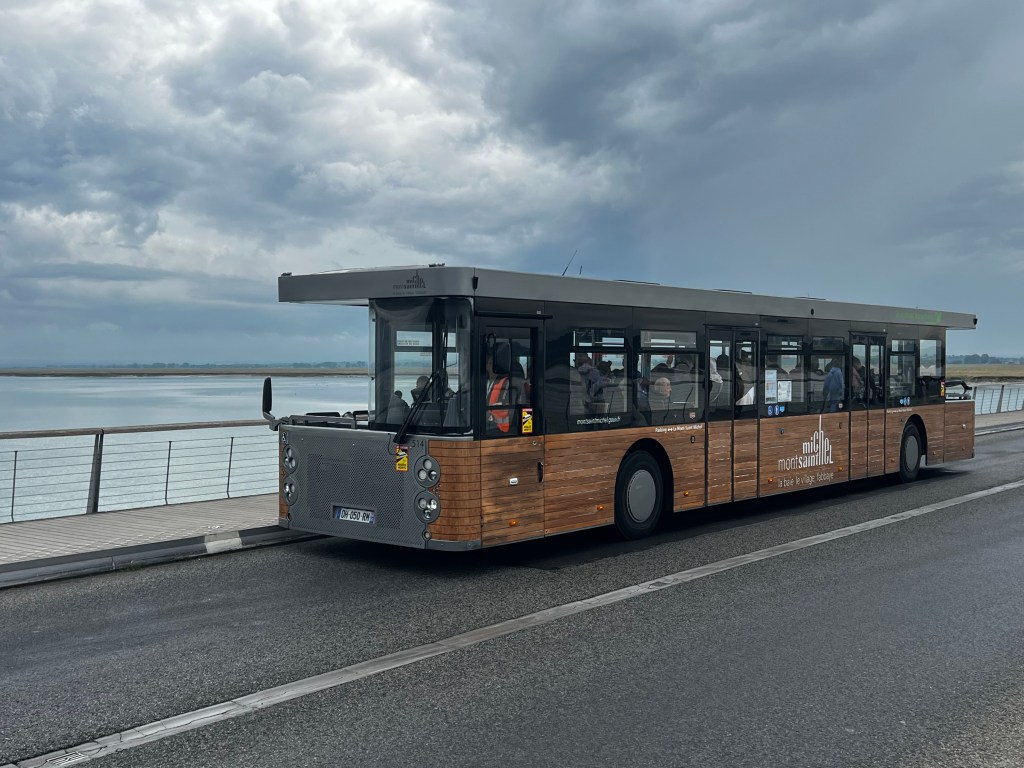
The next day, the 7th of September, we left the island midday, taking the shuttle bus back to the Pontorson station. Interestingly, the shuttle bus has two driver’s seats. When the bus arrives from the mainland at the drop-off point on the causeway, it does not turn around, but the driver locks the steering wheel, retracts the mirrors, gets out, walks around to the other end of the bus (which will now head back to the mainland) and opens his door for the return trip.
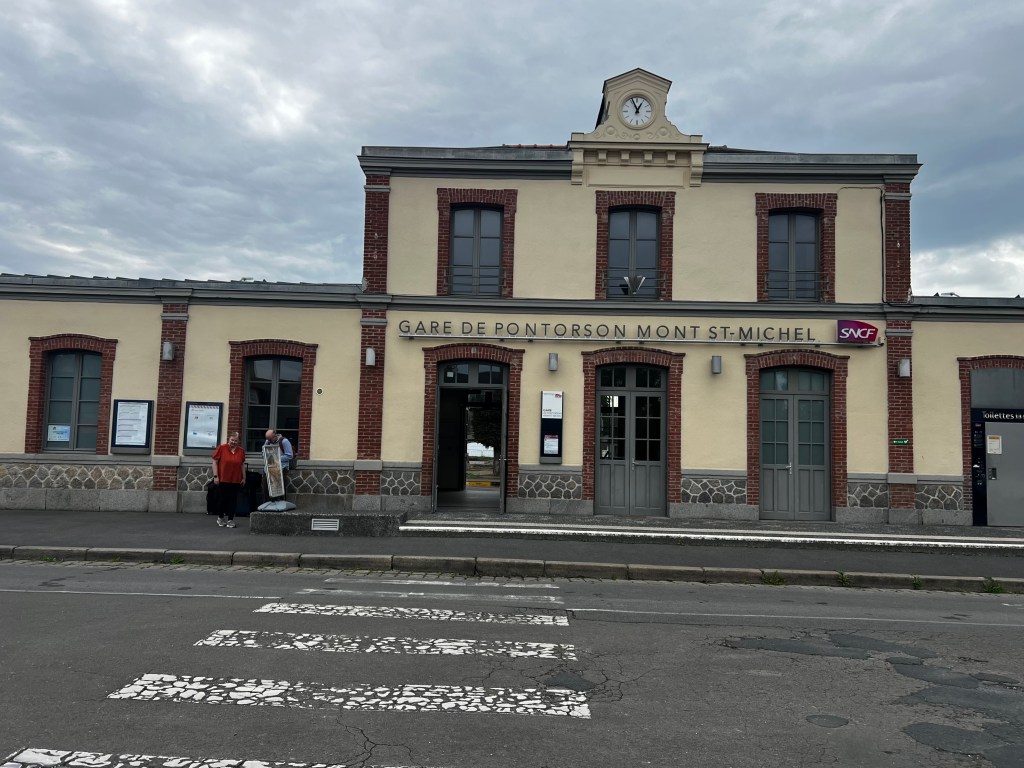
Then a train to Rennes and back to Paris, where our room overlooks la Tour Eiffel
The trip to Mont-Saint-Michel was way too short, but absolutely the highlight of this trip. Dramatic landscape and 1000 year history.
 TerraTraveler