
Trip 46
May 4, 2024
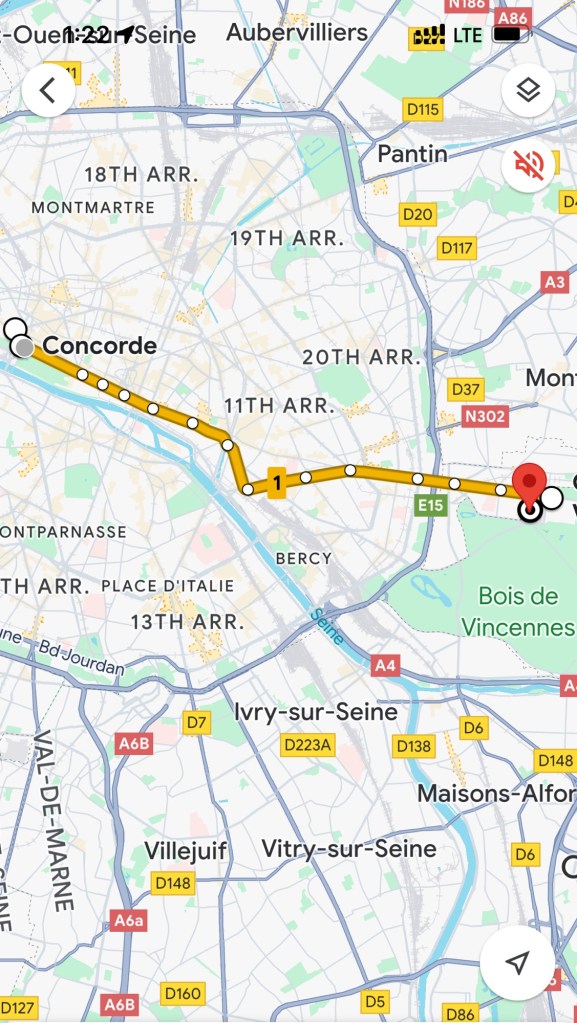
In all the years we’ve come to Paris, we’d never taken the Metro out to Château de Vincennes. It was just always Metro line 1 , direction Château de Vincennes, but there is actually a château (palace).
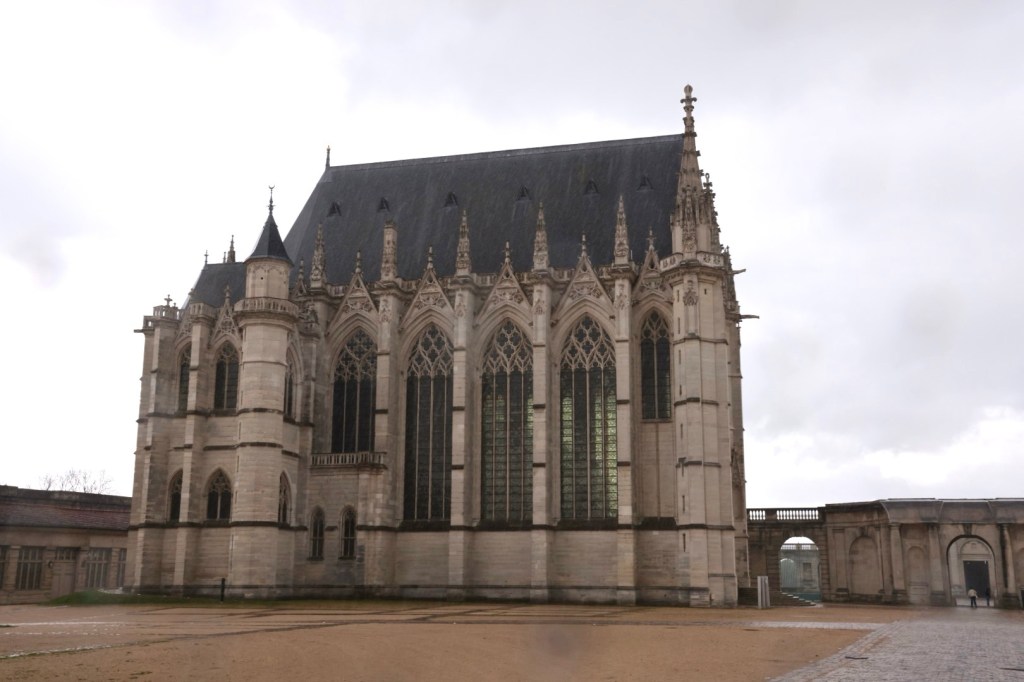
Its entrance is short walk from the end of the line metro station. There’s no fee to enter the grounds, but there is a fee if you want to tour the dungeon. We would have done more here, but not long after we arrived, it started to drizzle (hard), so we’ll have to make a return trip. The chateau was built in the 14th century and has a real drawbridge and moat.


Close to Paris, Vincennes was chosen to be a royal palace at the end of the 12th century. Around 1337, King Phillip VI had foundations dug to fortify it, but the work was stopped. About this time, the Hundred Years’ War started. Edward III, King of England, continued his victories over the French. In this context, political, military and social crises followed in France. In February 1358, the people of Paris rose up, led by Étienne Marcel, provost of the city’s merchants. He attacked the le Palais de la Cité, where the son of King John II the Good was located. This assault convinced the dolphin, future Charles V, to relaunch the project of a fortress in Vincennes. The construction of the main tower began in 1361, from the foundations of Philip VI and was completed in just 10 years.
Built on five levels, the Vincennes keep is the highest in Europe. It is 50 meters high and its walls are more than 3 meters thick. Each of its corners has a turret and its summit has a large terrace. It can also accommodate imposing war machines, such as catapults and is surmounted by a watchtower.
In 1378, Charles V built a second, larger enclosure, measuring more than a kilometer and the area it covers is equivalent to that of a medieval city, evidencing that the monarch wanted to make the Château de Vincennes a place of power bringing together his advisors, court and servants.
The building was then the heart of the Kingdom of France, serving as both a royal residence and a military fortress. At the end of the 15th century, King Louis XI gave it a new dimension: from now on, the dungeon will also serve as a prison. The prisoners here were only “housed” at the request of the King. In the 17th century, the keep continued to be used to accommodate prestigious captives, including the Grand Condé (Louis II de Bourbon , Nicolas Fouquet, the Superintendent of Finance of Louis XIV, in 1661. Common law detainees were also sent there by direct order of the King, in particular during the Poisons Affair in 1679. This series of scandals involved several aristocrats of the Court and triggered a real witch hunt throughout Paris.
While there were political prisoners here, troublesome commoners were easily disposed of. In the 18th century, the solution was found: ask for a stamp letter (“lettres de cachet”). Signed by the King, these letters can order imprisonment or exile without judgment. In the middle of the Enlightenment, writers and philosophers paid the price: Diderot was incarcerated in Vincennes in 1749 and Mirabeau in 1777.
After four centuries in the service of justice, the Château de Vincennes has become one of the symbols of royal oppression. In 1784, Louis XVI decided to close it in the face of the anger of the people, but Napoleon reopened it at the beginning of the 19th century.
Nôtre-Dame
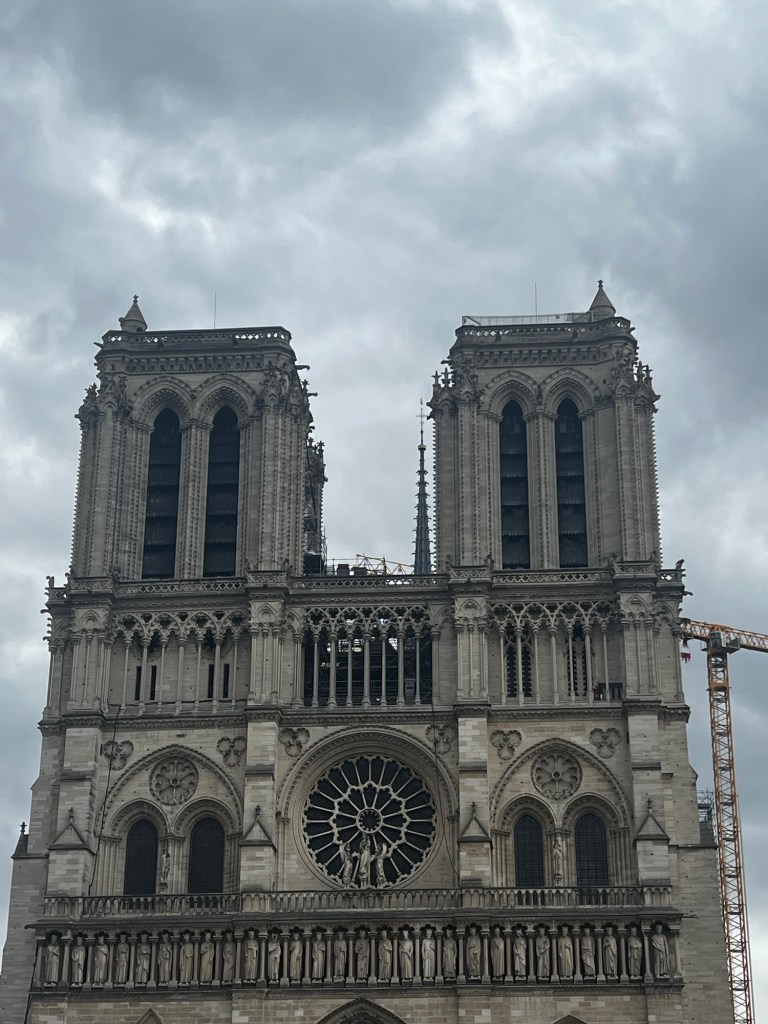
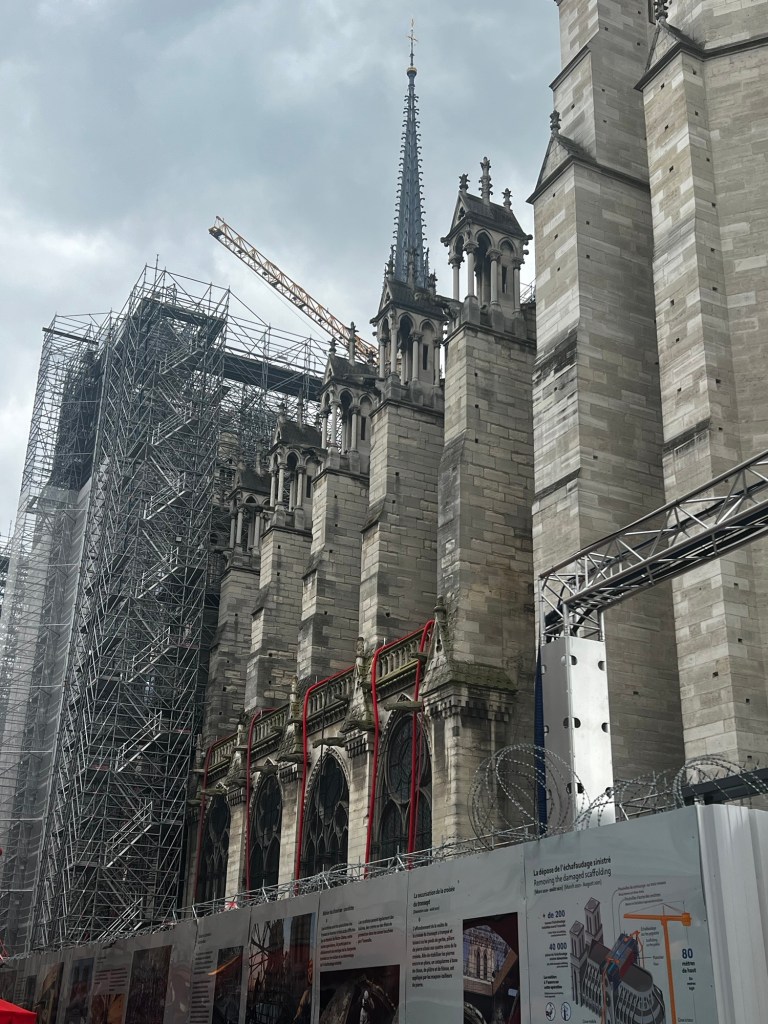
Since the rain prevented us from exploring further, we stopped for a bite to eat before heading back into the heart of the city to see how the reconstruction of Notre-Dame is proceeding from its near destruction by fire in April, 2019. We last visited Notre-Dame in 2022.
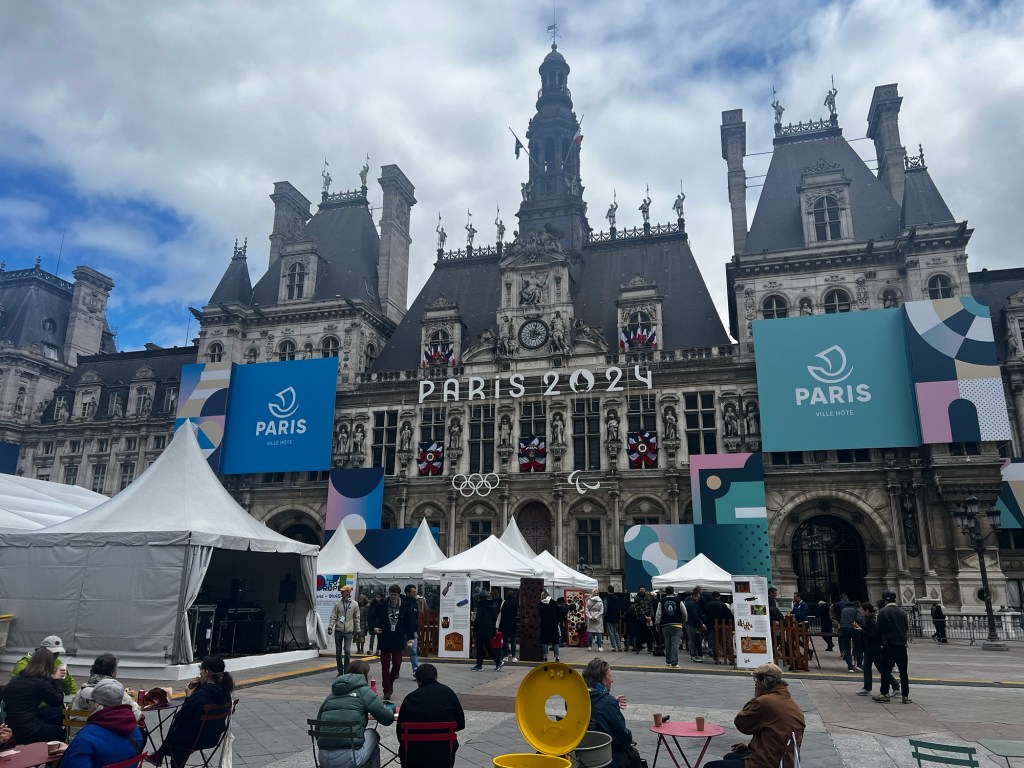
Prior to reaching Nôtre-Dame we walked past Hôtel de Ville (City Hall) , where there was a Mayfest still going on and the city is getting ready for the launch of the Olympics.
There’s still an enormous amount of work to be done on Nôtre-Dame and of course you cannot yet enter the building. The engineering and craftsmanship of the thousands of people who’ve worked to reconstruct Notre-Dame is quite overwhelming. Without the technology available today, such a disastrous fire would have doomed the cathedral. Progress report. The spire, which came tumbling down in the fire has been rebuilt. If this fire had happened 20 years ago, it likely could not have been saved. So much technology has been used, from drones, robots, 3D modeling, digital imaging, along with using artisans to use as much of the original materials and methods as possible. Just an amazing effort to bring a priceless jewel of history back to life.
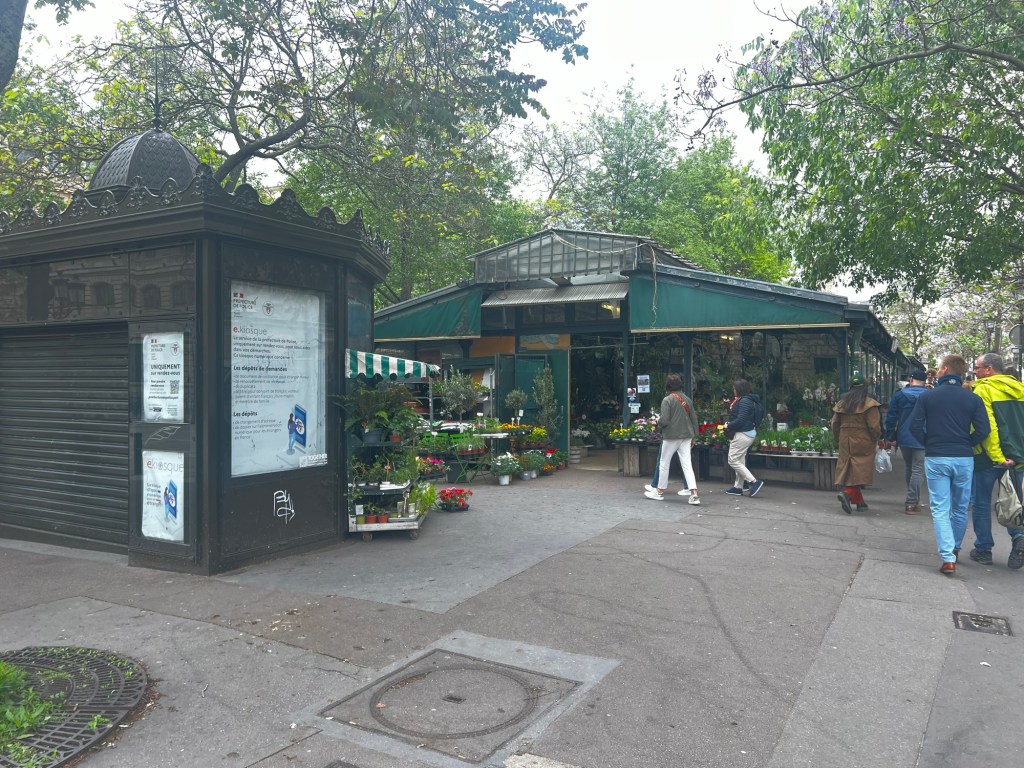
We continued on, to walk through the Marché aux Fleurs on Île de la Cité.
Then, taking the Metro back to the Tuileries, walked past Angelina (where the line was unbelievably long) , through Place Vendôme, on our way to see if we could wedge into Cedric Grolet’s Cafe, but the line was a half block long.
 TerraTraveler
2 thoughts on “Château de Vincennes to Nôtre Dame”