Unfortunately, we leave tomorrow and feel like it wasn’t the kind of experience we wanted to have here. I came down with a cold before we got here that really sapped my energy. There’s so much to see and we effectively had so little time to see it.
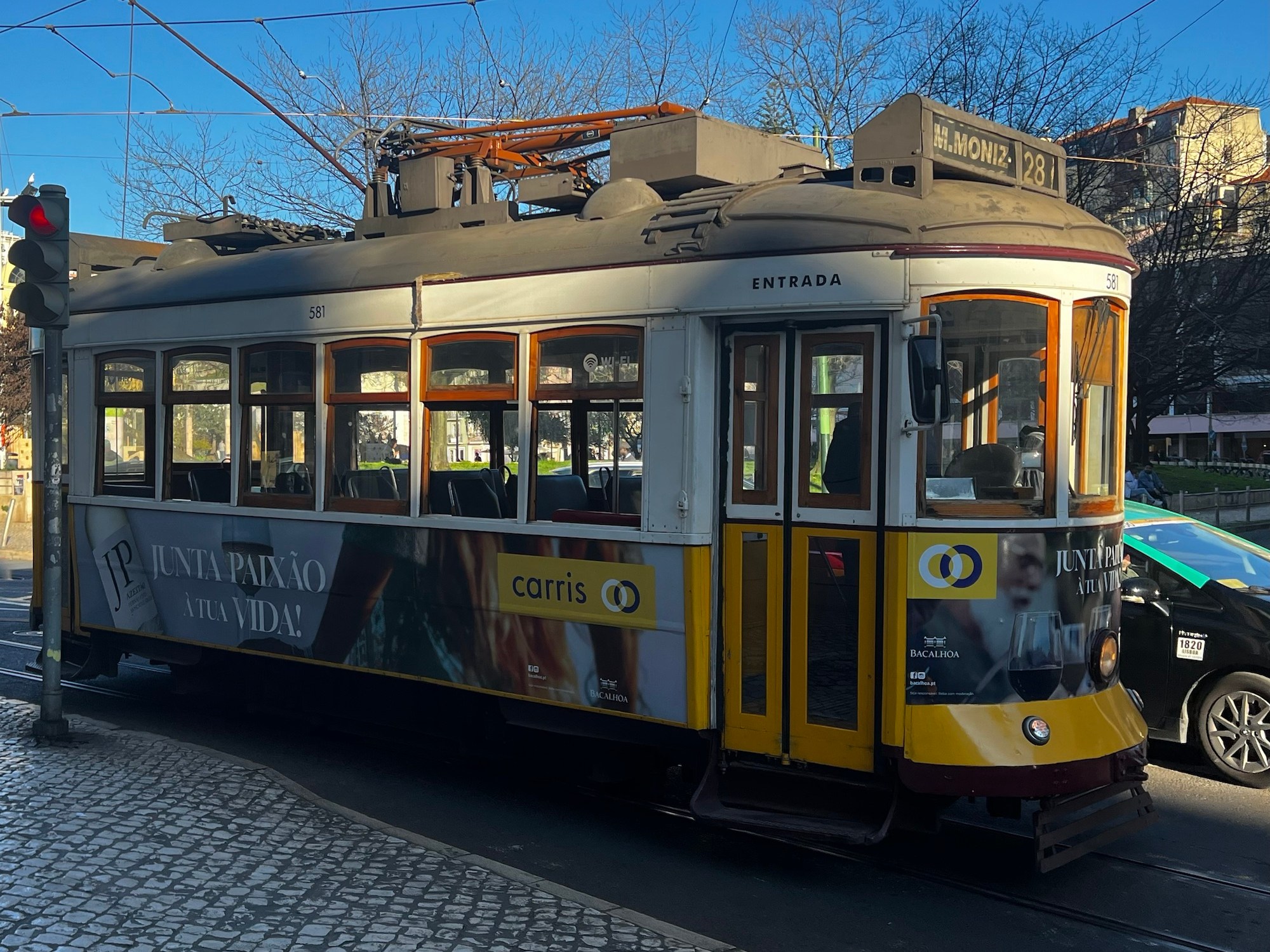
We went in the opposite direction of Belém yesterday to the area called the Bairro Alto, the “old” part of town (still on the same side of the river) and took a tram ride (#28) on a partial loop.
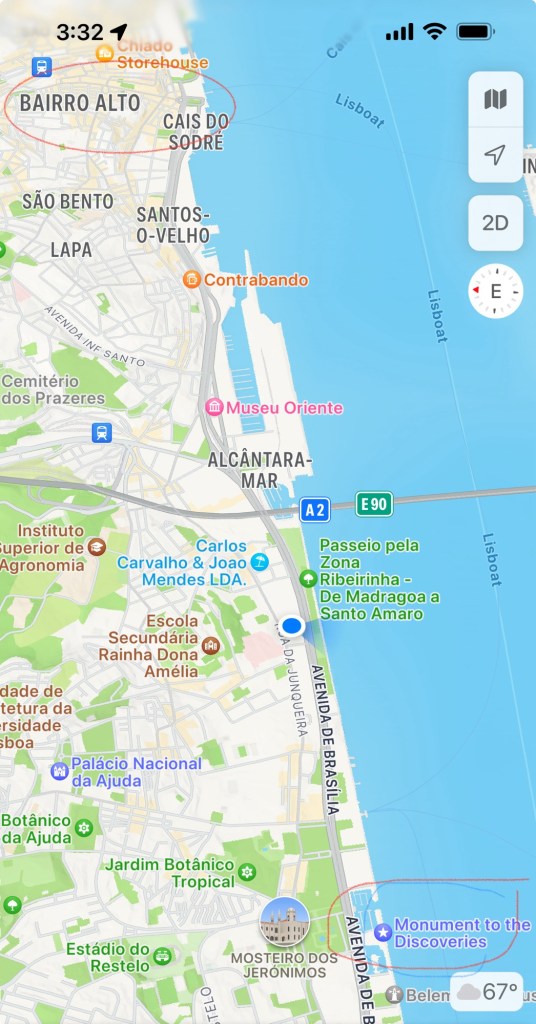
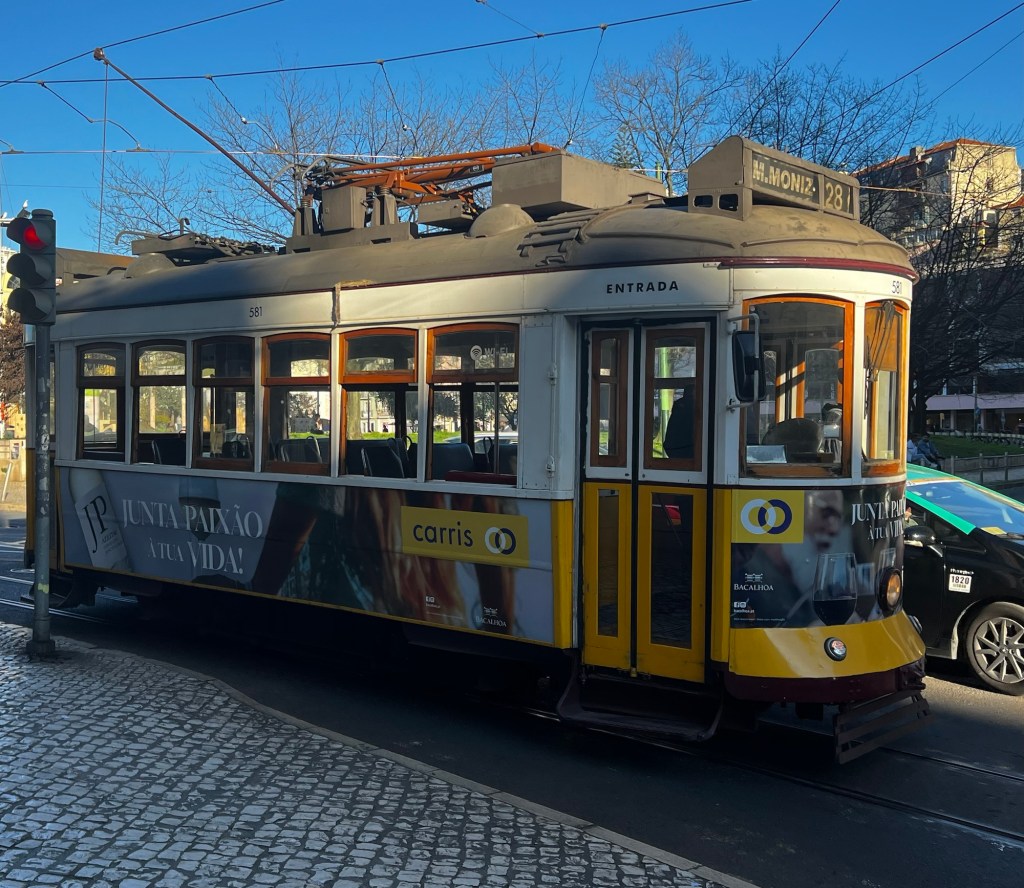
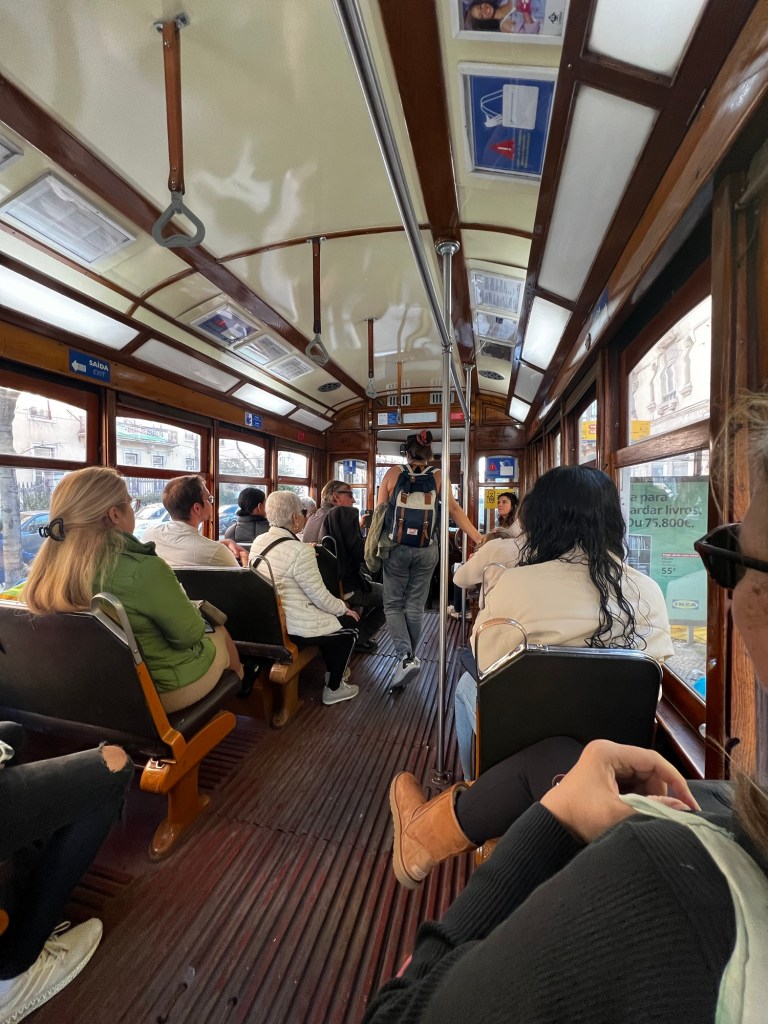
While they take the daily tram pass we don’t have, they still take coins (no touch to pay). It’s a beautiful day and the tram travels down narrow streets barely more than two trams wide on rails that are too narrow for the newer streetcars. At points, it would be possible (if very unwise ) to reach out the window and touch the walls of the buildings alongside .
We waited for the next tram after the first arrival because it was already crowded and a group boarded ahead of us, taking what little seating there wasn’t. The “style” of this old tram (and there are more than just this one) reminds me of the ones that still ply the tracks of New Orleans’ French Quarter. The tram travels down narrow streets and up hilly ones, making us glad we’re riding, rather than walking. Much of the area through which we ride is “everyday” Lisboa, small shops and restaurants, apartments, nothing particularly scenic and few of the people on this tram are tourists, their residents making their way through the day.

Throughout the areas we’ve walked, there are buildings decorated with tiled walls, from humble buildings to grand palaces (and certainly not all buildings). Azulejo tiles, which came to the Iberian Peninsula with the invasion of the Moors. These polychromed tiles, though initially introduced by the Moors, weren’t widely adopted until King Manuel I commanded their use in the Sintra National Palace in 1503 and now represent a distinct art form. Intricate design and attention to detail, sometimes telling the story of the building they decorate.
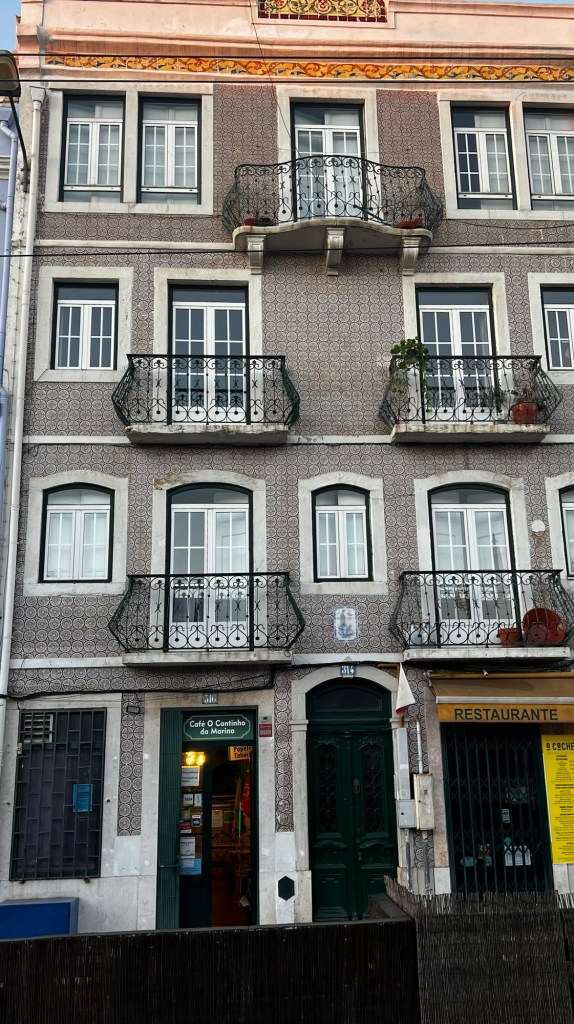

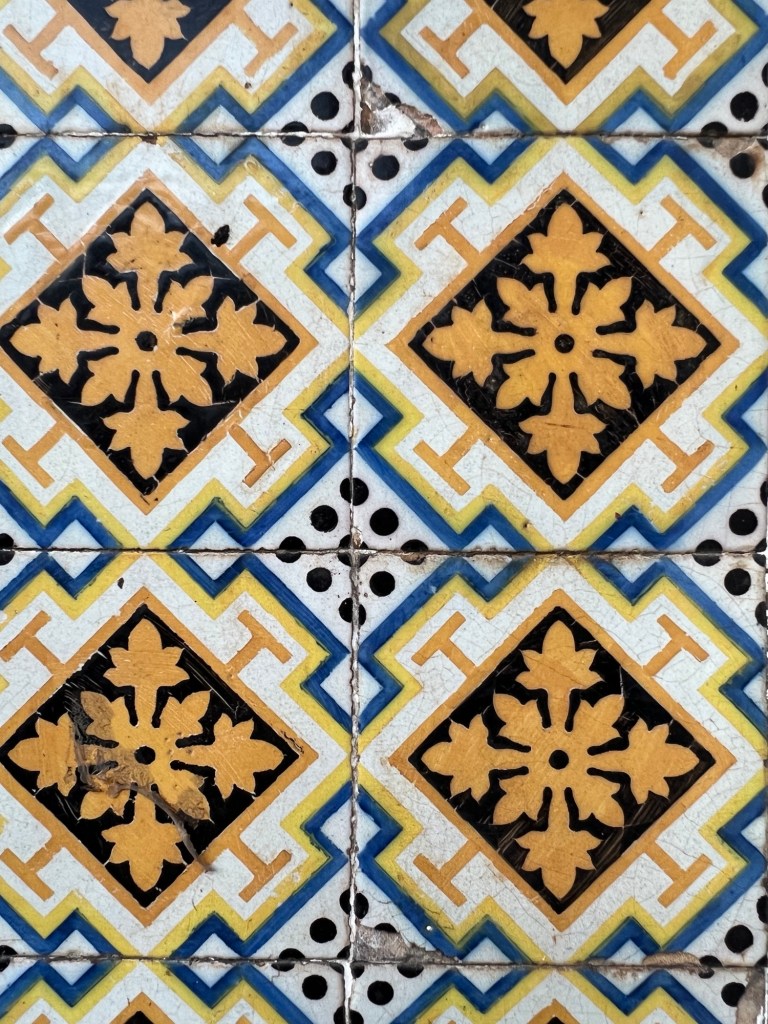
We knew, or highly suspected, that this tram wasn’t a circular route that would bring us back to where we started. This was actually fine and meant we could (would have to) get out and walk around, we just didn’t know where we’d stop. We did stop and it was “everyone off the tram”. The driver also got off and was making some adjustments at the rear as to how the tram connects to the electrical lines overhead
High above us as we stand in the Praça da Figueira, we see the city wall fortifications. Praça da Figueira is a large square in the centre of Lisbon. It is part of the Lisbon Baixa, the area of the city reurbanised after the 1755 Lisboa earthquake.
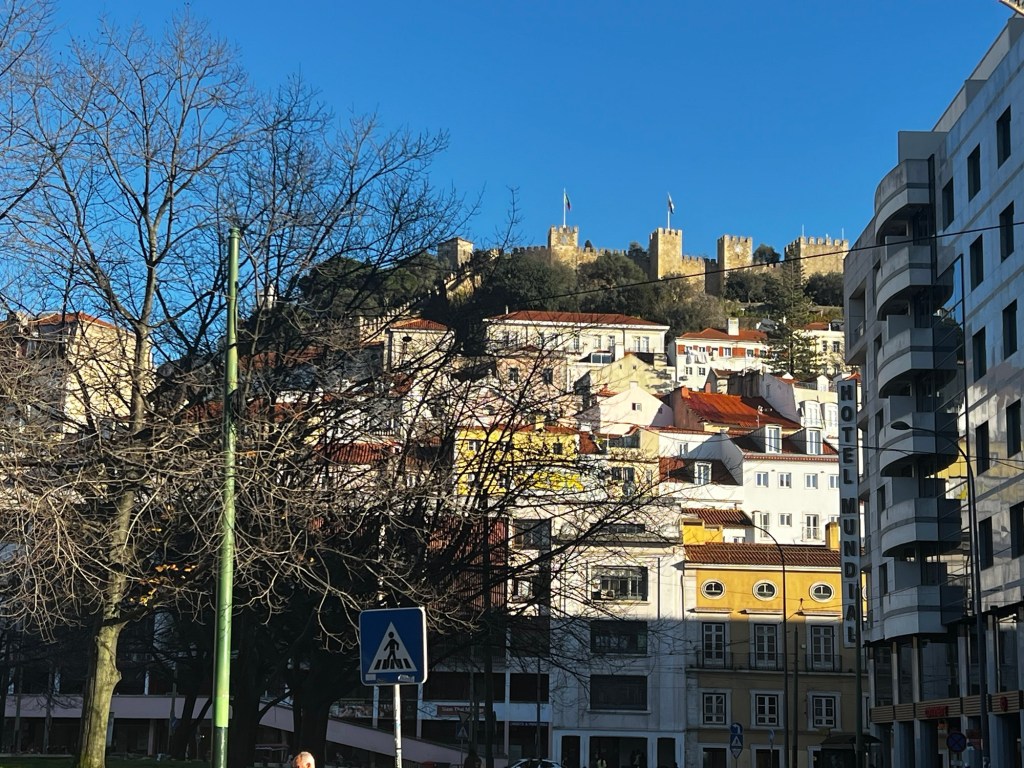
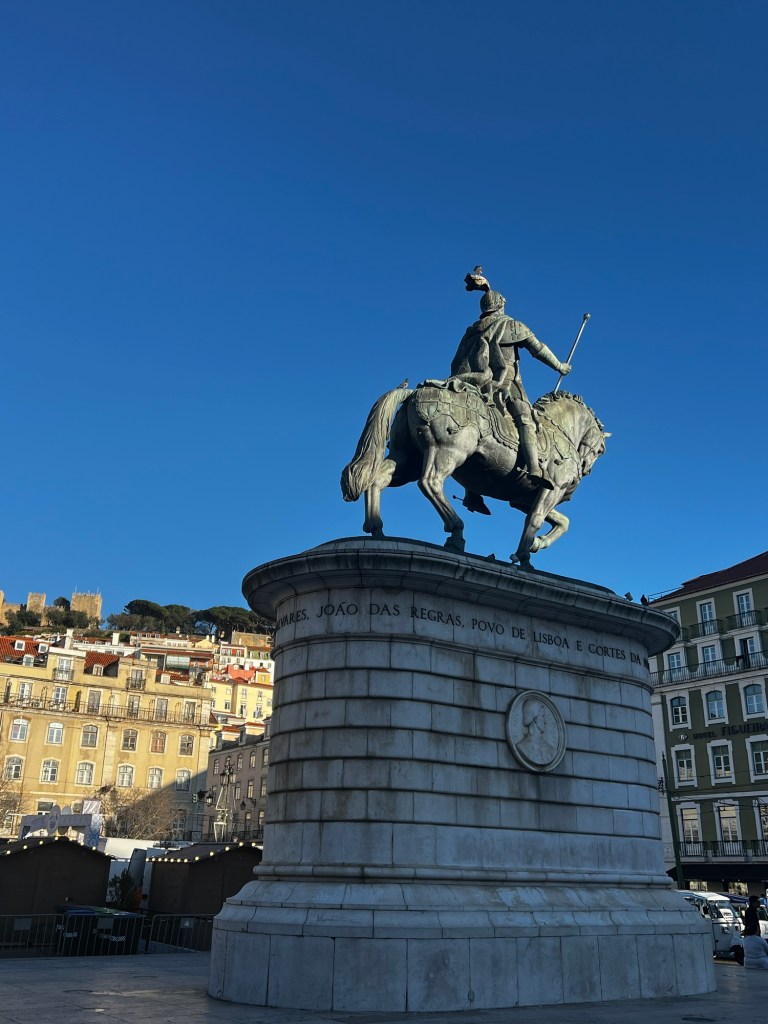
Although not lit, the Christmas decorations still hang above the streets.

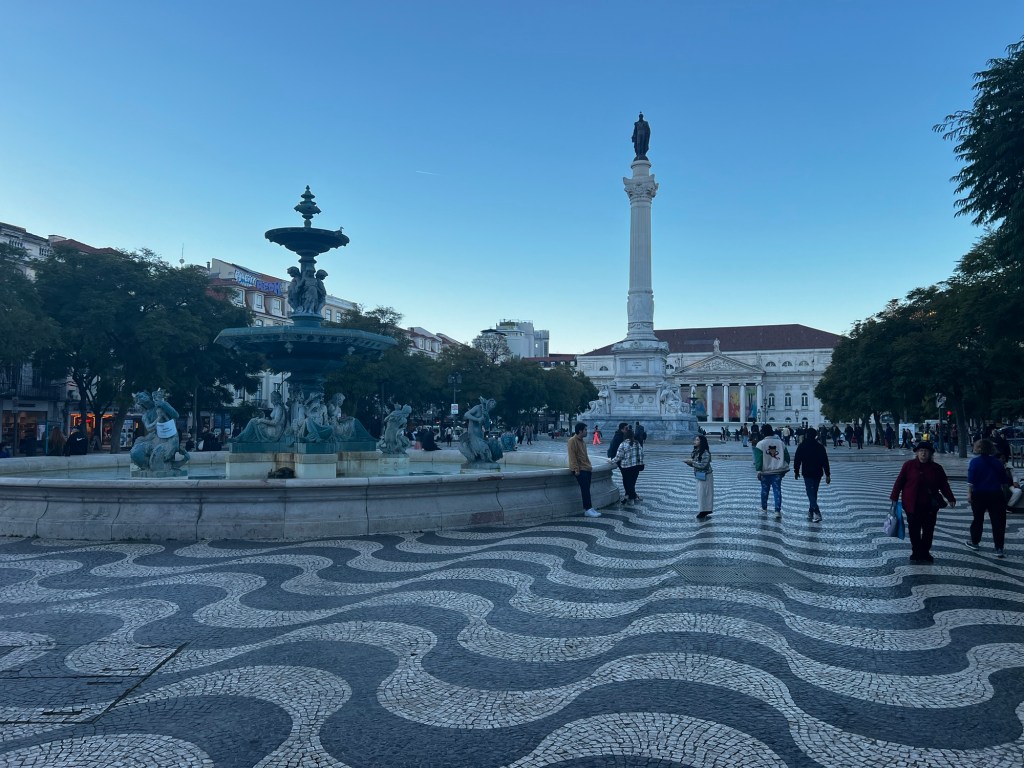
Rossio Square, has been one of its main squares since the Middle Ages. It has been the setting of popular revolts and celebrations, bullfights and executions, is nearby. No revolts and celebrations, bullfights or executions today.
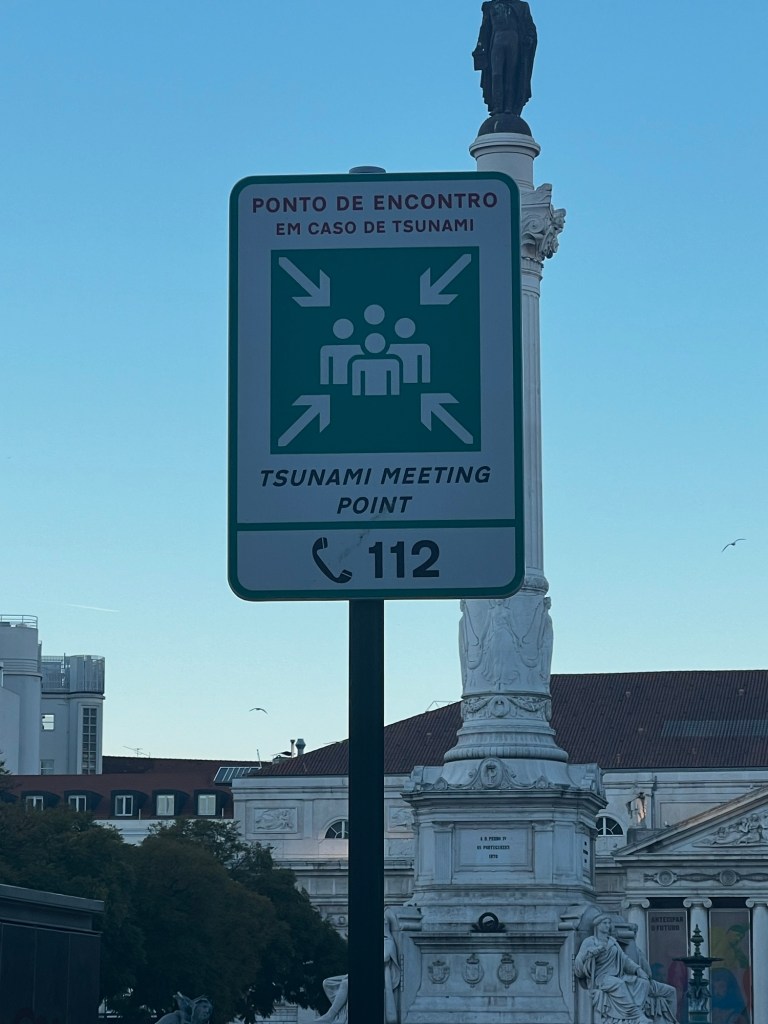
Remember that earthquake in 1755? So do the Lisboans
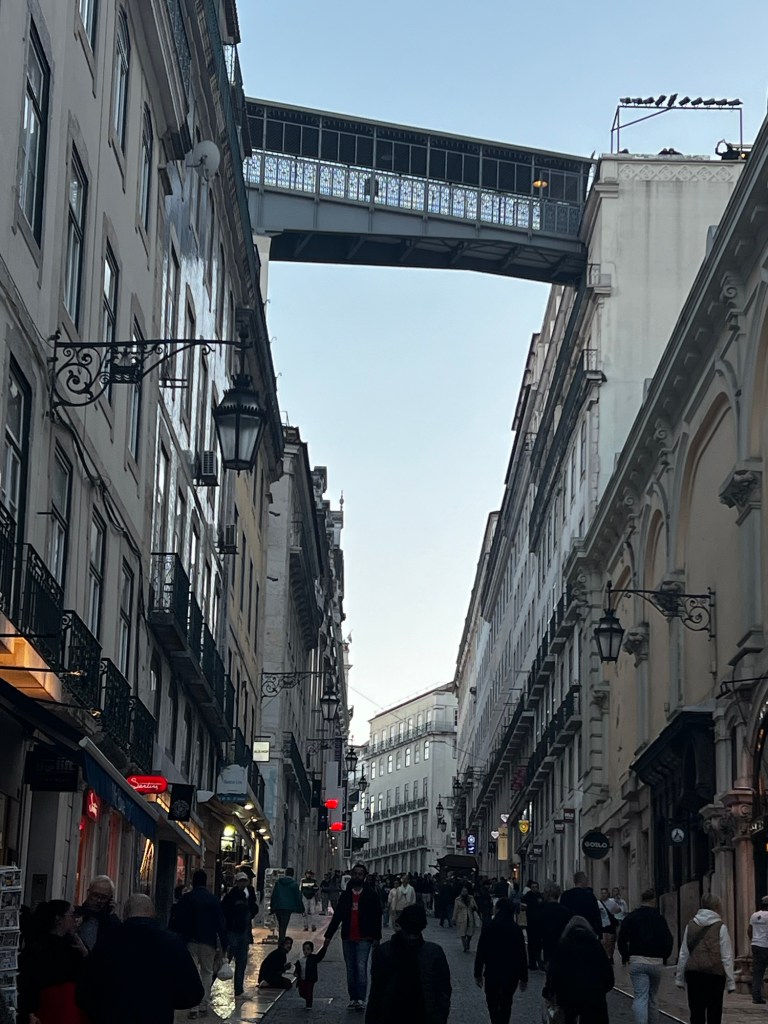
Down a side street, high overhead, is the Elevador Santa Justa.
We walked back near our starting point and called a Bolt (like an Uber). Busy time of day and meeting them in the square amongst the circulating traffic is a little challenging. We’re headed downhill towards the road along the waterfront, but at rush hour on a narrow street, the traffic is just not moving; Bolt driver does a u-turn. We’ll have to try Bolt again. Unlike Uber, they charge you when you reserve the ride , but it was super cheap. It was actually less than the tram ride for two.
We didn’t get a chance to cross the longest bridge in Europe. It’s truly huge. It’ll likely be there if we get to come back.
 TerraTraveler