Trip 45
January 23, 2024
Portugal has a long history. Lisboa is one of the oldest cities in the world and is the second-oldest European capital city (after Athens), predating other modern European capitals by centuries. Established by pre-Celtic tribes and later Phoenicians, According to a persistent legend, the location was named for the mythical Ulysses, who founded the city when he sailed westward to the ends of the known world. Julius Caesar made it a municipium called Felicitas Julia. After the fall of the Roman Empire, it was ruled by a series of Germanic tribes from the 5th century, most notably the Visigoths. Later it was captured by the Moors in the 8th century. In 1147 Afonso Henriques conquered the city and in 1255 it became Portugal’s capital.
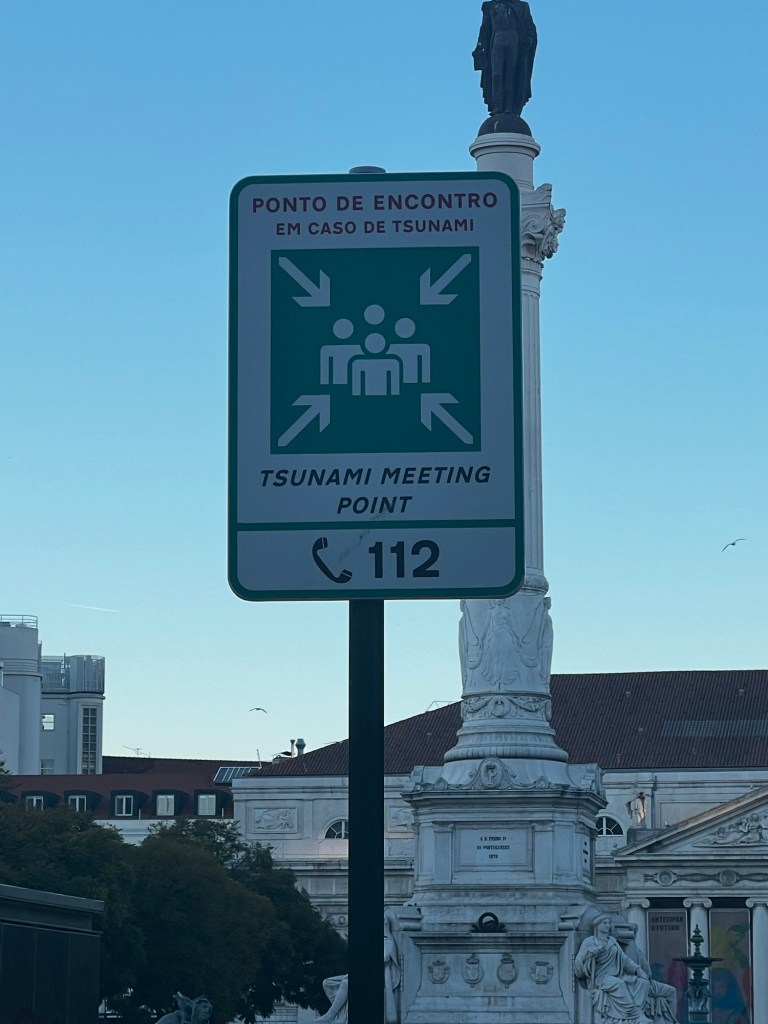
Now with 2.9 million people living in the metropolitan area, it was nearly destroyed in the great earthquake of November 1, 1755, with a magnitude of 7.7 Contemporary reports state that the earthquake lasted from three and a half to six minutes, causing fissures 5 metres (16 ft) wide in the city center. Survivors rushed to the open space of the docks for safety and watched as the sea receded, revealing a plain of mud littered with lost cargo and shipwrecks. Approximately 40 minutes after the earthquake, a tsunami engulfed the harbor and downtown area, rushing up the Tagus river. As many as 100,00 people died. More than two centuries later, on Feb. 28, 1969, a magnitude 7.8 earthquake struck the same area. The source of earthquakes in this area has been elusive, but there are some theories. Now,
The Torre de Belém is a 16th-century fortification located in Lisboa that served as a point of embarkation and disembarkation for Portuguese explorers and as a ceremonial gateway to Lisbon. It was built during the height of the Portuguese Renaissance. The Torre is symbolic of Portugal’s flourishing in the 15th, 16th, and 17th centuries, with voyages to India, the Orient, the Americas, and Africa. The Torre was begun in 1516 and was built as one part of defensive measures to defend the mouth of the river into Lisboa. As construction progressed, a man-of-war called the Grande Nau (Great Ship), a heavily armed, 1000–ton ship continued to guard the estuary at the mouth of the Tagus until the fort’s completion.

This immense trade network would create an extremely wealthy Portuguese middle class and monarchy, that would become patrons for an immense flourishing of culture, arts, and technology in Portugal and all over the world. The global expansion of Portugal’s navigation of “Age of Discovery” explorations were extremely important in opening Europe to the unknown and bringing a more worldly view to those European Renaissances, as at the time the Portuguese empire spanned the globe.
Did I mention Lisboa’s Rhino? What other city has a Rhino in their history ?
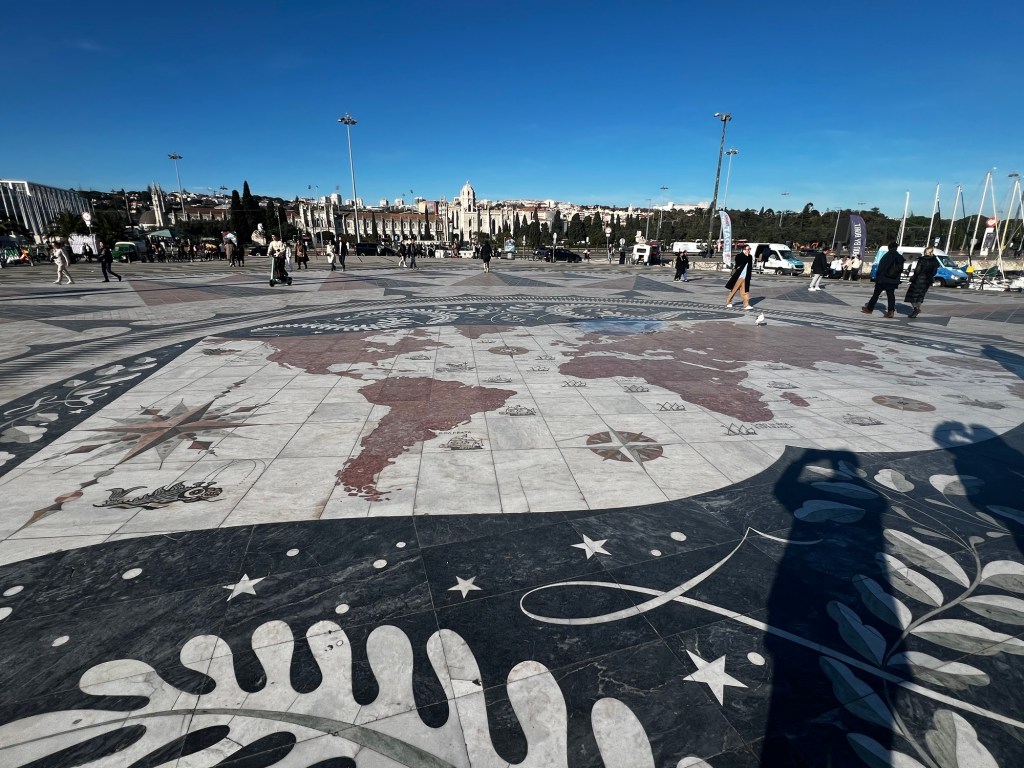
This mosaic at the head of the monument to Discovery at the bay front shows how widespread the Portuguese voyages were (too large to capture in one photo)
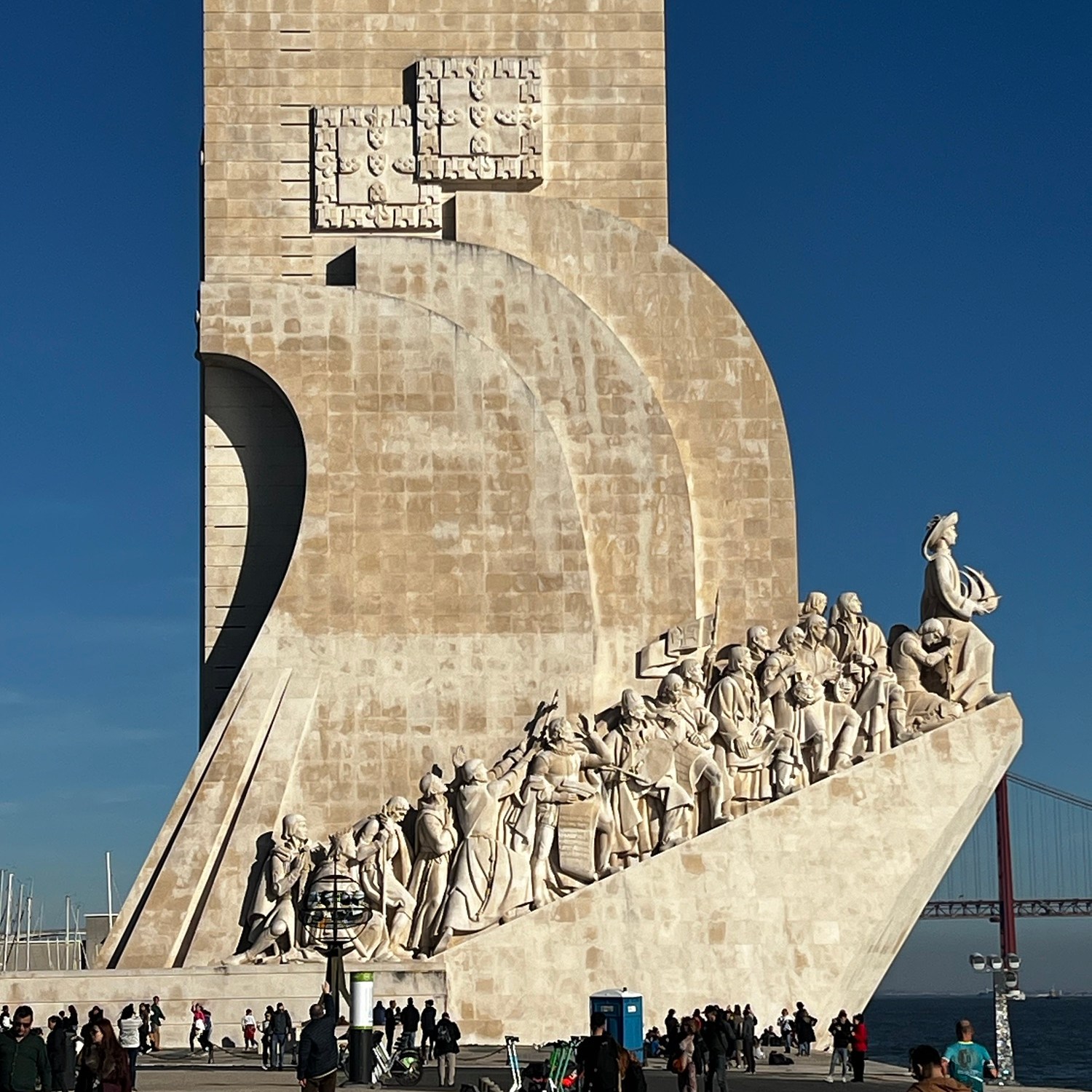
The monument to the era of discovery, with Vasco da Gamma at the head.
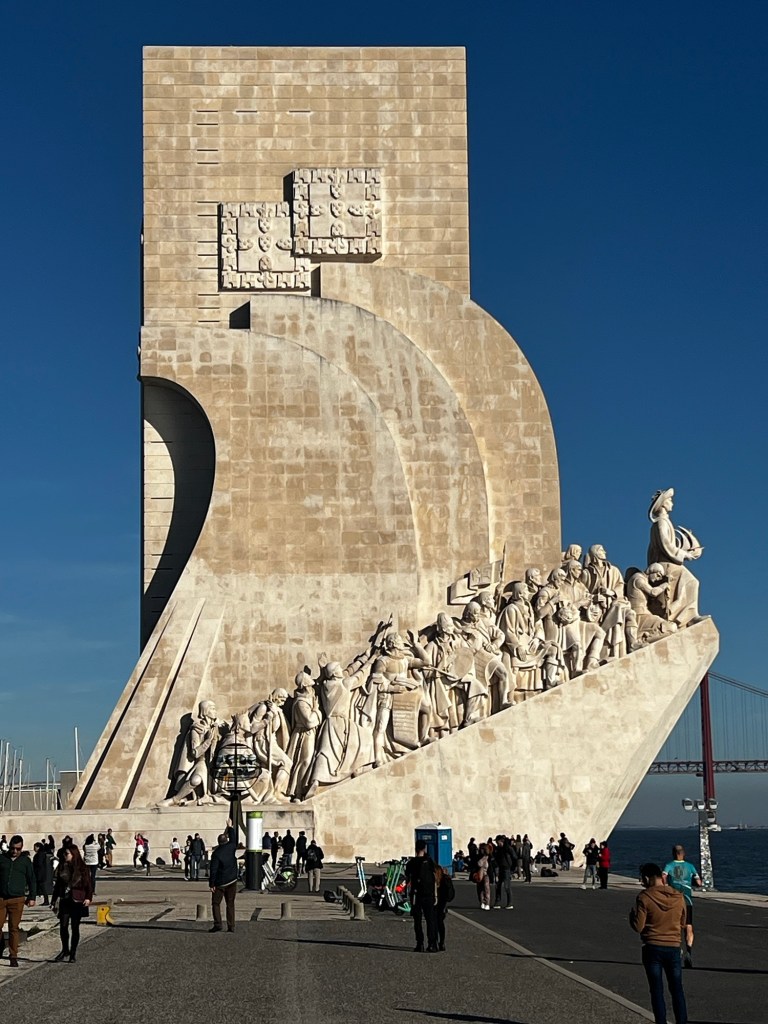
Though conceived in 1939 as part of Portugal’s World Exhibition, it was finally inaugurated on August 9, 1960, it was one of several projects nationwide that were intended to mark the Comemorações Henriquinas (the celebrations marking the anniversary of the death of Henry the Navigator, Duke of Viseu).
Vasco da Gamna is buried at the nearby Jerónimos Monastery.
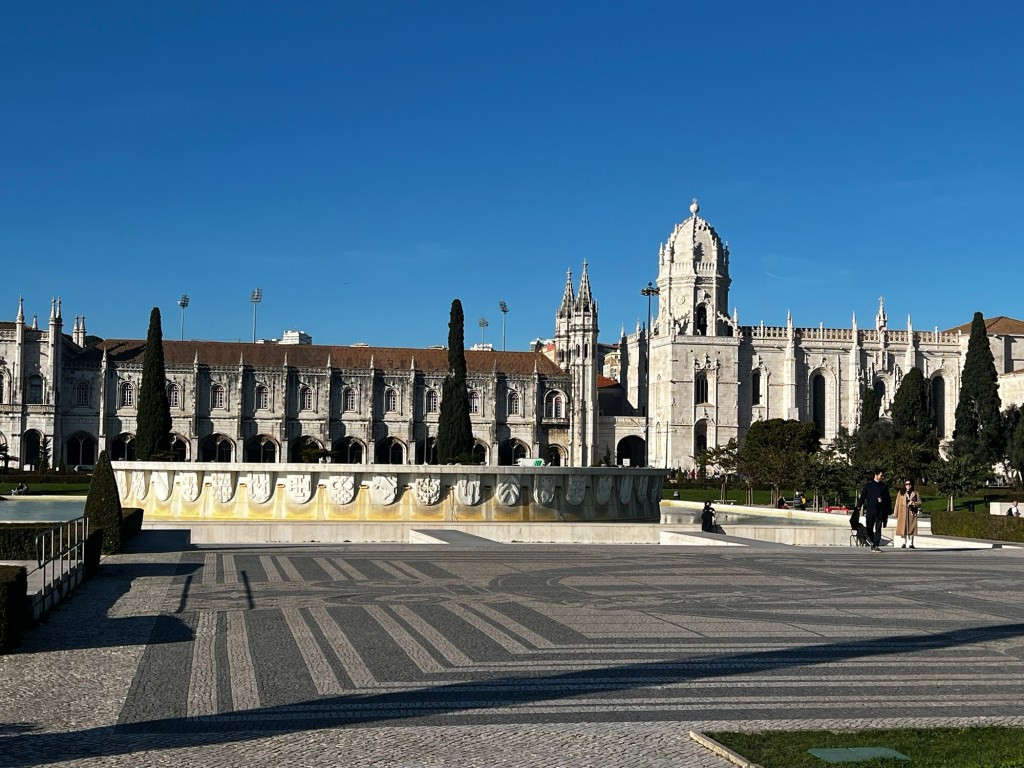
It’s a beautiful day here in Lisboa and there are quite a number of people walking along the bay front and the gardens , Praça do Império.
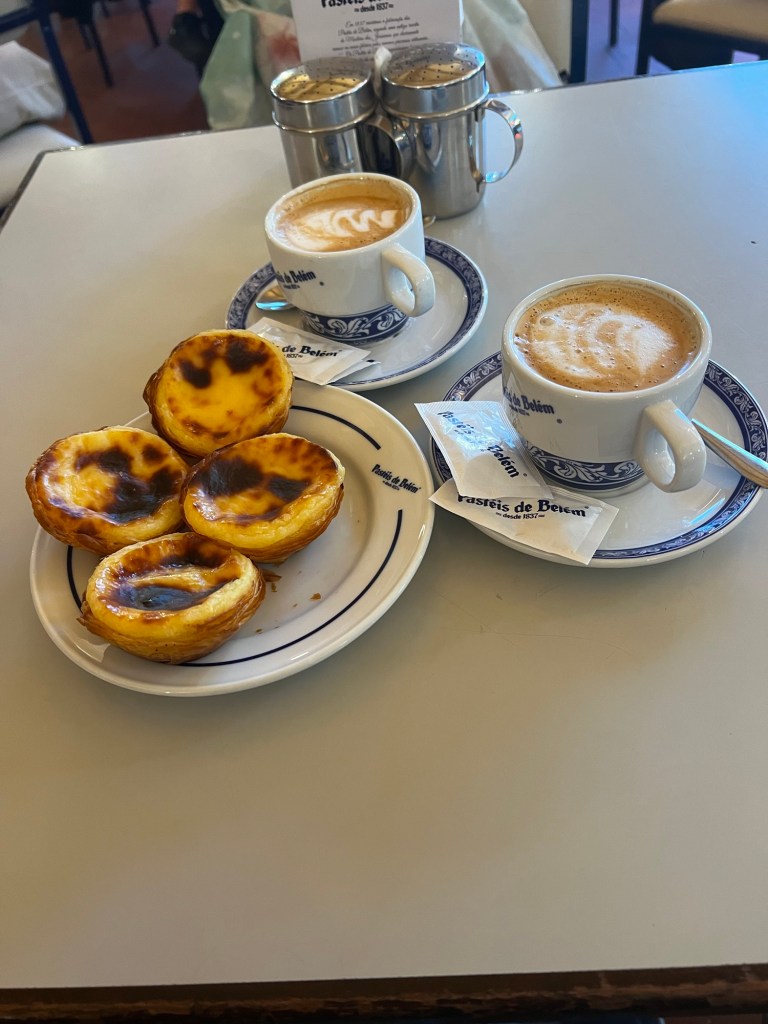
Making our way back towards the hotel, we made a “must stop” at the Pasteis de Belém for some extremely tasty Pastel de Belém. These handmade pastries have a history of their own, dating back to 1837 (just a few years after the dissolution of the clergy in 1834) . The Pasteis is an egg tart, served just baked, with a flaky crust with a delicate creamy filling, just delicious.
After winding our way through several rooms, we came to the big room.

A tiny team oversees the production of 20,000 pastéis de Belém every day.
 TerraTraveler
One thought on “Belém”