
Trip 43
September 25,2023
We had intended to explore some of the food markets in Paris, but found many of them are closed on Mondays, since people do their shopping on the weekend. We’ve visited Marché des Enfants Rouges and rue Clér but even if open, some are a bit far afield, so we’ll save the others for a future trip.
Just a few blocks down the street is Église Saint-Augustin. It’s centered on the square Saint-Augustin, built between 1860 and 1871 by the Paris city chief architect Victor Baltard. In the 1850s and 1860s Napoleon III carried out a massive reconstruction of the center of Paris, which was carried out by Georges-Eugène Haussmann. Wide boulevards were built to cut through the overcrowded medieval city, with monumental new buildings at the meeting points of the wide new boulevards. Saint-Augustin was intended to be the anchor of Boulevard Malesherbes, balancing The Church of La Madeleine at the other end. The size and design of the church was inspired by Saint Paul’s and other great churches of London, where Napoleon III had lived in exile before becoming President of France and then Emperor.
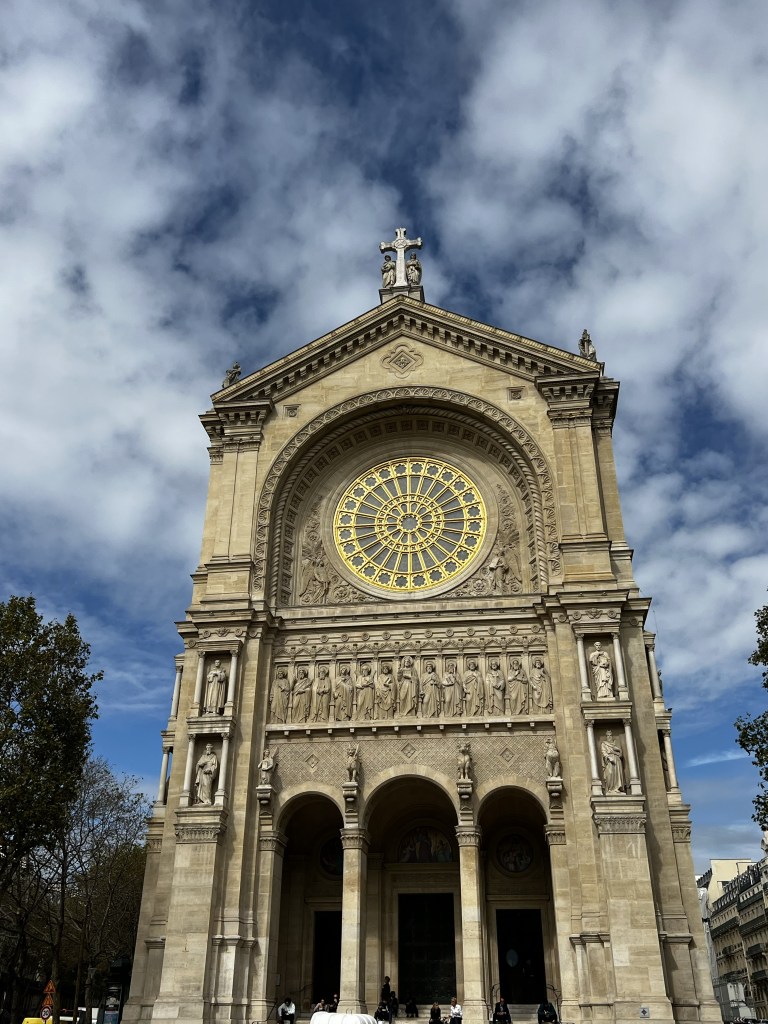
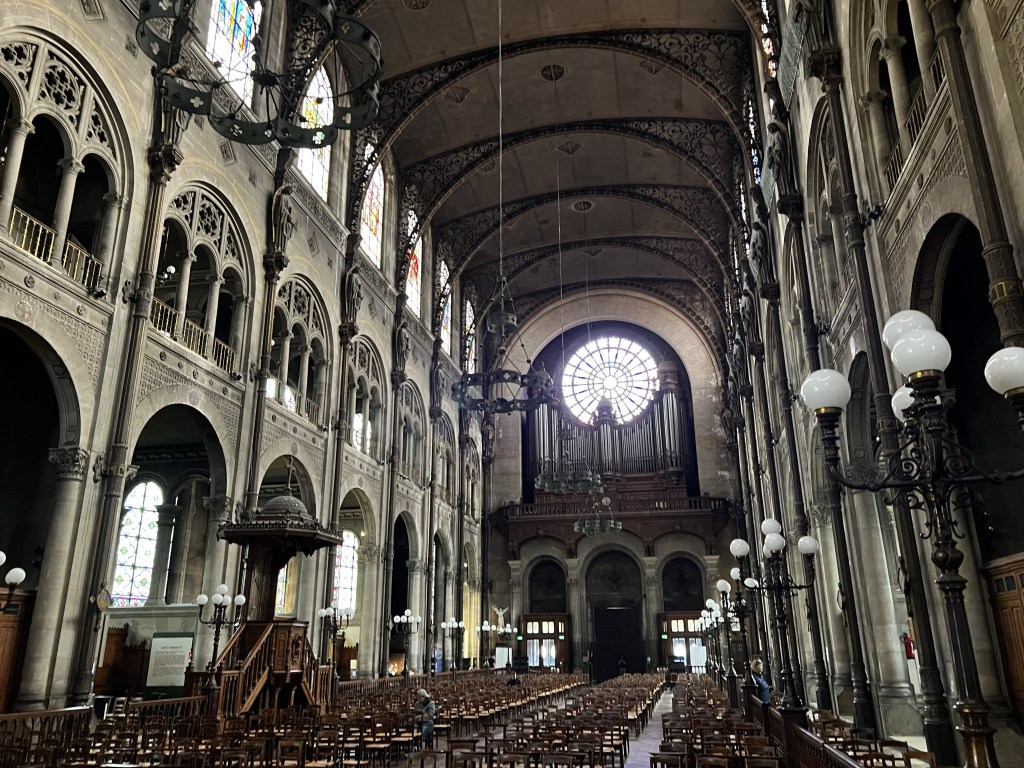
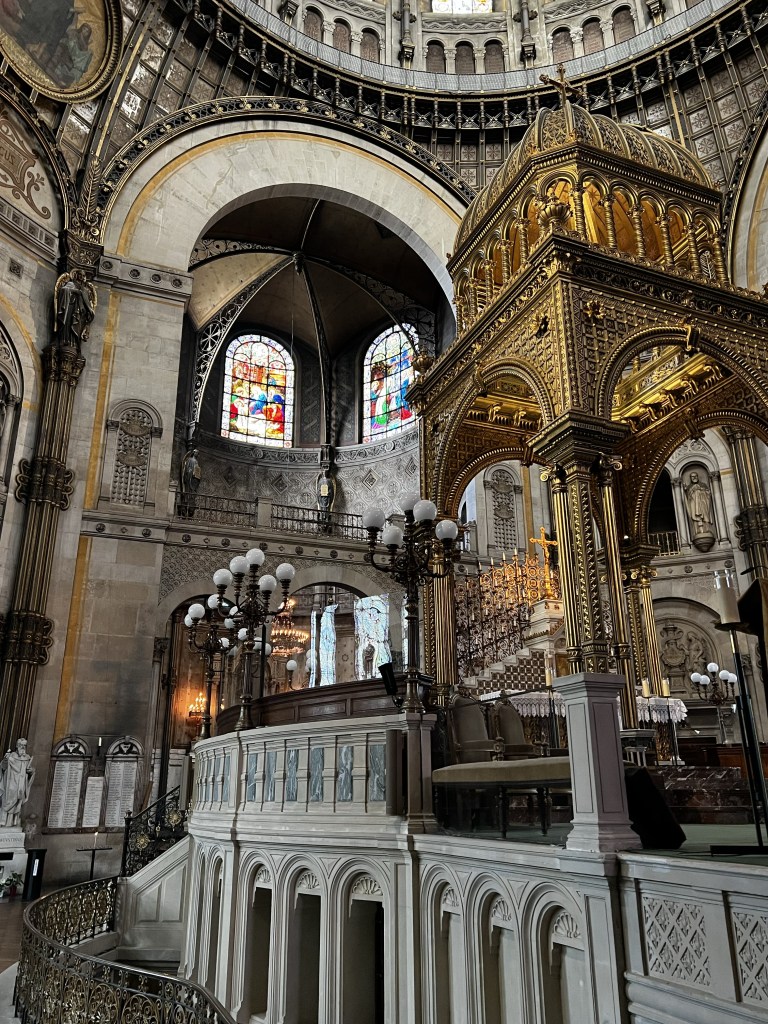
The front of the church belies it’s dimensions (compared to Notre-Dame); not unusually wide, but very deep.
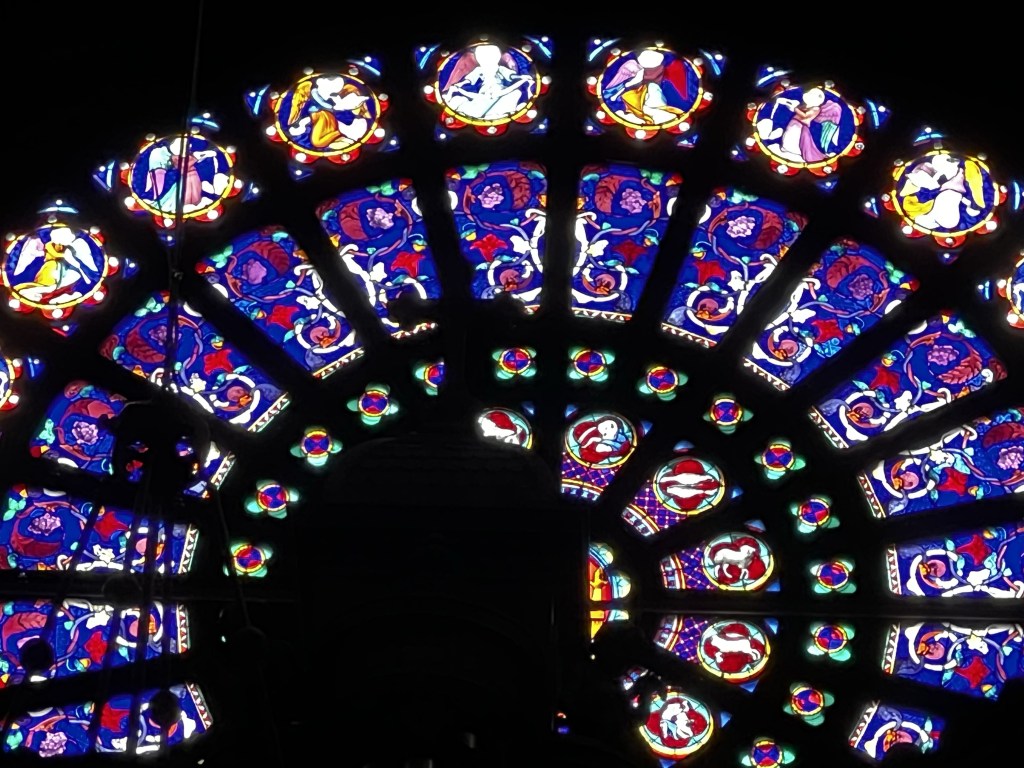
Total length : 93 metres (Notre-Dame: 128 metres)
Width: façade: 19 metres, rear : 39 metres (Notre-Dame: 40 metres)
Height: 79 metres (Notre-Dame: 69 metres)
Free height under the dome : 50 metres (Saint-Sophia, Istanbul: 56.75 metres)
Diameter of the cupola: 25.50 metres (Saint-Sophia, Istanbul: 35.10 metres)
From here, we wanted to revisit Notre-Dame to see how the reconstruction after the devastating fire of 2019 was progressing. We visited the site in 2022, which was still in the very basic stages of inventorying and removing the damaged sections and melted scaffolding. It’s impossible to describe the scope of such a restoration project for a building that is 800 years old. The amount of detailed planning, engineering, technology and all the trades – both modern and even medieval crafts you would not have thought about, that have been enlisted to restore this historic church and symbol is staggering, all with painstaking detail, to restore the church and its paintings, stonework, stained glass, art restorers, carpenters, stone mains, organ builders. 11 organ builders were brought together to dismantle the great organ, with all 8,000 pipes and 115 stops being dismantled and sent to three different workshops for cleaning. Over 1,000 old trees were felled (from private and public lands) to construct the supports and framework , with each one numbered for its purpose. It must be the engineering and construction project of the century, and for these craftsmen, of a lifetime.
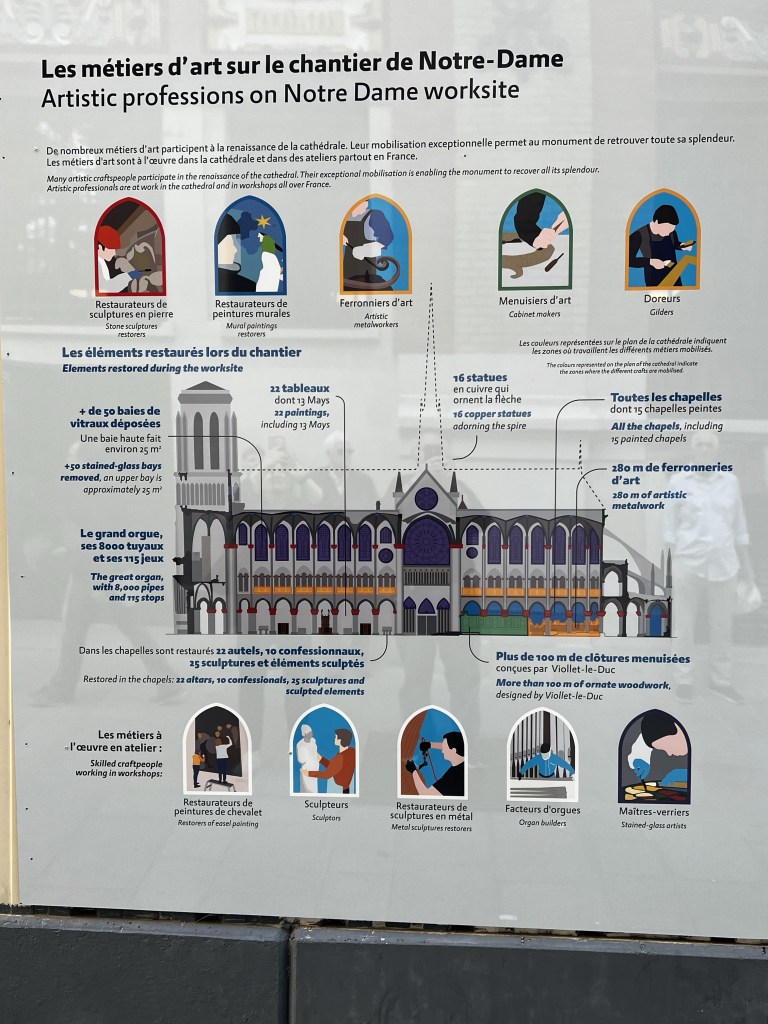
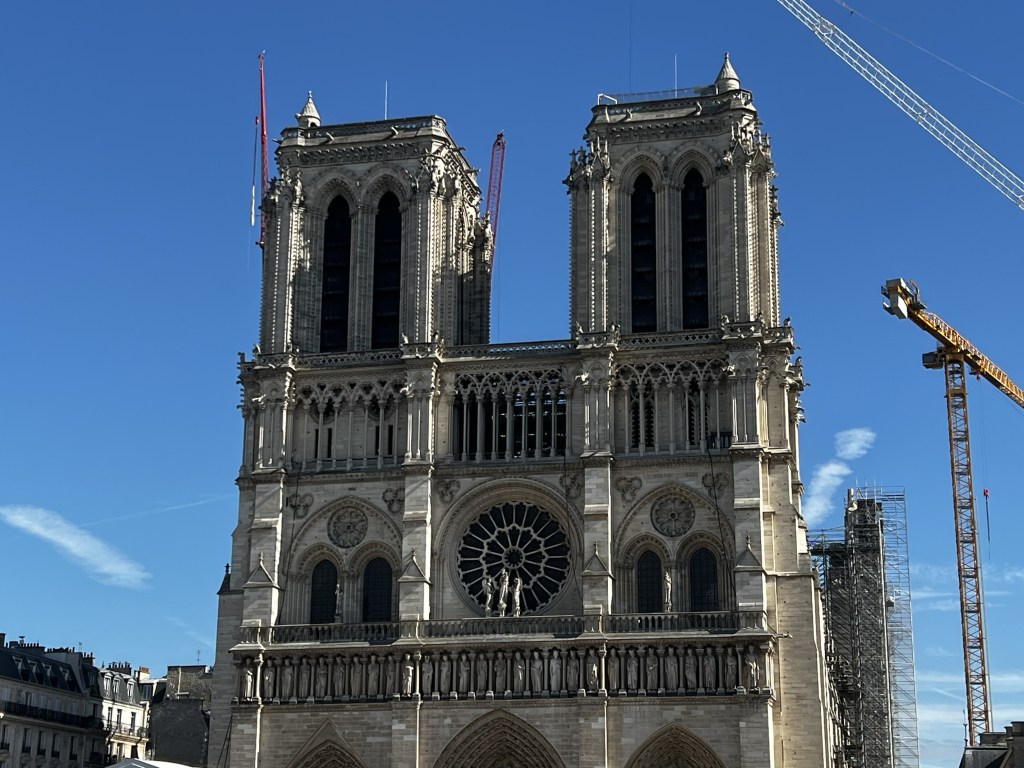
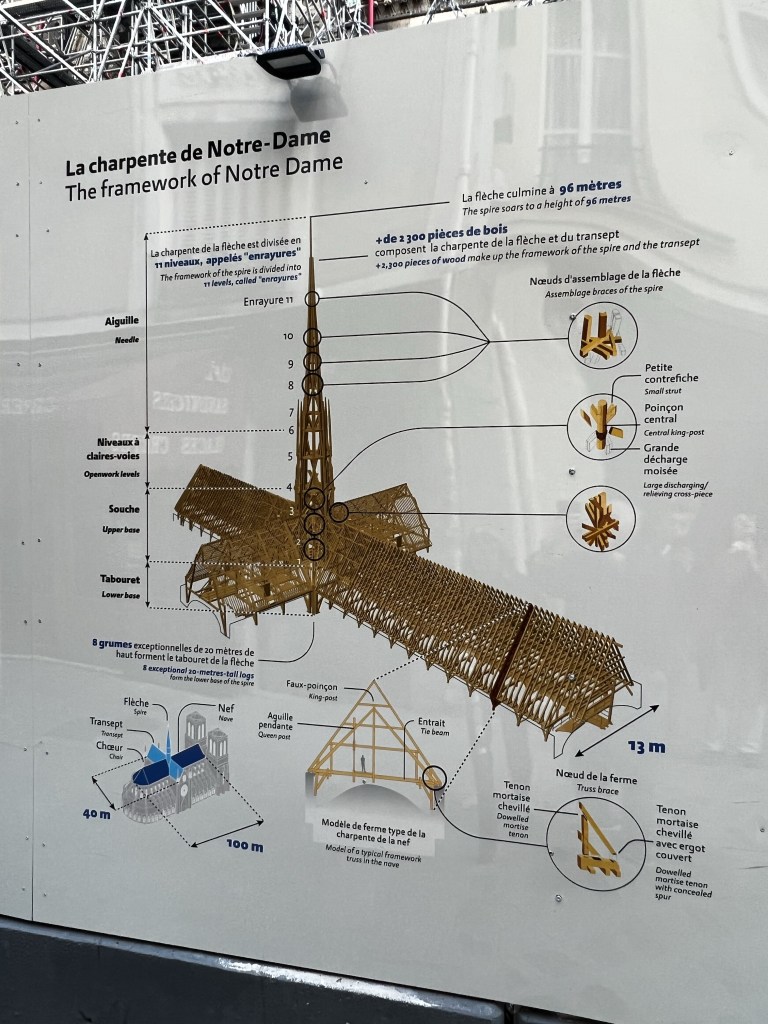

There’s still a construction wall separating the plaza from the construction, so the best that be done is observe from a distance.
It’s now estimated Notre-Dame will reopen (partially) in December, 2024, nearly five years after the fire which nearly destroyed it.
We’d hoped to go have some ice cream at Berthillon on rue Saint-Louis en-Île, but it’s Monday, so of course it’s closed! Not to be deterred, there are a number of cafés that serve Berthillon ice cream and we found one. Two servings of 3 scoops each were only $36! It was good while it lasted.

Making our way back to the Metro, we walk along the Seine, with some of the “bouquinistes” (used book sellers) stalls open, while on the pathway below, next to the river, people walk, jog or step on board one of the several floating restaurants.


While I hope it’s possible, it’s hard to look at the Seine now and imagine it will be clean enough for swimming in the 2024 Paris Olympics.
 TerraTraveler